
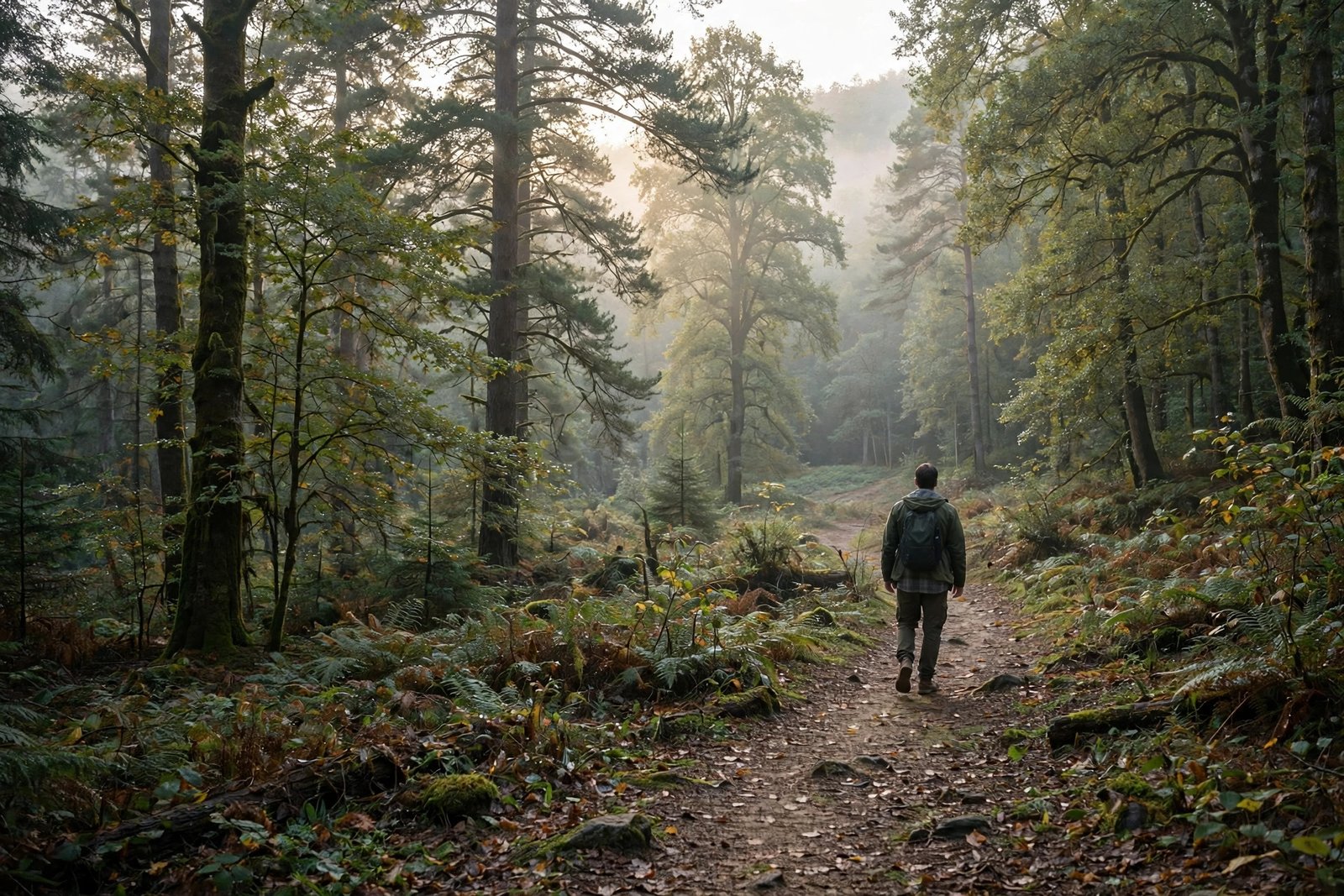
Somewhere in America this week, someone will put their phone in their pocket, leave their headphones at home, and go for a walk with absolutely nothing playing. No podcast. No playlist. No audiobook. No phone call. Just footsteps, fresh air, and their own thoughts.
They will call it silent walking, and millions of people will know exactly what they mean. That is the strange magic of this trend. Humans have walked quietly for most of history. Only now, in an age when every spare moment comes with a soundtrack, does walking in silence feel like a discovery worth naming.
Silent walking has become one of the most talked-about wellness trends in the United States, passed from creator to creator on TikTok and Instagram until it turned into a small cultural moment. It asks for no equipment, no subscription, and no skill. It only asks you to stop filling the silence for a little while.
What Silent Walking Actually Is
The rules are simple, which is part of the appeal. A silent walk means walking without technological distractions. That means no earbuds, no music, no podcasts, and no scrolling while you move. Your phone stays in your pocket, if it comes along at all, and your attention stays on the walk itself.
That is the whole practice. There is no special pace, no required distance, and no dress code. Some people do ten minutes around the block. Others take a full hour through a park or a neighborhood. Some walk alone. Some walk with a friend, talking as they go, because the point is the absence of devices, not the absence of company.
What makes it different from an ordinary walk is intention. Most of us already walk without headphones sometimes, but we rarely choose it on purpose. Silent walking turns that default into a decision. You notice the choice, and because you notice it, you notice everything else too.
Where the Trend Came From
Like many internet trends, silent walking has more than one origin story, and both of them are worth knowing. The version most people repeat starts with TikTok creator Mady Maio, co-host of the Okay Sister podcast. In a video that has reportedly drawn close to half a million views, Maio described how her boyfriend challenged her to take a walk without any technology.
She said the first couple of minutes felt like mayhem. Her mind raced, her hands wanted something to hold, and the quiet felt uncomfortable. Then something shifted. She described slipping into a flow state, a stretch of calm where the noise dropped away and she could suddenly hear herself think. She said silent walking gave her a clarity she had been looking for, and she urged her followers to try it for themselves.
The term itself, though, appears to predate that video. New York City influencer Arielle Lorre had already used the name months earlier, describing silent walking as a grounding alternative to the hot girl walk era. Lorre has said that on a silent walk, all of her senses go on high alert. She smells everything, hears everything, and sees everything, and the experience leaves her feeling grounded in a way a soundtracked walk does not.
Both stories point to the same idea. The trend did not invent quiet walking. It gave a name to something people were already craving, and the name made it shareable.
Why It Caught On Now
Silent walking arrived at the right moment. The hot girl walk, the pandemic-era trend of strutting through the city with earbuds in and a podcast playing, had already made walking fashionable again. Millions of people had built a daily walking habit. Silent walking is the natural next step for walkers who started wondering what all that audio was drowning out.
There is also a screen-fatigue story underneath it. The average American day is stitched together from notifications, feeds, messages, and streams. Even leisure time is mediated. A walk used to be a break from all of that. Then earbuds turned the walk into another content session. Silent walking takes the break back.
The trend also fits the way social media rewards contrast. Feeds are loud, fast, and crowded. A video of someone calmly walking in silence stands out precisely because it refuses to compete. Viewers have commented that watching a quiet walk makes them feel calm, which is a strange thing for a social media clip to do, and probably the reason so many of them spread.
What Fans Say It Does for Them
Ask people who silent walk regularly and you will hear a familiar set of descriptions. They say their thoughts untangle. They say ideas arrive that never show up while a podcast is playing. They say they notice their neighborhood for the first time in years: the smell of rain on pavement, a dog barking two streets over, the way the light changes at the end of the day.
None of this is mysterious. Walking has long been linked to clearer thinking, and plenty of writers and artists have sworn by long walks as a way to work through problems. What silent walking adds is the removal of the one thing that usually fills the mental space walking opens up. Without a voice in your ears, your own voice gets room to speak.
It is worth being honest about the limits here. Silent walking is not a medical treatment, and no walk, silent or otherwise, replaces professional help for anxiety, depression, or any other health condition. What it offers is simpler and still valuable: a short, free, daily stretch of time when nobody is selling you anything, asking you anything, or talking at you.
How to Try Your First Silent Walk
If you want to try it, start small. Ten or fifteen minutes is plenty for a first attempt, and a familiar route helps, because you will not be navigating at the same time as you are adjusting to the quiet.
- Leave the earbuds at home, or put them in your pocket before you step outside. Out of sight really does help.
- Put your phone on silent and face-down in a pocket or bag. If you need it for safety, keep it with you, just not in your hand.
- Pick a route you enjoy, not a chore route. A park path, a tree-lined street, or a lakeside trail all work better than a busy parking lot.
- Walk at whatever pace feels natural. This is not exercise with a target. Let your speed settle on its own.
- When your mind races, let it. The first few minutes are the hardest for almost everyone, and the restlessness is part of the point.
- Notice three things with your senses: something you hear, something you smell, and something you see that you would normally walk past.
Some people like to end the walk by jotting down whatever came to mind, a line in a notes app or a notebook by the door. Others prefer to let it fade. Either way works. The walk itself is the practice, not the record of it.
The Fair Criticism: Is It Just Walking?
Every viral wellness trend attracts skeptics, and silent walking has an obvious one: people have always walked without headphones. Giving it a name can look like rebranding something ordinary, and critics have said so, sometimes with an eye-roll.
They are not wrong, exactly. But the criticism misses why the name matters. Most ordinary habits do not survive contact with a phone. The moment a walk becomes boring, the hand reaches for the earbuds. Naming the practice gives people a reason to resist that reflex, and a community of other people doing the same thing. The name is the commitment device.
There is also a generational twist worth noting. For younger Americans who have never known a world without a soundtrack in their pocket, choosing silence really is a new experience. What looks obvious to one generation can feel radical to the next, and that gap is where trends live.
Silent Walking and the American Outdoors
One of the nicest side effects of the trend is where it sends people. Silent walkers tend to seek out quieter routes: neighborhood greenways, state park trails, beach boardwalks at off-peak hours, and small-town main streets early in the morning. The practice pairs naturally with the country’s enormous network of parks and trails, and it costs nothing to use them.
If you are near a national park, a state park, or even a well-kept city park, try your first silent walk there. Nature does a lot of the work for you. Birds, wind, water, and rustling leaves fill the silence without demanding attention, which makes the first few minutes much easier than walking a noisy commercial street.
And if you live somewhere without easy trail access, a quiet residential loop works just fine. The trend is not about scenery. It is about attention, and attention can be practiced anywhere.
Why This Trend Might Actually Last
Most viral trends burn out because they demand something: money, equipment, a new skill, or a level of effort that fades after a week. Silent walking demands the opposite. It asks you to do less, not more. That is a much easier habit to keep.
It also survives the usual trend cycle because it does not depend on any single creator, product, or platform. No one owns it. No app is required. If TikTok disappeared tomorrow, people could still walk out their front doors in silence, and many of them would, because the benefit was never the video. The video was just the invitation.
So the next time your feed shows someone walking quietly through their neighborhood, remember what you are really seeing. It is not a performance. It is a reminder that the oldest technology for clearing your head is still available, still free, and still waiting right outside your door.
For more on how the trend spread, see Marathon Handbook’s guide to silent walking, GenZ NewZ on the trend’s return, and IGV Official’s explainer.
Frequently Asked Questions
What is silent walking? Silent walking is walking without technological distractions: no phone in hand, no earbuds, no music, and no podcasts. Your attention stays on the walk, your surroundings, and your own thoughts.
How long should a silent walk be? There is no required length. Ten to fifteen minutes is a good starting point, and many people build up to thirty minutes or an hour as the habit settles in.
Can I walk with someone else? Yes. The point is the absence of devices, not the absence of company. Walking and talking with a friend still counts, as long as the phones stay away.
Is silent walking the same as meditation? Not exactly, but they share some qualities. Both involve paying attention to the present moment. Silent walking is simply less formal, and it happens outdoors, on the move.
Do I need to leave my phone at home? No. Many people carry a phone for safety and simply keep it silenced and out of sight. The practice is about not using it, not about being unreachable.