
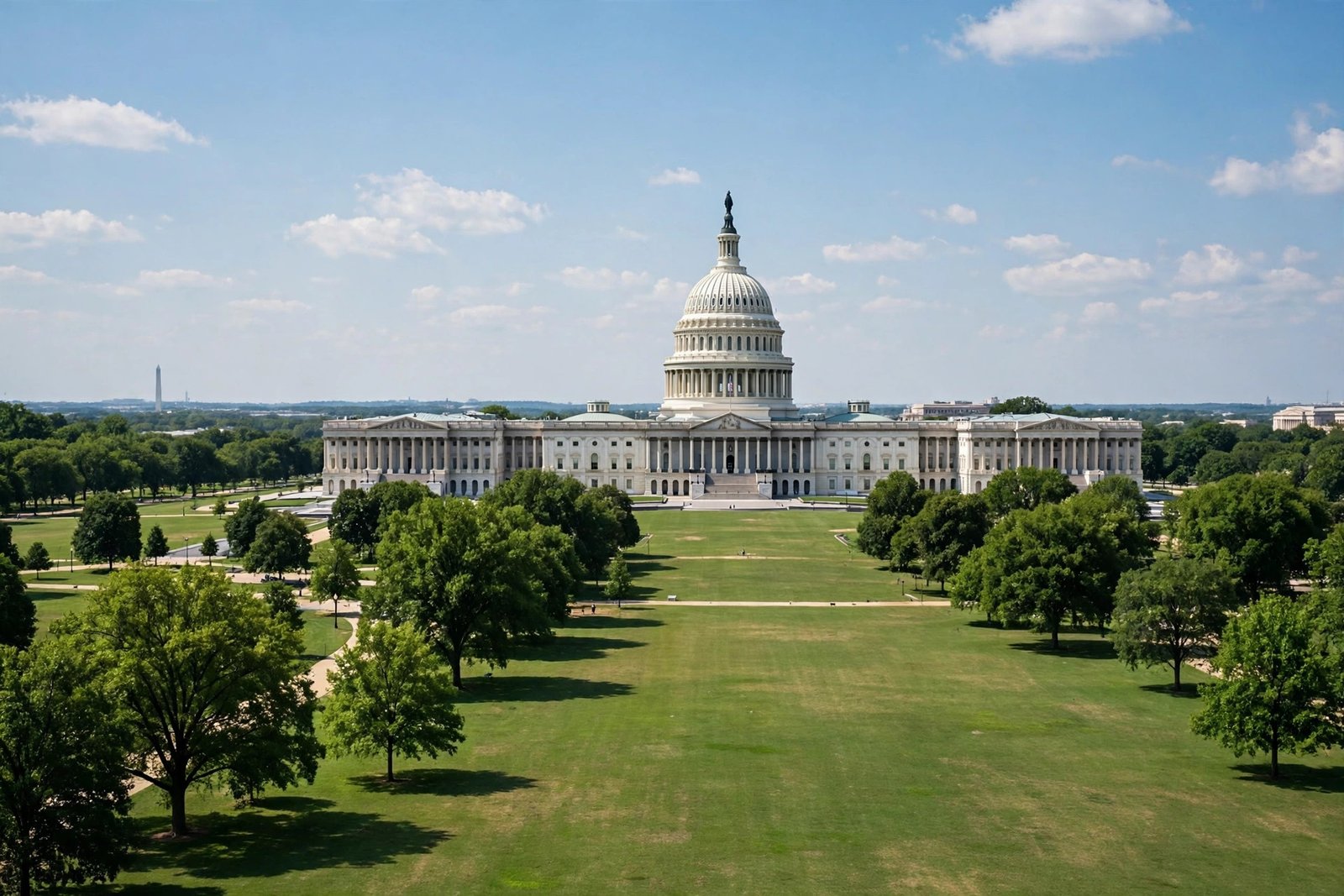
With one week to go before the November 3 midterm elections, the federal agency that tracks campaign money in the United States has gone dark online. The Federal Election Commission’s electronic filing system went offline on Monday night, October 26, 2026, after what the agency described as an attempted breach of its systems, leaving campaigns, political committees, and the journalists who watch them unable to file mandatory spending reports at the busiest moment of the election cycle.
According to an email seen by Reuters, an FEC electronic filings officer told campaign compliance firms on Monday night: “We have a bad actor attempting to breach FEC systems. As a result, we’ve had to temporarily shut down our web-facing services.” The agency later said the issue had been identified and a fix was being implemented, but as of Tuesday evening its filing system remained offline.
The timing could hardly be worse. The midterms will decide whether President Donald Trump’s Republican Party keeps its majorities in Congress, and political groups and super PACs are spending record amounts in the final days of the campaign. That spending is supposed to be disclosed to the public, fast, through the very system that is now down.
What exactly went offline
The outage hit the FEC’s electronic filing system, the portal through which candidates, parties, and political action committees submit campaign finance reports. According to the agency’s status tracker, the system had been offline since approximately 10 p.m. ET on Monday. The FEC Notify system, which alerts subscribers when new filings land, was also reported offline.
What did not go down matters too. The public can still search the FEC’s website for previously filed reports, and the agency’s online database of past filings remains accessible. In a statement, the FEC said: “At this time, the FEC’s electronic filing system is currently offline and our IT staff are actively working to restore service.” A spokesperson later added that the website search for FEC reports was not affected.
The FEC also posted a notice on X on Tuesday: “FEC’s electronic filing system is offline. We apologize for the inconvenience and are working to resolve the issue.”
Which reports are stuck
The most immediate casualty is the stream of 24-hour and 48-hour reports. These are the rapid disclosures that political committees must file when they spend money on specific races close to an election. They are the mechanism by which voters, reporters, and rival campaigns learn, sometimes within a day, who is paying for the ads flooding their television screens and social media feeds.
With the filing system offline, those reports cannot be submitted electronically at all. That creates a blind spot in the final week of the campaign, when last-minute spending often surges and when disclosure is arguably most valuable to voters trying to judge who is behind a message.
Compliance professionals say they have never seen anything like it. “I’ve never seen this in 26 years,” Steven Mele, president and CEO of political finance compliance firm MBA Consulting Group, told Reuters. The remark captures how unusual the outage is: the FEC’s filing system is built to absorb the crush of the campaign’s final stretch, not to disappear during it.
What the FEC does, and does not, do
It is important to be clear about what this outage is not. The FEC tracks campaign spending by candidates and political committees. It does not administer elections. Ballots, voter rolls, and vote counting are handled by state and local election officials, not by the FEC.
That distinction is why officials have been quick to say the outage should have no effect on voters’ ability to cast their ballots. Democratic FEC Commissioner Dara Lindenbaum put it plainly on social media: “To be absolutely clear: This has NOTHING to do with voter files or voter registration. Those are maintained by the states. The FEC only handles federal campaign finance filings.”
So the disruption is real, but its blast radius is disclosure, not democracy’s machinery. Voters can still vote. What they may not be able to do, for a few days at least, is follow the money behind the final wave of campaign advertising in real time.
A reported hacking attempt, still under investigation
Reports describe the incident as a hacking attempt rather than a confirmed successful breach. Reuters, citing the internal email, reported that a hacker or hackers targeted the agency’s systems. The FEC itself has not publicly confirmed that any data was accessed or stolen, and it declined to provide further details about the outage beyond its status updates.
The Cybersecurity and Infrastructure Security Agency and the Federal Bureau of Investigation referred questions about the incident to the FEC, according to reports. That is standard practice when an agency is still diagnosing a problem: the victim agency speaks for itself while the investigation is underway.
It is worth noting what remains unknown. The identity of the actor behind the attempt has not been publicly established. Whether any sensitive data was exposed has not been confirmed. And the exact timeline for full restoration has not been announced, beyond the status message saying a fix was being implemented.
Why the final week makes this worse
Campaign finance disclosure is designed around speed in the home stretch. The whole point of 24-hour and 48-hour reports is that late spending should not be able to hide until after Election Day. When a super PAC drops millions into a Senate race in the final days, voters are supposed to be able to see it quickly.
An outage in the last week therefore does more damage than the same outage would in a quiet month. It also lands in a campaign in which, according to reports, super PACs and other outside groups are spending record sums. The combination of record spending and a dark disclosure system is what makes this story bigger than a routine IT failure.
There is also a political backdrop. President Trump has emphasized election integrity ahead of the November 3 polls, and has said he would respect the midterm results if the polls were conducted honestly. Against that backdrop, any incident touching an election-adjacent system, even one that does not touch voting itself, is guaranteed to draw intense attention and speculation.
What happens next
Three things will determine how this story ends. First, how quickly the FEC restores electronic filing. The agency said a fix was being implemented on Tuesday evening, but its system was still offline at that point. Second, whether the FEC sets a plan for the reports that could not be filed on time, such as extended deadlines or a catch-up filing window. Third, what the investigation ultimately finds about who attempted the breach and whether anything was taken.
For now, the practical advice for anyone following the money is patience plus skepticism. Filings will be delayed, not necessarily hidden forever. But any claim about what the outage means for the election should be checked against the basic fact that the FEC does not run elections, and against the agency’s own status updates as they appear.
Read the reporting behind this story: Reuters reporting on the FEC outage, the FEC’s status updates and spokesperson comments, and the FEC Notify outage and the commissioner’s clarification.
What campaigns are doing instead
For campaigns and committees, the outage creates a practical headache with no clean workaround. The reports they owe cannot be filed through any other electronic channel while the system is down, and paper filing is not a realistic substitute at the speed the final week demands. Compliance firms are advising clients to prepare their reports so they can be submitted the moment the system returns, and to keep records of what was ready and when.
That advice matters because late filing can carry consequences even when the delay is the agency’s fault. Committees will want to show that they were ready and that the outage, not their own slowness, caused the gap. Expect a wave of filings the moment the system comes back, and expect watchdog groups to compare filing timestamps carefully against the dates the spending actually happened.
For journalists, the workaround is older-fashioned: ask campaigns directly what they have spent, watch for the ads themselves, and track the spending that is visible in public places, from television ad buys to social media disclosures. None of that replaces the FEC database, but it narrows the blind spot while the system is down.
Why disclosure delays cut deeper than they look
It is tempting to treat a few days of missing reports as a minor inconvenience. The money will be disclosed eventually, after all, and voters will still vote. But disclosure delayed past Election Day is disclosure denied in the only window when it can change a vote, and that is the whole reason the rapid-report rules exist.
Consider a voter who sees an attack ad on the Sunday before the election. With the system working, that voter can look up who paid for it within a day or two. With the system down, that voter may never learn the funder’s identity until the election is already over. The information still arrives, but it arrives too late to matter.
That is why the FEC’s restoration timeline matters as much as the cause of the outage. A system restored before Election Day preserves most of the disclosure regime. A system still dark on Election Day itself would leave the final weekend’s spending undisclosed when voters need it most.
Frequently asked questions
Is the FEC filing outage affecting voting?
No. The FEC tracks campaign finance, not ballots. Voting is administered by state and local officials, and the outage does not affect voter files, voter registration, or vote counting.
What reports cannot be filed right now?
Electronic campaign finance reports, including the rapid 24-hour and 48-hour spending reports that committees must file close to an election. Previously filed reports can still be searched on the FEC website.
When did the system go offline?
According to the FEC’s status tracker, the electronic filing system had been offline since approximately 10 p.m. ET on Monday, October 26, 2026. A later status message said the issue had been identified and a fix was being implemented.
Was the FEC hacked?
Reports describe a hacking attempt, citing an internal FEC email about a “bad actor attempting to breach FEC systems.” The agency has not publicly confirmed that any data was accessed or stolen, and the incident remains under investigation.
Will the delayed reports ever become public?
That depends on what the FEC announces about catch-up filings. The reports are mandatory, so committees will still owe them once the system is restored, but the agency has not yet announced a specific plan for the backlog.