
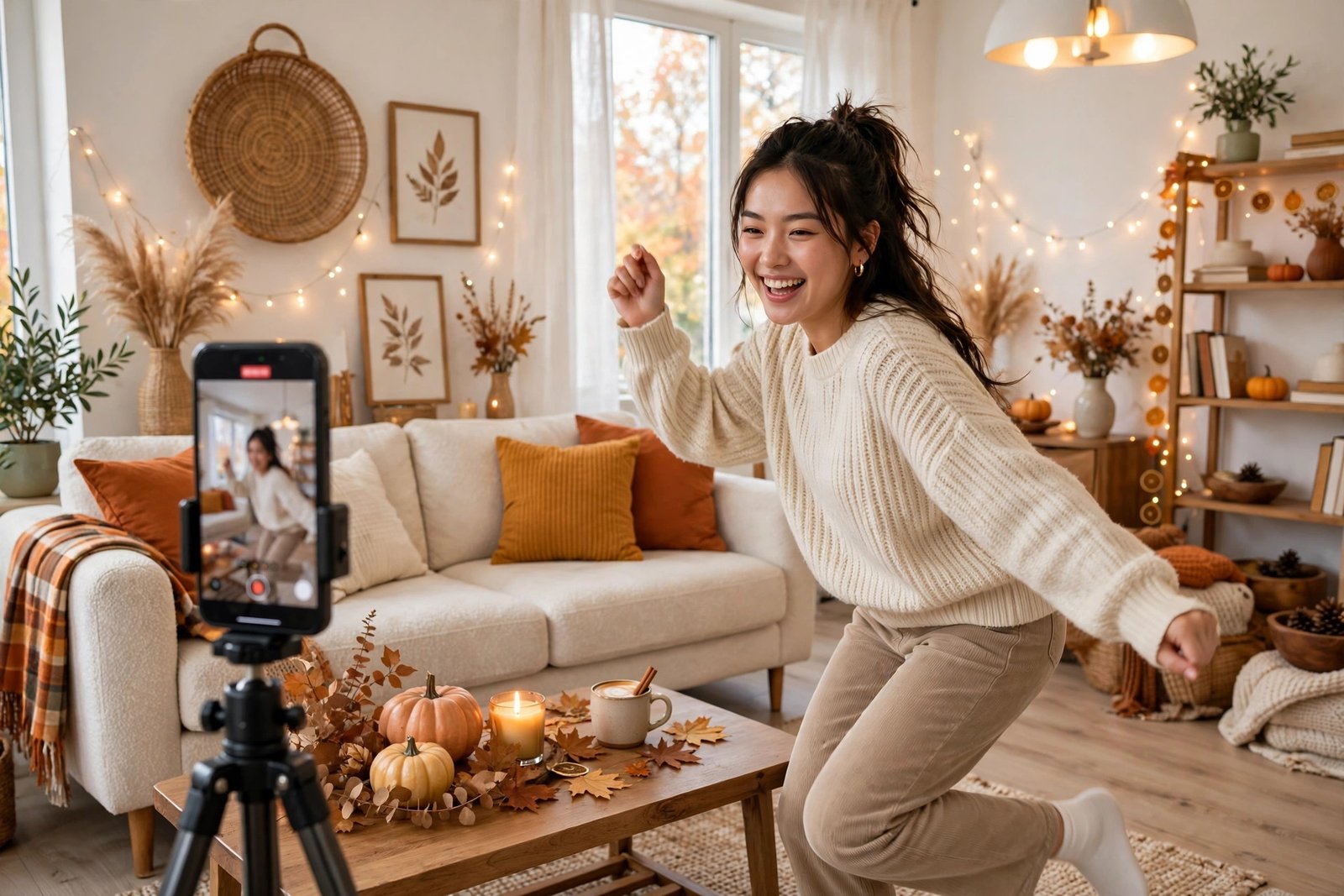
If you have opened TikTok at any point in the last few weeks, you have heard it. A confident, strutting pop beat drops, a line about making a lot of money lands, and a creator looks straight into the camera like the main character of her own movie. That is Tate McRae’s “Housewife,” and in November 2026 it has become the sound of the season on TikTok. I scrolled past it a dozen times before I realized I was watching a full-blown trend, and once I started counting, it was everywhere: in dance videos, in POV clips, in glow-up montages, in jokes about dream kitchens and walk-in closets. The song was released on October 15, 2026, as the lead single from McRae’s fourth album, and within a week it had inspired more than 309,000 TikTok creations. In the window from October 27 to November 5 alone, the sound appeared on roughly 313,700 TikTok videos, according to SocialPilot’s trend report. By early November, one tracked version of the sound had passed 524,800 videos. This is not a slow burn. This is a song that swallowed the app whole.
What makes the trend worth explaining is that it is really several trends wearing the same song. Some creators use “Housewife” to celebrate financial independence. Some use it to dream out loud about the life they want. Some use it, controversially, to celebrate traditional stay-at-home married life, which is almost the opposite of what the song is about. And some just dance to it.
What Is the “Housewife” Trend?
At its simplest, the “Housewife” trend is the wave of TikTok videos set to Tate McRae’s October 2026 single “Housewife.” The song debuted at No. 2 on the Billboard Hot 100, McRae’s highest-charting song as a lead artist, and hit No. 1 on Spotify’s Daily Global Chart, returning to the top spot on October 19. But the chart numbers only tell half the story. The other half is what TikTok did with it.
The trend took off almost immediately. By October 20, less than a week after release, the music industry tracker InMusic counted more than 309,000 TikTok creations using the song. By November 6 the song’s main TikTok sound had been used in more than 524,800 videos, according to the sound tracker Tokchart, and the hashtag #tatemcraehousewife had passed 1,070 videos and 8.4 million views. Those are big numbers for a track that had been out for barely three weeks.
Most “Housewife” videos fall into a few recognizable formats, and once you know them, you will spot them instantly. The first is the POV mini music video: a creator films an ordinary workday or an outfit reveal, adds a text overlay like “POV: you started using…” and ends with a confident reveal, turning a regular day into a tiny music video. The second is the “housewife era” manifestation montage: four to six quick shots of a dream life, a bright kitchen, a walk-in closet, a quiet morning coffee, a laptop showing your own brand, a slow drive at golden hour, each with a short line of text, usually captioned “POV: my housewife era.” The third is the dance, built on a routine posted by choreographer Kevin Bannier on October 16, the day after the song came out, filmed from the floor of his blue-lit living room. That routine became the one most copies credit, and a dance class version posted on October 25 passed 4.8 million views.
What the Song Is Actually About
Here is where the trend gets interesting, because the song’s meaning and the trend’s meaning are not always the same thing. McRae described the track during an October 7 appearance on The Tonight Show Starring Jimmy Fallon as being about “a woman who can’t be contained.” The key lyric, the one that launched a thousand videos, is about wanting to make a lot of money and be her own housewife. The point is independence: a woman who earns her own money, runs her own life, and answers to nobody. She is not waiting to be kept. She is keeping herself.
That is why so many of the most popular “Housewife” videos are about money and progress. Creators film glow-ups from a first job to where they are now. They list the things they want to buy. They show the apartment they moved into, the business they started, the degree they finished. One of the biggest early uses, posted on October 21, paired the sound with a video about a foldable iPhone and passed 6.8 million plays. The Economic Times, describing the trend on November 2, called it a TikTok money trend. That framing fits the song: the housewife in McRae’s version is the boss of her own house, because she paid for it.
McRae herself joined in, posting her own manifestations set to the song. And the trend crossed into celebrity culture quickly: Jessi Draper of The Secret Lives of Mormon Wives was among the early high-profile creators to post with the sound. When a song jumps from a pop star’s release to a reality star’s feed to a million ordinary users in the same week, that is what a genuine TikTok moment looks like.
The POV Format, Explained
So what exactly is a POV video, and why does this song fit the format so well? POV stands for point of view, and on TikTok it means a short video that puts the viewer inside a scenario, usually announced by a text overlay starting with “POV:” The viewer is not watching a story. They are in it. The format works best with a song that has a strong attitude and a clear emotional beat, and “Housewife” has both: a strut, a smirk, and a lyric that sounds like a mission statement.
The classic “Housewife” POV goes something like this. The video opens on an ordinary moment: a creator at her desk, in her car, in front of a mirror. The text overlay sets the scene, often “POV: you started using [an app, a routine, a habit] to…” The song builds, the creator’s expression shifts from tired to confident, and the video ends with a reveal: a finished outfit, a clean apartment, a paycheck. The whole thing takes fifteen seconds, and it works because the song does the emotional heavy lifting.
The manifestation version is softer but just as popular. Instead of a before-and-after, it is a vision board in motion: a kitchen bathed in morning light, a closet full of clothes that fit the life you want, a slow cup of coffee with nowhere to be. The caption is usually “POV: my housewife era,” and the dream is that the creator is claiming a future life in the present tense. TikTok loves a format that lets people try on a version of themselves, and “Housewife” is built for that.
Then there is the dance. Bannier’s October 16 routine, with its wide stance, hip sways, and arms thrown up, gave the song a physical language, and dance studios and creators quickly made their own versions. By early November the dance and the POV clips were running side by side on the same sound, which is part of why the numbers got so big: the song was not one trend, it was three or four, all feeding the same count.
The Other Side: Tradwives and the Debate
Not everyone is using the song the way McRae wrote it, and that is where the trend turns into a genuine cultural argument. A large group of creators, often associated with the tradwife movement, have taken the word “housewife” literally. They post videos about wanting to be stay-at-home wives, sometimes changing the lyric in their captions to “be my man’s housewife” or “I just want to spend all of his money, be his cute housewife,” set to the original audio. The videos range from women dancing in front of mirrors to clips of married couples embracing to stay-at-home wives doing household chores, all soundtracked by a song about financial independence.
Rolling Stone noticed the split on October 27, asking whether the tradwives were missing the point of the song. The answer, from McRae’s own description of the track, is that they are, or at least that they are using it to say the opposite of what she wrote. The song is about a woman who cannot be contained and who makes her own money. The tradwife version is about a woman who chooses to be contained, happily, inside a marriage where her husband earns the money. Those are two different ideas of freedom, and the argument between them has played out in thousands of comment sections.
That argument is a big reason the trend has lasted. Trends that everyone agrees on burn out fast. Trends that people argue about keep generating new videos, because every creator wants to weigh in. The “Housewife” debate is not really about one song. It is about what independence looks like in 2026, about whether choosing a traditional life is a free choice or a retreat, and about who gets to decide what a housewife is.
It is worth saying plainly that both readings are happening at the same time, and both are real. The creators posting glow-ups and business launches are not wrong about the song, and the creators posting about homemaking are not going away. The sound belongs to whoever uses it now, and the argument is part of the trend, not a distraction from it.
Why November? The Halloween-to-Holiday Handoff
The timing of the “Housewife” trend is not an accident. November is TikTok’s great reset month, the moment the app shakes off Halloween and pivots, almost overnight, to the holidays. Mariah Carey’s annual “It’s Time” video, posted shortly before midnight Eastern on Saturday, October 31, declared the start of the Christmas season, and within 12 hours it had passed 18 million views. By November 5, her song “All I Want for Christmas Is You” had accumulated 16.2 million TikTok videos all-time, and it sat at No. 2 among trending songs in the United States on TikTok. When the Queen of Christmas defrosts, the whole app changes temperature.
“Housewife” sits right in the middle of that handoff. It is not a Christmas song, and it is not a Halloween song. It is a November song: confident, forward-looking, about the life you want to build in the year ahead. That is why it pairs so naturally with the other big November trends, including the zombie-outbreak survival stories filling feeds with apocalyptic role-play. November on TikTok is a month of reinvention, and “Housewife” gave creators a soundtrack for claiming one.
There is also a practical reason the trend caught fire in November. The end of the year is when people take stock: of their money, their jobs, their relationships, their homes. A song about making a lot of money and being your own housewife lands differently in November than it would in June. It sounds like a resolution made early, a plan for the year ahead dressed up as a fifteen-second video. That is the kind of timing you cannot manufacture. McRae released the song in mid-October, and the calendar did the rest.
How to Join In (and What to Avoid)
If you want to make your own “Housewife” video, the format is forgiving, and that is part of its appeal. Pick one of the three lanes: a POV mini music video, a manifestation montage, or the dance. Film it in good light, keep it short, and let the song do the work. The best versions have a clear before-and-after, or a clear dream: a real job, a real apartment, a real goal. The videos that flop are the ones with no story, just a camera pointed at a face while the song plays. The trend rewards specificity.
A few honest tips. First, use the official sound rather than a re-upload, so the video counts toward the trend and McRae gets the credit. Second, keep the text overlay short: one line, maybe two. Third, do not fake the glow-up. The trend’s most-liked videos show real progress: a first paycheck, a finished room, a degree on the wall. TikTok can smell a staged success story from a mile away, and the comments will not be kind.
And if you are going to join the debate about what the song means, at least know what the song says. McRae wrote it about a woman who cannot be contained and who makes her own money. You are free to use it however you like; that is how TikTok works. But the creators who understand the song tend to make the videos that last. The trend will move on, as every TikTok trend does. The song, and the argument it started, will stick around longer.
Frequently Asked Questions
What is the Tate McRae “Housewife” TikTok trend?
It is the wave of TikTok videos set to Tate McRae’s single “Housewife,” released October 15, 2026. Creators use the song for POV mini music videos, “housewife era” manifestation montages, and a dance routine, with the sound appearing on roughly 313,700 videos in the October 27 to November 5 window alone.
What is “Housewife” by Tate McRae about?
McRae described the song on The Tonight Show as being about “a woman who can’t be contained.” The central idea is financial independence: making your own money and being your own housewife, rather than depending on someone else.
Why are tradwives using the “Housewife” song?
Some creators in the tradwife community have adopted the song literally, changing the lyric in captions to “be my man’s housewife” and posting about stay-at-home married life. Rolling Stone and other outlets have noted this runs counter to the song’s message about independence, which has fueled a wide debate in the comments.
How many TikTok videos use the “Housewife” sound?
By October 21, 2026, InMusic counted more than 309,000 TikTok creations using the song. By November 6, the song’s main TikTok sound had passed 524,800 videos, according to the tracker Tokchart, and the count was still climbing.
Related reading
- Mariah Carey “It’s Time”: Christmas Trend Goes Viral
- “Dame Hombro” Shoulder Dance TikTok Trend Explained
- Zombie Outbreak Survival Stories Take Over TikTok
Sources: Economic Times: A Tate McRae Song Is Fuelling a TikTok Money Trend; ViralMeme: Tate McRae Housewife Trend; Vogoo: Housewife Trend Explained; Fashion Times: Tradwives Rewrite Tate McRae’s “Housewife”; MakeViral: Housewife Dance Trend; The Blast: Mariah Carey Is Officially Defrosted; WiseVoter: Tate McRae’s “Housewife” Sparks TikTok Trend.