
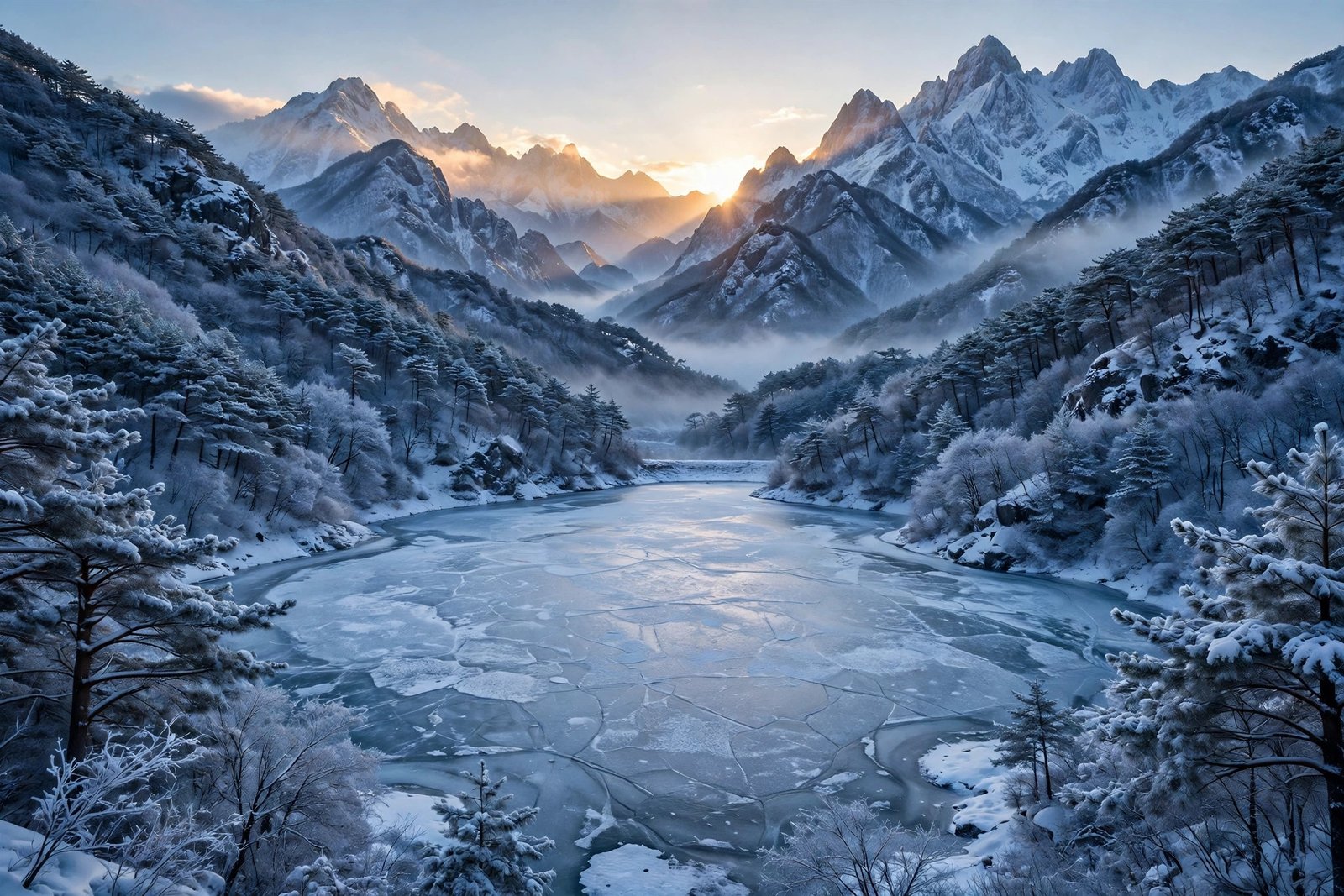
In late November 1950, American troops in the mountains of North Korea believed the war was almost over. They had landed at Inchon, retaken Seoul, and pushed deep into the north. The talk was of being home by Christmas. Then, on the night of November 27, bugles sounded in the frozen darkness around the Chosin Reservoir, and wave after wave of Chinese soldiers came down the ridges. The 1st Marine Division, spread thin along a single mountain road, was suddenly surrounded, outnumbered, and facing some of the coldest weather of the Korean War. What happened over the next two weeks became one of the most famous stories in Marine Corps history: a fighting withdrawal through ice and enemy fire to the sea.
The men who survived call themselves the Chosin Few, or the Frozen Chosin. Seventy-five years later, the battle is still taught to young Marines as an example of what discipline, leadership, and stubborn refusal to quit can do when everything goes wrong at once. This is the story of how they got trapped, how they fought their way out, and why the name Chosin Reservoir still carries such weight in America.
Korea in Late 1950: Victory in Sight, Then a New Enemy
The Korean War had begun in June 1950, when North Korea invaded the South. By September, General Douglas MacArthur, commander of the United Nations forces, had turned the war around with a daring landing at Inchon, on Korea’s west coast, and the recapture of Seoul. United Nations troops then pushed north across the 38th parallel, chasing the retreating North Korean army toward the Yalu River, the border with China.
On the eastern side of the peninsula, MacArthur’s X Corps, commanded by Major General Edward Almond, landed in the northeast and advanced inland. The 1st Marine Division, led by Major General Oliver P. Smith, moved up from the port of Hungnam toward a man-made lake in the Taebaek Mountains known on Japanese maps as the Chosin Reservoir. Its Korean name is Changjin, and today it is usually called Lake Changjin, but the Marines knew it as Chosin, and the name stuck. The division’s orders were to push north and then turn west to link up with the Eighth Army, in what was expected to be the final drive of the war.
The plan depended on a single road, a narrow, twisting mountain track that ran about 78 miles from Hungnam up through the villages of Chinhung-ni, Koto-ri, and Hagaru-ri to the reservoir itself. Everything the Marines needed, food, fuel, ammunition, medical supplies, had to come up that one road. And the weather was already turning. In mid-November, a cold front swept down from Siberia, and temperatures plunged far below zero. The Marines were not dressed for it. Many still wore summer gear, and their leather boots froze solid on their feet.
What the Americans did not know was that China had already entered the war. In late October, Chinese forces crossed the Yalu in large numbers, and by November, roughly 120,000 Chinese troops of the 9th Army Group had moved into position around the Chosin Reservoir, undetected in the mountains. They were there with one mission: to surround and destroy the 1st Marine Division and the rest of X Corps.
The Trap Closes: November 27, 1950
The attack came on the night of November 27, the night before Thanksgiving. At Yudam-ni, on the western side of the reservoir, the 5th and 7th Marine Regiments were dug in and expecting trouble. At Hagaru-ri, at the southern tip of the lake, the division headquarters and a supply base held the ground. Farther east, Army units of the 7th Infantry Division held positions on the other shore. All of them were hit at once.
The Chinese attacked in the dark, in waves, blowing bugles and whistles as they came. They outnumbered the Americans several times over, and they knew the ground. The fighting was close and savage, often hand to hand, in snow and darkness. Weapons froze and jammed. Blood froze on wounds. Men who were wounded risked freezing to death before help could reach them. Yet the Marine positions held. At Yudam-ni, the two regiments fought off repeated attacks and refused to be overrun. At Hagaru-ri, a scratch force of headquarters troops, engineers, and rear-area Marines held the perimeter against assaults that went on for days.
By the morning, the picture was clear. The 1st Marine Division was cut off. The road south was blocked at several points. The Chinese had surrounded the division, and the only way out was to fight south, village by village, through the same mountains the enemy now held. General Smith gave the order that would define the battle: the division would concentrate at Hagaru-ri and then attack its way south to the sea. When reporters called it a retreat, Smith famously answered that the Marines were not retreating, they were attacking in a different direction.
Fox Company and the Stand at Toktong Pass
One of the most famous stands of the battle happened on a frozen hill called Toktong Pass, the high ground that controlled the road between Yudam-ni and Hagaru-ri. Holding that pass was the difference between the division getting out and being cut to pieces. The job fell to Fox Company, 2nd Battalion, 7th Marines, a company that had already taken heavy casualties at Inchon and was well below full strength.
Fox Company dug in on the hill in bitter cold and was attacked night after night by far larger Chinese forces. The Marines held their foxholes, called in artillery and air support, and refused to give ground. Their captain, William Barber, was wounded but stayed with his men, and he later received the Medal of Honor for his leadership on that hill. After days of fighting, the company was relieved, but it had bought the division the time it needed. The Marines of Fox Company became a symbol of the whole battle: outnumbered, freezing, cut off, and still holding.
Similar stands happened all along the road. Small groups of Marines and soldiers held ridgelines and roadblocks against attacks that seemed endless. Navy and Marine pilots flew close air support in weather that grounded most aircraft, dropping supplies and strafing enemy positions. The wounded were flown out from a rough airstrip at Hagaru-ri, and during the first days of December, thousands of United Nations troops were evacuated by air from the reservoir area.
The Cold Was an Enemy Too
It is hard to overstate what the cold did at Chosin. Temperatures fell to around 35 degrees below zero in some places, with wind driving the chill far lower. Rations froze in their cans. Men had to thaw them against their bodies or over small fires. Medical supplies froze. Blood plasma froze. Morphine froze in its tubes. Vehicles would not start unless their engines were kept running around the clock, and gasoline had to be warmed before it would flow.
Frostbite was everywhere. Thousands of Marines and soldiers suffered frozen feet, hands, and faces, and frostbite caused more casualties than enemy fire in some units. The 1st Marine Division reported thousands of non-battle casualties from the cold, most of them frostbite. Men learned to stamp their feet, to change socks when they could, and to watch one another for the white, waxy skin that meant frostbite was setting in. Those who fell asleep in the snow sometimes never woke up.
The cold hurt the Chinese too, and badly. Their troops had marched into the mountains with thin uniforms and little food, and many suffered frostbite and starvation. But they kept attacking, and their numbers meant that every American position was under pressure, day and night, for two weeks. The battle was not only a fight against an enemy army. It was a fight against the winter itself.
The Fighting Withdrawal to Hungnam
On December 6, the breakout began in earnest. The regiments at Yudam-ni fought their way back to Hagaru-ri, carrying their wounded and their dead with them. Marines do not leave their dead behind, and at Chosin that tradition meant long columns of men carrying stretchers through the snow while under fire. From Hagaru-ri, the combined force moved south to Koto-ri, and then down the long road to the coast.
The hardest obstacle was a blown bridge at Funchilin Pass, where the road crossed a deep gorge between Koto-ri and Chinhung-ni. Without a bridge, the column, with its trucks, tanks, and artillery, could not get through. The answer came from the air. The Air Force dropped prefabricated bridge sections by parachute, and Army engineers, working under fire in freezing weather, fitted them into place. On December 9, the first vehicles crossed the new bridge, and the column rolled on toward the sea.
By December 11, the last of the Marines from the reservoir had reached Hungnam. They had fought for about 78 miles through enemy roadblocks, in subzero cold, and they had brought out their wounded, their equipment, and their dead. At Hungnam, a great fleet of ships waited. In the days that followed, United Nations forces and tens of thousands of Korean civilian refugees were evacuated by sea, in what historians have called one of the largest sea evacuations in American military history. The 1st Marine Division sailed out intact, battered and frozen, but still a fighting division.
Why Chosin Is Remembered
The Battle of Chosin Reservoir was not a victory in the usual sense. United Nations forces were driven out of North Korea, and the war would drag on for more than two more years. But the Chinese did not achieve their goal either. They had set out to destroy the 1st Marine Division, and the division fought its way out, bringing its wounded and its equipment with it and inflicting heavy losses on the attacking forces. Seven Chinese divisions were badly damaged in the fighting, and the 9th Army Group was so worn down that it could not pursue the withdrawal effectively.
That is why the battle holds its place in Marine Corps lore. It was a test of everything the Corps claims to stand for: discipline under fire, care for fellow Marines, and the refusal to quit when surrounded. The division’s leadership mattered too. General Smith’s careful preparation, his insistence on building up supplies at Hagaru-ri before pushing north, and his calm decision to concentrate and fight south are still studied as examples of how to lead in a crisis. Colonel Lewis “Chesty” Puller, commanding the 1st Marine Regiment, fought the rearguard actions that kept the road open, and earned his fifth Navy Cross at Chosin.
The human cost was heavy, and the numbers are still debated by historians, because battle casualties and cold-weather casualties were counted differently by different services. What is not debated is the scale of the suffering: thousands of Americans were killed or wounded, thousands more were evacuated with frostbite, and the Chinese forces suffered far heavier losses. Fourteen Marines received the Medal of Honor for their actions at Chosin, along with two Army soldiers and a Navy pilot, a measure of how much heroism a single battle produced.
Today, the survivors are known as the Chosin Few, and their numbers grow smaller every year. Their reunions, their stories, and the memorials to the battle keep the memory alive. The Marine Corps still teaches Chosin to new officers, and the phrase “Frozen Chosin” is still understood instantly by anyone who has worn the uniform. In the coldest winter of the Korean War, surrounded and outnumbered, the Marines attacked in a different direction, and they came home.
To learn more, read the U.S. Army Center of Military History summary of the Korean War, the story of Fox Company at Toktong Pass from Marine Corps University Press, the account of military medics at Chosin, the Britannica overview of the battle, the Army’s 75th anniversary remembrance, the House resolution marking the 75th anniversary, and the 65th Infantry Regiment’s role in the withdrawal.
Frequently Asked Questions
When was the Battle of Chosin Reservoir?
The battle ran from November 27 to December 13, 1950, during the Korean War. The heaviest fighting took place in the first two weeks, and the last Marines from the reservoir reached the port of Hungnam on December 11, 1950.
Why were the Marines at Chosin Reservoir?
After the Inchon landing and the recapture of Seoul, United Nations forces pushed north toward the Yalu River. The 1st Marine Division advanced inland from Hungnam to the Chosin Reservoir, a mountain lake in northeastern Korea, as part of that drive. Chinese forces had secretly moved into the area in large numbers and surrounded them.
How cold was it at Chosin Reservoir?
Temperatures fell far below zero, reaching around 35 degrees below zero Fahrenheit in some places, with wind making it feel colder still. The cold froze weapons, rations, medical supplies, and vehicles, and frostbite caused thousands of casualties on both sides.
What does “the Chosin Few” mean?
“The Chosin Few” is the name the survivors of the battle gave themselves, along with “the Frozen Chosin.” It reflects how few of them there were against the forces that surrounded them, and how few of the veterans remain today. The name is a badge of honor among Marines.
Was Chosin Reservoir a victory or a defeat?
It was neither in the simple sense. United Nations forces were forced out of North Korea, but the Chinese failed in their main goal of destroying the 1st Marine Division, which fought its way out intact with its wounded and equipment. The Marines’ fighting withdrawal is remembered as one of the finest hours in Marine Corps history.