
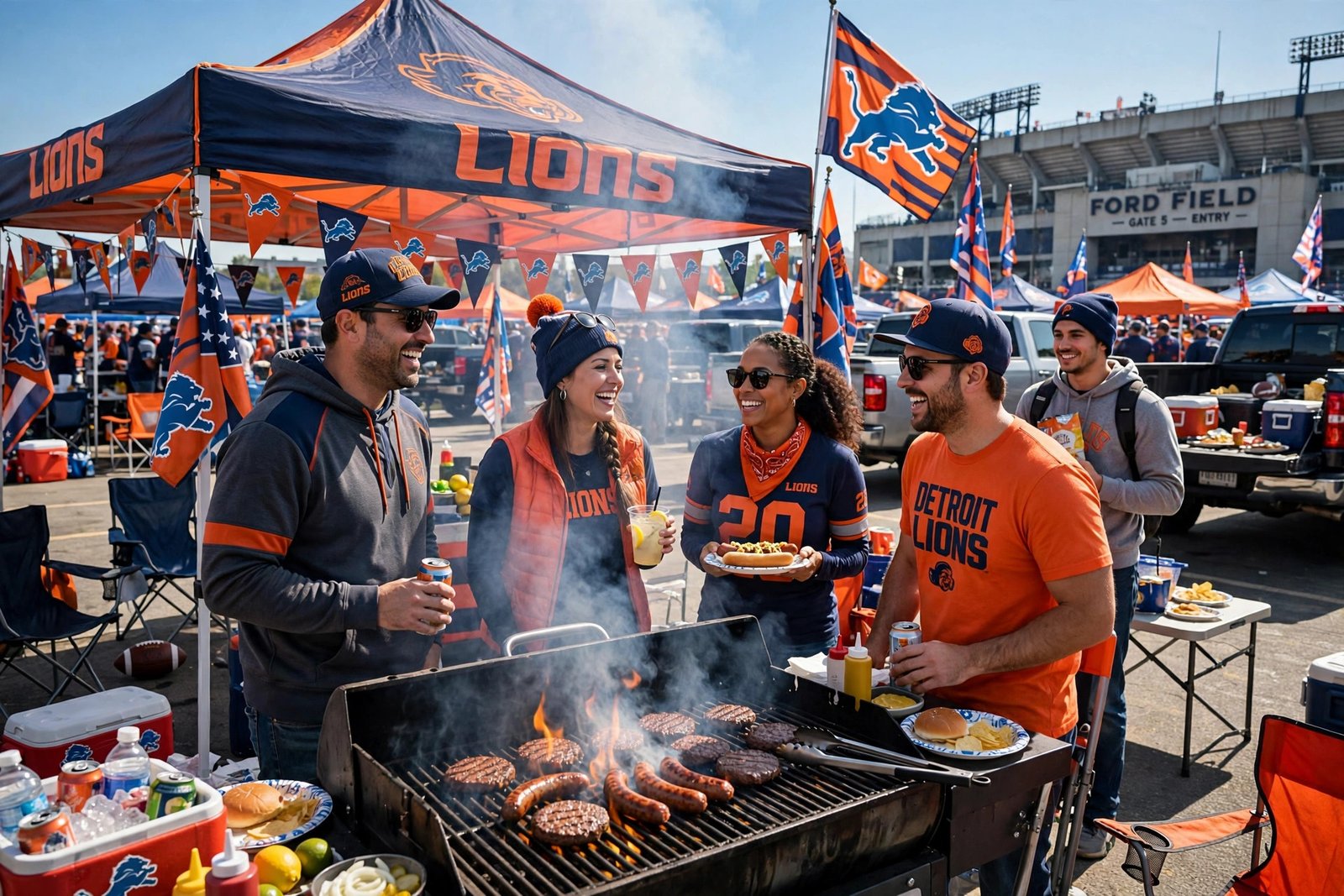
Hours before kickoff, long before the first whistle, the real event is already underway in the parking lot. Grills smoke, coolers open, music plays, and strangers in the same team colors become fast friends over burgers and cornhole. This is tailgating, America’s great pre-game ritual — part picnic, part pep rally, part family reunion — and on autumn Saturdays and Sundays across the country, it is as much a part of football as the game itself.
Tailgating is not an official part of football. No rulebook mentions it, no ticket includes it, and no coach game-plans for it. Yet millions of fans plan their weekends around it, arriving four to six hours before kickoff to claim a patch of asphalt and turn it into a party. Understanding tailgating means understanding something essential about American sports culture: for many fans, the game is the excuse, and the gathering is the point.
Where tailgating began
The roots of tailgating run back to the earliest days of American football. The first documented tailgate-style gathering in the United States took place in 1869, before the first intercollegiate football game between Rutgers and Princeton, when fans arrived in carriages with picnic baskets to eat before kickoff. The tradition grew alongside college football itself, through the Ivy League campuses of Harvard, Yale and Princeton, where alumni gatherings before big games became social events in their own right.
There is also an older, stranger ancestor that historians sometimes cite: the crowds of Washington spectators who packed picnics and traveled to Virginia on July 21, 1861, hoping to watch the First Battle of Bull Run, in what became one of the Civil War’s first battles. That picnic did not end well for the spectators, but the instinct — bring food, gather with friends, watch a spectacle — was the same one that would later attach itself to football.
The modern form of tailgating arrived with the automobile. As cars became widespread in the early twentieth century, and especially as pickup trucks with usable tailgates spread, fans gained a portable table, a portable kitchen and a portable living room all in one vehicle. The tailgate itself — the hinged back of a truck — became the serving counter, the gathering point and eventually the name of the whole tradition. By the 1960s and 1970s, as the NFL grew into a national obsession and college football crowds swelled in the South, tailgating had become a mainstream phenomenon, with universities and stadiums setting aside designated tailgating zones.
What makes a tailgate
Every tailgate is different, but the elements are remarkably consistent across the country. Food comes first: grilled burgers, hot dogs, wings, ribs and regional specialties — bratwurst in Wisconsin, barbecue in Texas and the Carolinas, crab cakes in Maryland. The grill is the centerpiece, and the person working it holds a position of real authority.
Games come second. Cornhole is the undisputed king of tailgate games, followed by ladder toss, football tossing and, in some crowds, beer pong. Music comes third: team anthems, fight songs and playlists blasted from portable speakers, loud enough to hear across the lot but — in the best tailgates — not so loud that conversation dies. Team gear is everywhere: jerseys, face paint, flags, banners and vehicles decorated in team colors. And the social rule is generous: a good tailgate welcomes strangers, shares food with neighbors, and treats rival fans with the kind of hospitality that will be cheerfully withdrawn the moment the game starts.
The scale ranges wildly. At one end is a couple with a cooler and a folding chair. At the other end are the legendary setups of the Southeastern Conference, where fans arrive in RVs, set up satellite televisions, full kitchens and tents the size of small houses, and host dozens of guests. The Grove at Ole Miss, the lots around LSU’s Tiger Stadium, and the sprawling tailgate scene at the University of Georgia are famous enough to draw visitors who never enter the stadium at all.
The South, and everywhere else
Tailgating is often described as a Southern religion, and there is truth in that — the SEC’s Saturday cultures are the most elaborate in the country, built on generations of alumni loyalty and small towns that swell to several times their population on game day. But tailgating belongs to the whole country now. NFL Sundays from Green Bay to Buffalo to Kansas City have their own parking-lot traditions, shaped by cold weather, local food and the particular character of each fan base.
Green Bay’s frozen tundra tailgates, where fans grill bratwurst in subzero temperatures, are as iconic as any Southern spread. Buffalo’s Bills Mafia tailgates are famous for their rowdy generosity — and their charitable fundraising. Kansas City’s Arrowhead lots are renowned for barbecue. Each region has made the ritual its own, which is exactly how folk traditions survive: they adapt to local conditions while keeping their core intact.
More than a party
It is easy to dismiss tailgating as drinking in a parking lot, and some tailgates deserve that description. But the tradition does real social work. For alumni, it is a homecoming that happens every week of the season — a standing appointment with old friends. For families, it is a multigenerational ritual, with grandparents, parents and children sharing the same patch of asphalt year after year. For students, it is an introduction to the community they have joined. For towns built around universities, it is an economic engine, filling hotels, restaurants and shops.
Tailgating also has a charitable streak that surprises outsiders. Many large tailgates raise money for local causes, food banks and scholarships, and fan groups have turned their parking-lot fame into genuine philanthropy. The hospitality of tailgating — the open cooler, the offered burger — is not just politeness. It is the ethic of the tradition: you are a guest until you prove otherwise, and the price of admission is a team color and a good attitude.
How to tailgate well
If you are new to tailgating, a few rules will carry you far. Arrive early — the best spots go first, and the setup is half the fun. Check the stadium’s tailgating rules in advance, since lots differ on grills, alcohol, tent sizes and hours. Bring more food and drink than you think you need, because you will make friends and friends will be hungry. Pack layers, sunscreen and rain gear, since you will be outside for hours. Bring games, but keep them friendly. And plan your exit: know where you parked, keep your keys safe, and never drive after drinking.
For hosts, the golden rule is generosity with boundaries: welcome neighbors, share the grill, and keep the music at a level that invites conversation rather than ending it. For guests, the rule is simpler: bring something — ice, drinks, a side dish, or at minimum a good story — and thank your host. Tailgating runs on reciprocity, and the people who are invited back are the ones who contribute.
You can read more about the tradition’s origins here and in a University of Georgia study of tailgating culture here.
Tailgating in a changing sports world
Tailgating has survived television, streaming, rising ticket prices and the pandemic, which briefly emptied the parking lots and reminded fans how much they missed them. Its future looks secure, but it is evolving. Stadiums are building more organized tailgate villages with food vendors and entertainment. Teams are experimenting with ticketed pre-game experiences. Some fans worry that commercialization will crowd out the homemade, bring-your-own character that made tailgating special.
So far, the homemade version is holding its own. The reason is simple: no vendor can replicate the feeling of a grill your friend is working, a game your family has played for years, and a parking lot full of people who chose to spend their Saturday with you. Football will keep changing — rules, conferences, television deals — but the parking lot, at least, will stay recognizably itself.
So the next time you pass a stadium on a fall Saturday and see the smoke rising from a hundred grills, know that you are looking at something older than the forward pass and more durable than most sports traditions. The game lasts three hours. The tailgate lasts all day. And for millions of Americans, that is exactly the point.
Related reading
For more on American weekend rituals, read Why Farmers Markets Became America’s Favorite Saturday Ritual, The American Front Porch Is Making a Comeback, and Grandma Hobbies Are Booming: Why Gen Z Picked Up Knitting.
Frequently asked questions
What is tailgating? Tailgating is a pre-game social gathering in a stadium parking lot, where fans grill food, play games, listen to music and celebrate their team before kickoff.
Where did tailgating start? The first documented gathering was in 1869 before the Rutgers-Princeton football game, when fans brought picnic baskets. The modern form grew with the automobile in the twentieth century.
Why is it called tailgating? The name comes from the tailgate of a pickup truck, which fans lowered to use as a table for food and drinks.
How early do people arrive for a tailgate? Most tailgates start four to six hours before kickoff, and the most dedicated fans arrive even earlier to claim the best spots.
Do you need a game ticket to tailgate? Usually no — tailgating happens in the parking lot outside the stadium — but rules vary by venue, so check the stadium’s tailgating policy in advance.