
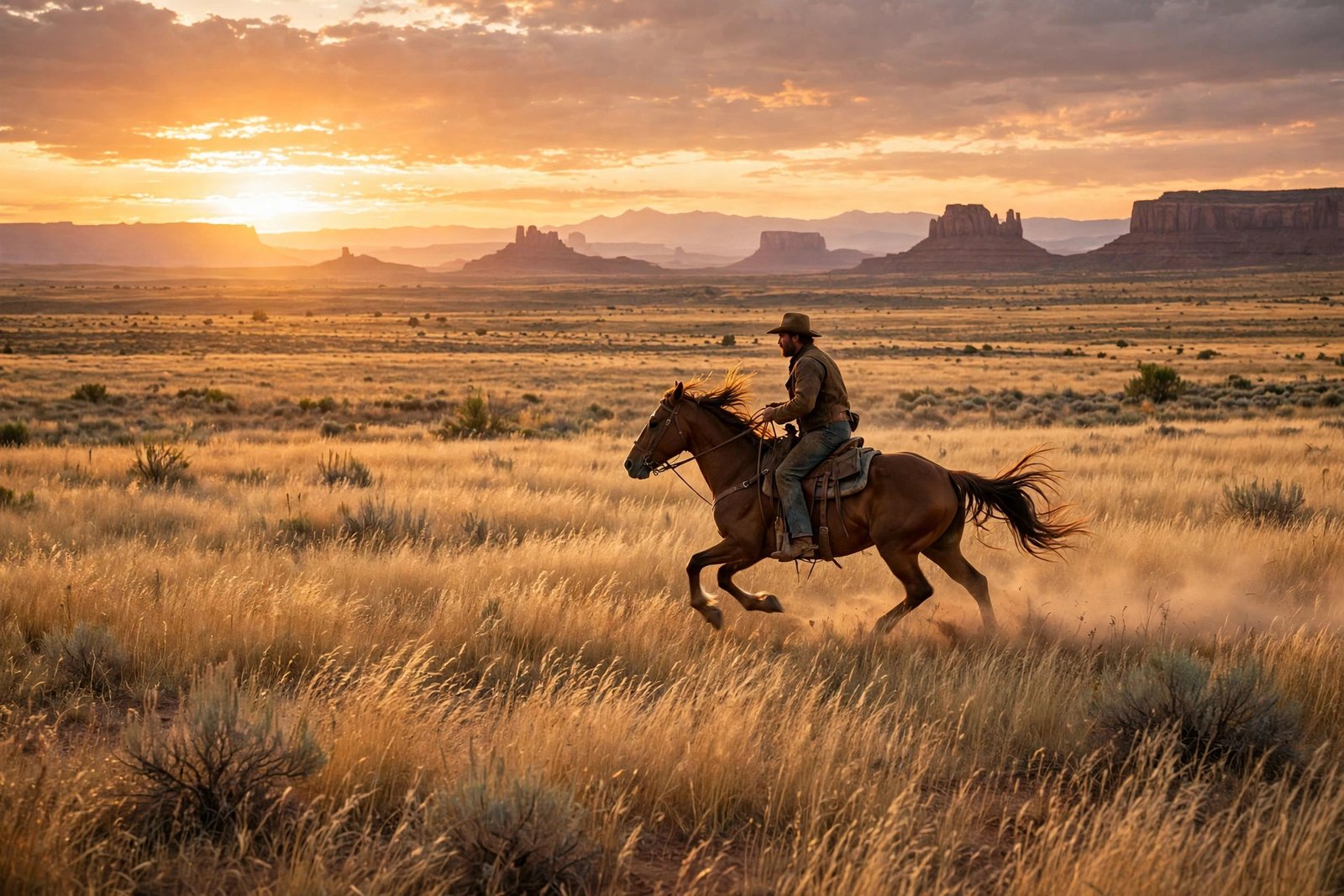
It lasted only about 18 months, lost money from the start, and was obsolete the day it died. And yet the Pony Express remains one of the most famous institutions in American history, the very image of the Wild West: a lone rider, a fast horse, and a leather mail pouch racing the sunset. The real story is even better than the legend, because the real Pony Express was a feat of organization as much as of courage.
The service ran from April 1860 to October 1861, carrying mail between St. Joseph, Missouri, and Sacramento, California, where a steamer completed the journey to San Francisco. In an age when a letter could take nearly a month to cross the continent, the Pony Express promised delivery in 10 days, and it delivered.
The route: nearly 2,000 miles of everything
The Pony Express route ran approximately 1,966 miles across eight modern-day states: Missouri, Kansas, Nebraska, Colorado, Wyoming, Utah, Nevada, and California. Along it stood around 190 stations, spaced roughly 10 to 15 miles apart, each one a tiny outpost of fresh horses, food, and shelter in country that offered none of those things naturally.
The terrain was the whole of the American West in miniature. Riders crossed the Great Plains, climbed the Rockies, crossed the deserts of Nevada, and finished with a run over the Sierra Nevada, including the notorious Donner Pass, before dropping into Sacramento. They did it in every season, including winters that buried the trail in snow and summers that baked it dry.
When the service began, only Missouri and California were officially states. The rest of the route ran through territories, which meant the Pony Express was not just crossing geography. It was stitching a not-yet-finished country together.
How the relay worked
The genius of the Pony Express was that it was a relay, not a ride. No single horse or rider covered the whole route. Instead, each rider covered 75 to 100 miles, swapping horses every 10 to 15 miles at the relay stations, and then handing the mail to the next rider.
The mail itself traveled in a mochila, a Spanish word for knapsack: a leather blanket-like device designed to fit over a horse’s saddle, with four pockets, called cantinas, sewn into each corner. When a rider dismounted from a tired horse, he would swipe the mochila off and throw it onto a fresh horse’s saddle, a transfer that took about two minutes. The mail was wrapped in oiled silk to protect it from weather, and no more than about twenty pounds of mail was carried by a single pony.
Riders traveled at an average pace of around 10 miles per hour, day and night, and the service ran around the clock. The horses were chosen for speed and endurance, and the riders for light weight, stamina, and steady nerves. According to one research summary, rider pay was about $125 a month, a good income for the time, and a fair reflection of the risk involved.
The riders and their oath
The riders were young men, often slight of build, expert horsemen, undaunted by danger, and familiar with the trail they were assigned. Some became famous. William “Buffalo Bill” Cody rode for the service, as did Robert “Pony Bob” Haslam, whose emergency rides of several hundred miles became frontier legend.
Every rider swore an oath. They promised to abstain from bad language and alcohol, to avoid fighting, and to conduct themselves honestly. It was a strange code for the Wild West, and it tells you something about the company behind the service: it wanted its riders to be seen as professionals, not adventurers.
The dangers were real enough. Riders faced rough terrain, harsh weather, insects, scarce water, and the threat of attack. In the winter of 1860 to 1861, conditions were so hard that much of the route was shortened, with most trips confined to the stretch between the telegraph lines then under construction.
The first ride and the fastest ride
The Pony Express launched on April 3, 1860. A young rider set out from St. Joseph, Missouri, while his counterpart left Sacramento heading east. The first westbound delivery concluded in Sacramento on April 13, 1860, exactly 10 days after the initial rider departed, proving the guarantee on the very first attempt.
The service could go even faster when it mattered. In 1861, riders carried a copy of Abraham Lincoln’s inaugural address across the westward route in seven days and 17 hours, a record that showed what the relay could do under pressure. Among the most famous deliveries were that inaugural address and the news of the outbreak of the Civil War.
Before the Pony Express, mail that took the stagecoach route needed about 24 days at best. Cutting that to 10 days, and sometimes less, changed what it meant to be connected across a continent. News that had arrived as history now arrived while it was still news.
Why it died so young
The Pony Express was killed by a wire. Service ended on October 24, 1861, when the transcontinental telegraph was completed, connecting Missouri and California instantly. The last letters reached their destinations in November 1861, and the company behind the service was soon absorbed into the wider story of American communications.
The economics had never worked. The service was expensive to run, with hundreds of horses, scores of riders, and nearly 200 stations to maintain, and it mainly served newspapers and businesses that could afford its rates. The telegraph did not just beat it on speed. It made the entire idea of a horse relay unnecessary.
And yet the Pony Express outlived its own business by more than a century and a half. The National Pony Express Association re-enacts the ride every year, and the route is preserved as the Pony Express National Historic Trail. The reason is simple: the service captured an American ideal that the telegraph never could. It was fast, brave, and human, a young rider alone against the distance, carrying the country’s words in a leather pouch.
Read the history in full: the Pony Express at Britannica, the National Park Service commemoration, and 11 facts about the Pony Express.
A day in the life of a rider
Picture a rider’s day. He wakes before dawn at a home station, eats quickly, and checks his horse and his mochila. The mail is already packed, wrapped in oiled silk against rain and river crossings, tucked into the four pockets of the leather pouch. Then he mounts, and for the next 75 to 100 miles he is alone with the trail.
The rhythm is relentless. Gallop to a relay station, 10 to 15 miles away. Dismount, throw the mochila onto a fresh horse, and go again, the whole transfer taking about two minutes. Repeat that half a dozen times or more, through heat, dust, rain, and snow, until the next rider takes the pouch and the first rider can finally rest.
The trail offered no comforts. Stations were often little more than a cabin and a corral, stocked with horses, grain, and whatever food the keeper could provide. Water was scarce in the desert stretches, and the rider carried what he could. By the end of a run, horse and rider alike were spent, and the rider’s reward was a meal, a bed, and the knowledge that the mail was still moving, carried on by someone else, through the night.
The Pony Express in American memory
Why does a failed business that lasted 18 months still feel like the essence of the West? Part of the answer is that the Pony Express arrived at exactly the right moment in American storytelling. The country was tearing itself apart over slavery, the West was the great national project, and a story about brave young riders connecting a divided nation was exactly the story Americans wanted to hear.
Buffalo Bill Cody did more than anyone to fix the legend in place. His Wild West shows, which toured for decades, turned the Pony Express into a crowd-pleasing spectacle, complete with galloping riders and cheering audiences. The shows blurred the line between history and entertainment, and the legend that emerged was bigger, faster, and more glamorous than the reality.
The reality, though, is impressive enough on its own. A private company built a 1,966-mile relay across a continent with no railroads, no telegraph, and no reliable maps of much of the route, and it kept its 10-day promise again and again. That is an achievement of logistics as much as of courage, and it deserves to be remembered as one.
What the Pony Express teaches us
There is a lesson in the Pony Express for anyone building something ambitious. The service succeeded at its technical goal and failed as a business, because a better technology arrived before it could pay for itself. That pattern repeats throughout American history, from canals replaced by railroads to video stores replaced by streaming.
But the Pony Express also shows that failure is not the same as insignificance. The relay proved that the continent could be crossed quickly and reliably, and it kept the West connected to the East during the months when the Civil War was beginning and the country’s future was uncertain. Its riders carried news that mattered, including the outbreak of war itself, and they did it on horseback, in winter, through country that had no roads.
The telegraph won, as it was always going to. But the telegraph never inspired a legend. Nobody writes songs about a wire. The Pony Express endures because it was human in a way technology never is: a young rider, a tired horse, and a leather pouch, racing the dark.
Frequently asked questions
When did the Pony Express operate?
From April 1860 to October 1861, about 18 months. It ended when the transcontinental telegraph was completed on October 24, 1861.
How long was the Pony Express route?
Approximately 1,966 miles from St. Joseph, Missouri, to Sacramento, California, with around 190 relay stations spaced 10 to 15 miles apart.
How fast was the Pony Express?
It guaranteed delivery in 10 days, less than half the roughly 24 days a stagecoach needed. Its fastest famous run, carrying Lincoln’s inaugural address in 1861, took seven days and 17 hours.
Who were the Pony Express riders?
Young, lightly built, expert horsemen, including future legends like Buffalo Bill Cody and Pony Bob Haslam. They swore an oath to avoid bad language, alcohol, and fighting, and to conduct themselves honestly.
Why did the Pony Express end?
The transcontinental telegraph made it obsolete overnight. Instant communication by wire replaced the 10-day horse relay, and the service shut down for good in late 1861.