
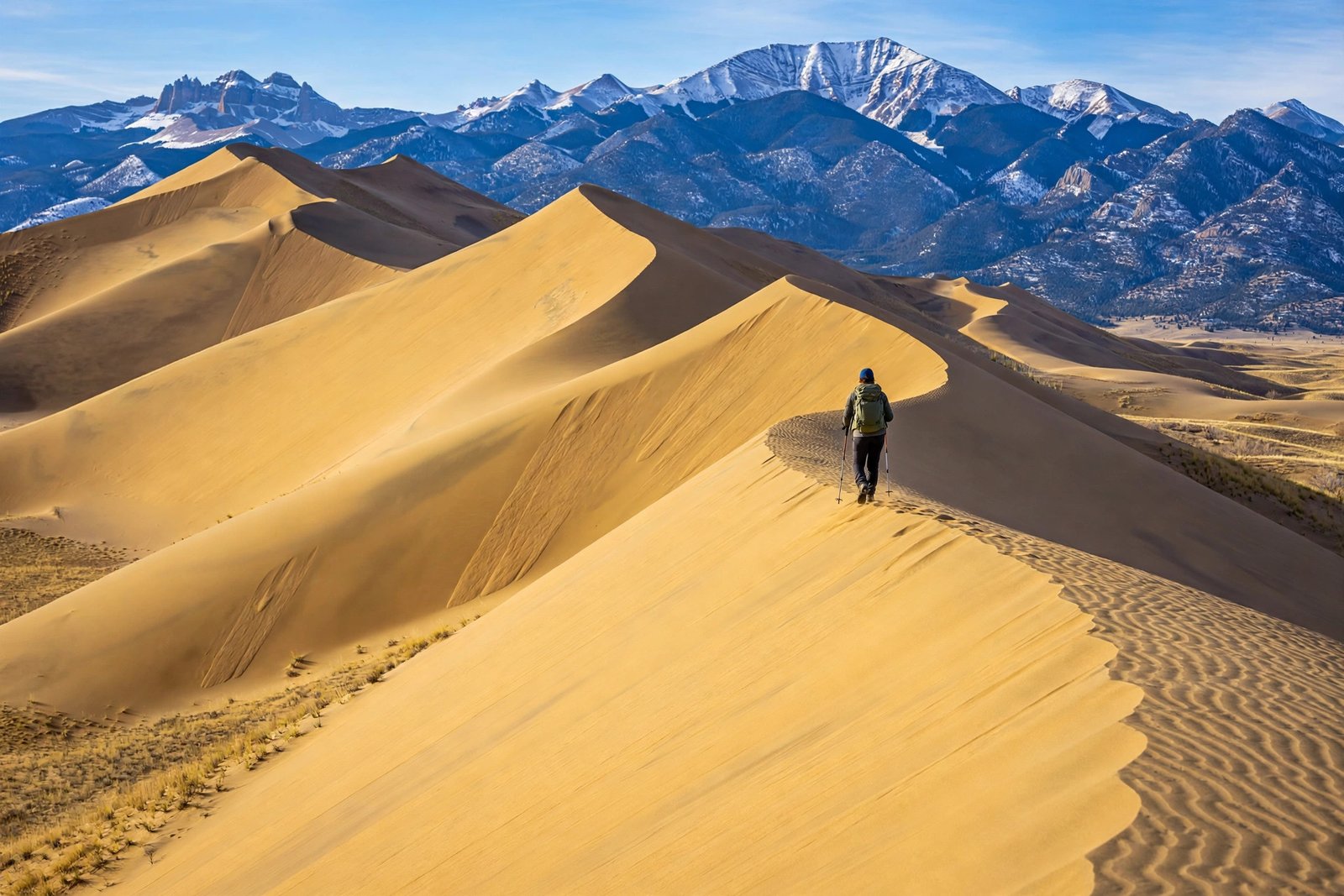
There is a moment on the drive into Great Sand Dunes National Park and Preserve when the landscape stops making sense in the best possible way. You are in southern Colorado, in the wide, high San Luis Valley, with the steep Sangre de Cristo Mountains rising in front of you. Then, right at the foot of those mountains, a sea of sand appears, golden and rippled, with ridges that climb higher than many city skyscrapers. It looks like a desert that wandered into the Rockies and decided to stay, and in a way, that is exactly what happened. This is not a small roadside dune field. It is the tallest dune system in North America, and it rewards visitors who come prepared, take their time, and look beyond the first big climb.
Great Sand Dunes is a park of contrasts, and that is what makes a visit here so memorable. In one day you can wade in a shallow seasonal creek, climb a dune crest with no marked trail to follow, watch the light change across the sand at sunset, and then stand under some of the darkest night skies in the country. You can also learn, quietly and without any special equipment, how wind, water, and mountains have worked together for thousands of years to build and rebuild this place. This guide explains what to see, how to hike the dunes safely, when Medano Creek is most likely to be flowing, how sandboarding works, and what to pack for a high-desert day at altitude.
Where the Park Is and Why the Dunes Are Here
Great Sand Dunes National Park and Preserve sits in south-central Colorado, in the San Luis Valley, northeast of Alamosa. The park protects a dunefield of about 30 square miles, along with grasslands, wetlands, forests, and alpine country in the surrounding preserve. The main visitor area, including the Dunes Parking Area and the visitor center, sits at roughly 8,200 feet above sea level, so even a short walk here feels different from a walk at sea level. Give yourself time to adjust, drink water before you start, and plan a gentler first day if you have just arrived from lower elevation.
The dunes exist because of a fortunate meeting of wind and geography. Sand from the valley floor, carried from the San Juan Mountains and the Sangre de Cristo Mountains, is blown northeast across the San Luis Valley. When that wind meets the mountains, it slows, drops its load, and the sand piles up. Storm winds blowing back from the mountains help push sand back toward the dunefield, recycling it rather than letting it scatter. Over a very long time, that cycle built dunes that the National Park Service describes as the tallest in North America, rising about 750 feet from base to crest. Some recent guides put the tallest dune at about 741 feet, a reminder that dunes shift and that exact measurements can vary with the method used, but the headline does not change: nothing else on the continent comes close.
Hiking the Dunes: High Dune, Star Dune, and No Marked Trails
One of the most freeing things about Great Sand Dunes is that there are no designated trails on the open dunefield. From the main Dunes Parking Area, you simply choose a route and climb. That freedom comes with a responsibility to navigate carefully. Dunes look alike, distances are deceptive, and climbing in soft sand is far harder than walking on a firm path. A ridge that looks close can take much longer than expected, especially in the heat. Start early, note landmarks, keep the parking area and the mountains in mind as reference points, and turn back well before you are exhausted.
For most first-time visitors, High Dune on First Ridge is the classic goal. It is a substantial climb, often described as a rewarding half-day effort rather than a casual stroll, and it offers a sweeping view across the dunefield and back toward the valley. Star Dune and Hidden Dune are the park’s tallest dunes, and reaching them is a much longer, very strenuous undertaking that many visitors save for a second visit or a full day with plenty of water and sun protection. There is no shame in climbing partway, sitting on a crest, and simply watching the light move across the sand. At Great Sand Dunes, the view from halfway up is already extraordinary.
Footwear and timing matter more here than on most hikes. In summer, sand surface temperatures can become extremely hot, even when the air temperature feels mild, so closed shoes are a wise choice and barefoot hiking in the middle of the day is best avoided. Mornings and late afternoons are kinder, both for your feet and for photography, when long shadows carve the ridges into sharp relief. Carry more water than you think you will need, because there is no water on the dunes themselves, and wear a hat, sunscreen, and sunglasses. The high elevation also means the sun is stronger than it feels, and a breeze on a crest can hide how quickly you are dehydrating.
Medano Creek: A Seasonal Beach at the Base of the Dunes
Medano Creek is one of the park’s most delightful surprises. In spring and early summer, snowmelt from the Sangre de Cristo Mountains sends water along the base of the dunes, creating a wide, shallow creek that families treat like a beach. Children build sandcastles at the water’s edge, visitors wade in the cool water, and the contrast of sand, water, and snow-capped peaks in the distance feels almost unreal. In a typical year, the creek reaches the main dunes area in spring, often peaks in late May or early June, and then fades as summer goes on.
The creek is also famous for a rare phenomenon called surge flow. Small dams of sand form on the creek bed, water builds up behind them, and then the dams break, sending a small wave downstream. Visitors sometimes describe the water pulsing in gentle waves, and the National Park Service notes Medano Creek as one of the few places in the world where this can be seen. It is a wonderful detail to watch for, but it is not guaranteed on any given day, and neither is the creek itself. Flow varies enormously from year to year with snowpack and weather. In a dry year, the creek may barely reach the main parking area at all, so always check the park’s current creek report before planning a trip around it.
If the creek is flowing, treat it as a bonus rather than a promise, and enjoy it simply. Wade, splash, and build a sandcastle, but keep an eye on children near moving water, protect your skin, and remember that the sand underfoot can be soft and uneven. If the creek is dry, the park loses none of its drama. The dunes, the mountains, and the night sky are there in every season, and a dry creek bed is itself a reminder of how seasonal and changeable this high-desert landscape really is.
Sandboarding and Sledding: What Works and What Does Not
Sandboarding and sand sledding are signature Great Sand Dunes activities, and they are genuinely thrilling. Sliding down a steep dune face, with the valley spread out below you, is the kind of memory that brings families back year after year. There is one important rule to know before you arrive: the park itself does not rent sandboards or sleds, so you need to arrange equipment in advance from outfitters in nearby communities. Do not count on picking up a board at the visitor center.
Just as important, only equipment designed for sand works reliably on dry dunes. Sandboards and sand sleds have slick bases and use special wax, and that combination is what lets them glide. Ordinary snow sleds, snowboards, and skis generally only slide on very wet sand after rain or snow, and cardboard, plastic saucers, and soft plastic toys tend to dig in and drag. The National Park Service also asks visitors to stay away from vegetated areas when sandboarding, and motorized or mechanized vehicles are not permitted on the dunefield, which is federally designated wilderness. Keep to the open sand, be courteous to hikers climbing the same slope, and check that your run-out area is clear before you go.
Night Skies, Seasons, and Planning Your Visit
Great Sand Dunes is a certified International Dark Sky Park, and that designation is well earned. Far from city lights, at high elevation, the night sky here can be astonishing, with the Milky Way arching over the dunes on a clear, moonless night. The park’s outdoor areas are open around the clock, so a night visit is possible, but it takes planning. Bring a flashlight with a red-light setting if you have one, note your route back to the parking area before it gets fully dark, dress warmly because desert nights cool quickly, and give your eyes time to adjust. Even a short stargazing stop after sunset can be a highlight of the trip.
Each season offers a different version of the park. Spring brings the best chance of Medano Creek and cooler hiking weather, along with larger crowds around the creek. Summer brings long days and warm sand, best enjoyed early and late in the day. Autumn often brings crisp air, thinner crowds, and beautiful light, while winter brings quiet, cold, and a stark beauty all its own, with snow sometimes dusting the dune crests. There is no single best season, only the season that matches what you most want to do, so choose based on creek hopes, heat tolerance, and crowd preferences, and check current conditions before you go.
A few practical notes will make the day smoother. The park does not require a timed-entry reservation, but visitor center hours change seasonally, and entrance fees apply, so check the latest fee and hours information on the National Park Service site before you travel. Camping is available at Pinon Flats Campground, and sites can be in demand in busy seasons, so reserve ahead when you can. Cell service can be unreliable in and around the park, so download maps and information in advance, let someone know your plans if you are heading into the backcountry, and carry a paper map as a backup.
What to Bring and How to Visit Responsibly
Packing well is half the secret to enjoying Great Sand Dunes. Start with water, and then add more water. Add sun protection, a hat, sunglasses, and layers for changing temperatures. Wear sturdy closed shoes that you do not mind filling with sand, and bring a small backpack for snacks, a first-aid kit, and a phone or camera. If you are sandboarding, bring your rented board and wax, and if you are hoping for the creek, bring water shoes and a towel. A change of clothes for the drive home is a small luxury that feels enormous after a day in the sand.
Visiting responsibly here is simple and makes a real difference. Stay on open sand when boarding, avoid trampling vegetation that holds the dunes in place, pack out everything you bring in, and leave the sand as you found it. The dunefield is a living landscape, shaped by wind and water every day, and the plants and animals that survive in this harsh, beautiful place depend on visitors giving them space. If you take nothing but photographs and memories, and leave nothing but footprints that the wind will soon erase, you will have visited in exactly the right spirit.
Frequently Asked Questions
How tall are the tallest dunes at Great Sand Dunes?
The National Park Service describes the park as home to the tallest dunes in North America, rising about 750 feet from base to crest. Some recent guides cite about 741 feet for the tallest dune, reflecting shifting sand and different measurement methods. Either way, the dunes here are far taller than any others on the continent.
When is Medano Creek most likely to be flowing?
In a typical year, Medano Creek reaches the main dunes area in spring and often peaks in late May or early June, then fades through summer. Flow depends heavily on snowpack and weather, and in dry years it may not reach the main parking area at all, so check the current park creek report before you go.
Can I rent a sandboard inside the park?
No, the park does not rent sandboards or sleds. Arrange a rental from an outfitter in a nearby community before you arrive, and use equipment designed for sand, with a slick base and special wax, for the best experience on dry dunes.
Is there a marked trail to the top of the dunes?
There are no designated trails on the open dunefield. Visitors choose their own route from the Dunes Parking Area, with High Dune on First Ridge as a popular goal and Star Dune and Hidden Dune as longer, more strenuous objectives for experienced, well-prepared hikers.
Is Great Sand Dunes good for stargazing?
Yes, the park is a certified International Dark Sky Park. On a clear, moonless night, away from city lights, the Milky Way can be spectacular over the dunes. Bring a flashlight, dress warmly, and note your route back before it gets dark.
For current conditions, creek flow, fees, and visitor center hours, start with the National Park Service: Great Sand Dunes National Park frequently asked questions and a detailed park guide at More Than Just Parks: Great Sand Dunes facts.