
There are places in America that feel like they were designed for quiet discovery, and the Apostle Islands belong near the top of that list. Set on Lake Superior in northern Wisconsin, this chain of islands and mainland shoreline offers sandstone sea caves, sandy beaches, old-growth forests, and a collection of historic lighthouses that rewards travelers willing to slow down. The water is vast, the shoreline is dramatic, and the sense of distance from everyday life is part of the appeal. A trip here is less about checking off attractions in a hurry and more about watching light move across cliffs, listening to waves in a cave, and exploring islands that each have their own character.
The Apostle Islands National Lakeshore is managed by the National Park Service and headquartered in Bayfield, a small lakeside town that serves as the gateway for many visitors. The lakeshore includes 21 islands plus mainland shoreline, a geography that gives travelers a remarkable range of experiences within a single destination. Some visitors come for a day trip by boat, others plan a longer stay with kayaking, hiking, camping, and lighthouse viewing. However the trip is shaped, the lakeshore rewards preparation, respect for the lake, and an understanding that Lake Superior sets the terms.
A Lakeshore Created for Protection
The Apostle Islands National Lakeshore was established on September 26, 1970, under Public Law 91-424. At the time of establishment it included 20 islands, and Long Island was added in 1986, bringing the total to 21 islands plus the mainland shoreline. That history matters because it explains what the lakeshore is designed to protect: not just scenic views, but a whole island landscape, from sandstone cliffs and caves to forests, beaches, and cultural sites that tell the story of human life on Lake Superior.
National Park Service management means the lakeshore is cared for as a public resource, with visitor information, safety guidance, and preservation work that helps the islands remain accessible for future generations. Visitors benefit from that stewardship in practical ways, from trail and campsite information to guidance on boating and kayaking conditions. It also means travelers should plan with the same care they would bring to any national park unit, checking conditions, understanding regulations, and leaving natural and historic features undisturbed.
Bayfield, as headquarters, is a natural starting point. The town offers a harbor, tour options, and a sense of the region’s maritime character, and it is where many visitors first grasp the scale of Lake Superior. Standing on the shore and looking toward the islands, it is easy to understand why this landscape inspired protection. The water stretches to the horizon, the islands appear as low, forested shapes, and the feeling is one of a place that is both accessible and wild.
The Famous Sea Caves
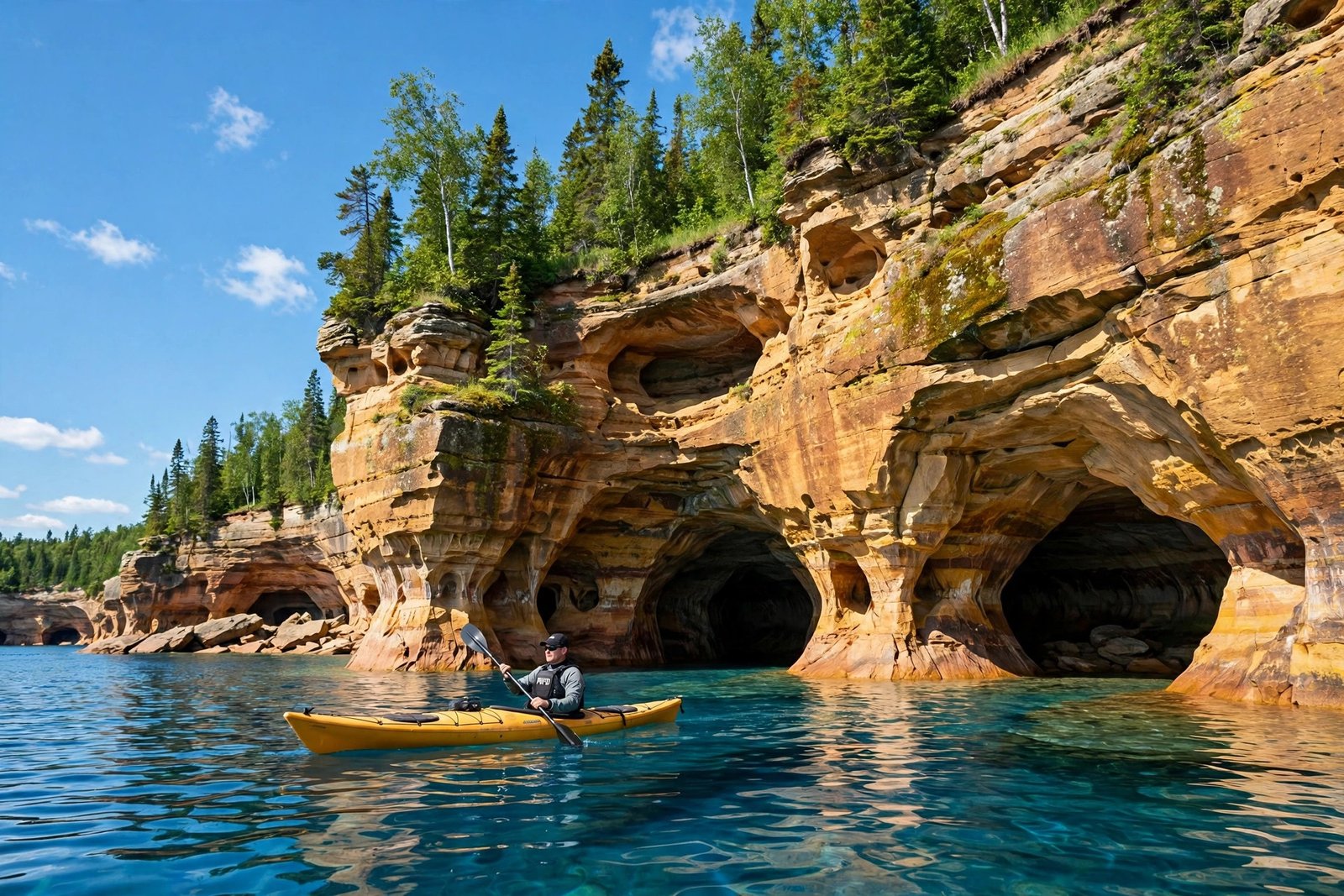
For many visitors, the sea caves are the signature experience of the Apostle Islands. Carved into sandstone by the action of Lake Superior over long periods, the caves form arches, chambers, and narrow passages along cliffs that change character with light and water level. Seen from a boat, the caves reveal layers of color in the rock, from warm browns and reds to paler stone, with water reflecting light into shadowed openings. The effect is both geological and artistic, a reminder that the shoreline is still being shaped by the lake.
The sea caves are best seen by boat at Devils Island, Sand Island, and the mainland near Meyers Beach. Each location offers a different perspective. Devils Island, at the northern edge of the archipelago, is known for its dramatic caves and rugged shoreline. Sand Island offers caves along with a lighthouse and beaches that invite a longer stop. The mainland near Meyers Beach provides access to a well-known stretch of mainland caves, making it a popular choice for visitors who want to experience the caves without traveling far into the island chain. Together, these spots give travelers options depending on time, weather, and interest.
Seeing the caves well depends on conditions. Calm water makes for a smoother boat trip and clearer views, while wind and waves can make the shoreline rougher and less accessible. Tour operators and park staff can help visitors understand current conditions, and travelers should remain flexible, since Lake Superior weather can change quickly. A cave visit that is postponed for safety is not a lost trip. It is part of learning to travel on a great lake, where patience is rewarded with better light, calmer water, and a safer experience.
Kayaking on Lake Superior
Kayaking is one of the most popular ways to experience the Apostle Islands up close, but it is also an activity where preparation matters most. The National Park Service recommends a 16-foot sea kayak for Lake Superior, a recommendation that reflects the lake’s size, waves, and changing conditions. A longer sea kayak handles open water more safely and comfortably than shorter recreational boats, and it allows paddlers to manage wind and chop with greater control.
Equally important is what the Park Service warns against. Small open boats, canoes, and paddle boards are not recommended at the sea caves. The warning is not about discouraging adventure. It is about the specific risks near cliffs and caves, where waves can reflect off rock, conditions can shift suddenly, and a small or open craft offers less stability and protection. Visitors who want to paddle near the caves should choose an appropriate sea kayak, paddle with experienced companions or guides when possible, wear proper safety gear, and check forecasts and lake conditions before launching.
For paddlers who prepare well, kayaking offers a perspective no other mode of travel can match. From the water, the scale of the cliffs becomes clear, the detail of the sandstone comes into focus, and the quiet between waves creates a sense of immersion in the landscape. Paddling also encourages a slower pace, with time to pause, observe wildlife, and appreciate beaches and forests that are less visible from a larger boat. The key is to match ambition to conditions and to treat Lake Superior with the respect it deserves.
Lighthouses, Beaches, and Old-Growth Forests
Beyond the caves, the Apostle Islands are known for having the largest collection of lighthouses in the National Park System. That distinction reflects the islands’ maritime history, when lighthouses guided ships through the waters of Lake Superior and marked dangerous passages between islands. Today, the lighthouses remain as historic structures and as landmarks that help visitors understand how people lived and worked on the lake. Some can be viewed from the water, others can be visited on land, and each adds a chapter to the story of navigation, settlement, and commerce in the region.
Beaches offer a different kind of island experience. Sandy shorelines invite walking, swimming in season, picnicking, and simply resting after a hike or paddle. The beaches vary from island to island, with some offering long, open stretches and others tucked into coves near cliffs and forests. Water temperatures on Lake Superior remain cool even in summer, so swimming is refreshing in a way that surprises first-time visitors, and beach time is often combined with hiking or boating rather than treated as a single activity.
Old-growth forests complete the picture. Walking beneath tall, mature trees on an island feels different from hiking on the mainland, because the forest is bounded by water and shaped by island ecology. Trails lead through shaded woods to overlooks, beaches, and historic sites, and the quiet of the forest contrasts with the openness of the lake. For visitors interested in nature, the combination of forest, shoreline, and water in a single day is one of the lakeshore’s greatest strengths.
Winter Ice Caves and Seasonal Change
The Apostle Islands change dramatically with the seasons, and winter brings one of the most talked-about phenomena in the region: ice caves. When Lake Superior freezes solid enough, winter ice caves form along the mainland shoreline, creating frozen chambers, icicles, and sculpted ice that draw visitors from across the country. The spectacle is beautiful, but access is not guaranteed in any given winter. It depends on ice conditions being safe and stable enough to allow travel, and visitors should never assume access without checking current park information.
That uncertainty is part of the appeal and part of the responsibility of visiting in winter. Ice conditions must be monitored carefully, and park guidance should be followed closely. When conditions do allow access, the experience is unlike any other season, with snow, ice, and frozen water transforming familiar cliffs into a winter landscape. When conditions do not allow access, the lakeshore still offers winter beauty from safe viewpoints, and nearby communities provide warm places to plan a return visit in another season.
Planning a Visit, Including Madeline Island
Planning a visit starts with understanding the geography. With 21 islands plus mainland shoreline, choices matter, and visitors should think about how much time they have, what activities they most want, and how comfortable they are on the water. Day trips by tour boat offer an excellent introduction, especially for first-time visitors who want to see caves and lighthouses without arranging their own boat or kayak. Longer stays allow for camping, hiking, and island-by-island exploration, but they require more planning around transport, supplies, and weather.
One geographic detail surprises many visitors: Madeline Island, the only inhabited island in the archipelago, is not part of the lakeshore. Madeline Island has its own community, services, and character, and it is reached by ferry. Visitors often combine a Madeline Island stop with a lakeshore trip, enjoying the island’s town, beaches, and trails alongside the protected islands. Understanding that distinction helps travelers plan accurately and appreciate both the national lakeshore and the inhabited island for what each offers.
For practical planning, visitors can turn to official guidance on kayaking and other activities, including the Park Service page on kayaking in the Apostle Islands, which explains equipment and safety recommendations. For a sense of the winter phenomenon, reporting on the Wisconsin ice caves opening shows how seasonal conditions shape access. Both resources help travelers set realistic expectations and prepare for a trip that is safe, enjoyable, and respectful of this remarkable lakeshore.
Frequently Asked Questions
Where are the Apostle Islands?
The Apostle Islands National Lakeshore is in northern Wisconsin on Lake Superior, managed by the National Park Service and headquartered in Bayfield.
How many islands are in the lakeshore?
The lakeshore includes 21 islands plus mainland shoreline. It was established with 20 islands in 1970, and Long Island was added in 1986.
Where are the sea caves best seen?
Sea caves are best seen by boat at Devils Island, Sand Island, and the mainland near Meyers Beach.
What kind of kayak is recommended on Lake Superior?
The National Park Service recommends a 16-foot sea kayak. Small open boats, canoes, and paddle boards are not recommended at the sea caves.
Are winter ice caves always accessible?
No. Winter ice caves form when Lake Superior freezes solid enough, and access is not guaranteed. Visitors should check current conditions and park guidance.
Is Madeline Island part of the national lakeshore?
No. Madeline Island is the only inhabited island and is not part of the lakeshore, though it is a popular complementary stop.