
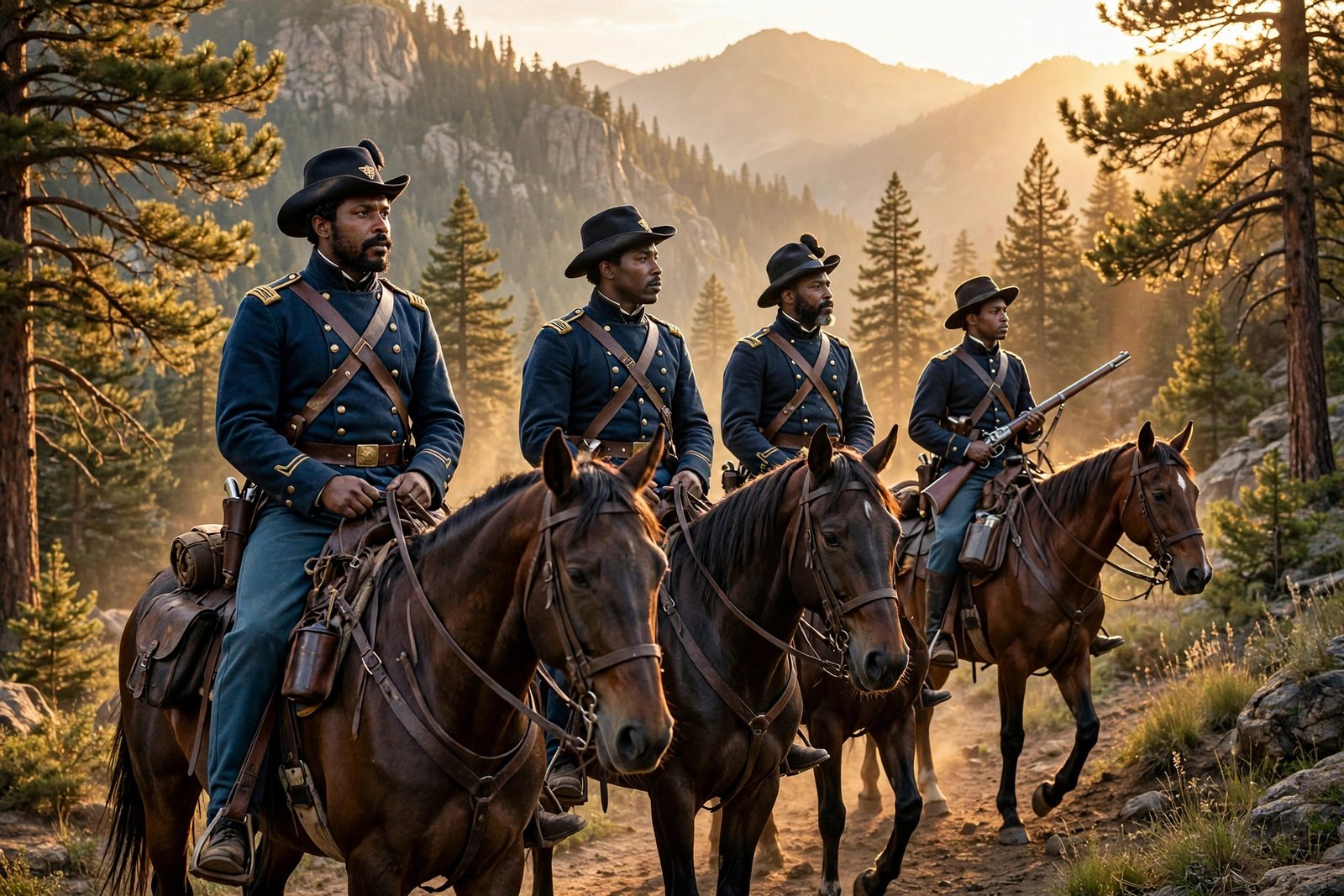
In the early years of America’s national parks, before there were ranger hats, visitor centers, or a National Park Service at all, the men who walked the trails, watched for fire, and kept order in Yosemite and Sequoia wore Army uniforms. Many of them were Buffalo Soldiers, African American soldiers whose service stretched from the western frontier to the Philippines and whose park work laid the groundwork for the ranger profession we know today. Their story is one of duty performed under difficult conditions, skill recognized slowly, and a legacy that is only now getting the attention it deserves.
The Buffalo Soldiers were not a single unit but a group of regiments with a shared nickname and a shared experience. They served in an Army that was segregated, in a country still wrestling with the aftermath of slavery and civil war, and in landscapes that were vast, rugged, and often unforgiving. Understanding who they were means understanding both their achievements and the complicated history they were part of, including frontier campaigns against Native peoples that should be remembered honestly rather than celebrated with easy slogans.
A New Kind of Regiment
In 1866, Congress established all-black regiments in the peacetime Army: the 9th and 10th Cavalry and the 24th and 25th Infantry. Six regiments were created at first, and they were later consolidated into four. For African American men in the years after the Civil War, enlistment offered steady pay, a uniform, and a measure of dignity and opportunity that civilian life often denied them. It also meant service in some of the hardest postings the Army had to offer, far from home and under officers who were, for many years, white.
These regiments became known for discipline, endurance, and low desertion rates, qualities that their commanders noted and that helped the regiments build a reputation within the Army. The soldiers themselves took pride in their units, in their horsemanship in the cavalry regiments, and in the esprit de corps that carried them through long marches, harsh weather, and lonely outposts. Their service was not a footnote to American military history; it was a central thread running through decades of it.
Where the Nickname Came From
The nickname Buffalo Soldiers came from American Plains Indians, and it is linked to the buffalo’s coat and to the fierce fighting reputation of the soldiers. Over time the name became synonymous with all of the African American regiments created in 1866. The soldiers adopted the name with pride, and it stuck, appearing in songs, stories, and eventually in the history books.
Nicknames in military history often tell you how a unit was seen by others, and this one is no exception. It spoke to respect earned in hard encounters on the Plains. It also reminds us that the history of these regiments is entangled with the history of Native peoples, whose lands and ways of life were under intense pressure during the same years. Remembering the Buffalo Soldiers fully means holding both truths at once: the courage and professionalism of Black soldiers serving their country, and the painful cost of the frontier campaigns in which they took part.
Service on the Western Frontier
The Buffalo Soldiers spent years on the western frontier, where their duties were as varied as the landscape. They escorted wagon trains and mail routes, guarded settlements and supply lines, built and repaired forts, and mapped unfamiliar country. Life at a frontier post could be monotonous for weeks and dangerous in an instant, and the work demanded horsemanship, marksmanship, and the ability to keep going when supplies ran short and weather turned.
Their frontier service also placed them in campaigns against Native peoples who were defending their homelands. That part of the story deserves to be told plainly and respectfully, without glorifying language. Native nations were fighting for their families, their territory, and their survival, and the outcome of those conflicts was devastating for them. The Buffalo Soldiers, themselves members of a community that had only recently emerged from slavery, were instruments of a national policy they did not set. Historians today try to tell this story with that complexity intact, honoring the soldiers’ service while refusing to turn conquest into celebration.
The Army’s Park Rangers
One of the most remarkable chapters in Buffalo Soldier history began not on a battlefield but in the mountains of California. Before the National Park Service was created in 1916, the Army administered Yosemite and Sequoia, and soldiers were assigned to protect them. Buffalo Soldiers patrolled those parks in 1899, 1903, and 1904, doing work that looks strikingly like the job of a modern park ranger.
Their duties were practical and demanding. They fought wildfire in steep, smoky terrain, curbing blazes that could sweep through groves of giant sequoias. They curbed poaching and illegal grazing, confronting people who hunted wildlife or drove livestock onto protected land. They built roads and trails, including the wagon road into Sequoia’s Giant Forest and the trail to Mount Whitney, opening the parks to visitors while trying to keep their wonders intact. In an era before ranger stations and radio dispatch, this work was done on foot and on horseback, with tools, patience, and knowledge of the land.
It is fair to say that these soldiers were among America’s first park rangers in everything but title. They wore no ranger badge, but they performed the core tasks of the profession: protection, stewardship, and public access. Visitors who walk the trails they built today are walking through their handiwork, whether or not they know the names of the men who cleared the way.
Captain Charles Young and the Giant Forest
Among the officers associated with this park service, one name stands out. Captain Charles Young led a company in Sequoia in 1903 and was the first African American acting superintendent of a national park. Young was already a trailblazer: a West Point graduate who had overcome considerable obstacles to earn his commission, and an officer respected for his competence and leadership.
During his season in Sequoia, Young’s company worked on the road into the Giant Forest, the grove of enormous sequoias that remains one of the park’s great treasures. The work was grueling, involving grading and clearing through mountain terrain, but it made the grove accessible in a way it had never been before. Young understood that a park people could not reach was a park people could not love, and his leadership connected the ideals of conservation with the practical labor of building access. His example matters not only for what he accomplished in one summer but for what his appointment represented: an African American officer entrusted with the stewardship of one of America’s most treasured landscapes, decades before such appointments became common.
Later Wars and a Long Legacy
The Buffalo Soldiers’ service did not end with the frontier or the parks. They served in the Spanish-American War and in the Philippine-American War from 1899 to 1902, carrying their reputation for steadiness into conflicts far from the American West. In each era, they adapted to new missions, new climates, and new forms of warfare, and in each era they did so while still serving in a segregated Army that limited their opportunities for promotion and recognition.
The regiments endured well into the twentieth century, even as the Army slowly moved toward integration. The last Buffalo Soldier regiment, the 27th Cavalry, was disbanded on December 12, 1951. By then, the nickname had long since passed into American culture, carried by books, songs, and monuments. Today, the National Park Service tells the Buffalo Soldiers’ story as part of the history of the parks themselves, and visitors can learn how these soldiers helped shape the places they love. A look at the Buffalo Soldiers as America’s first park rangers shows how deeply their service is woven into the national park idea.
The legacy of the Buffalo Soldiers lives on in the ranger profession, in the trails and roads of Sequoia and Yosemite, and in the broader story of African Americans in the military. It is a legacy best honored with clear eyes: pride in what these soldiers accomplished, honesty about the conflicts they were drawn into, and gratitude for the parks they helped protect before park rangers even existed.
Visiting the History Today
For visitors, the Buffalo Soldier story is best encountered where it happened. In Sequoia and Yosemite, ranger programs, exhibits, and trail markers connect the landscape to the soldiers who patrolled it, built its early roads, and protected its groves. Walking the Giant Forest or a trail the soldiers helped build gives the history a physical dimension that a textbook cannot. The ground itself is part of the story, and the parks’ interpretive work today makes that connection explicit for a new generation of visitors.
Monuments, museums, and military history sites across the country also carry the story forward, and the National Park Service’s own materials make it accessible to anyone planning a visit or teaching a class. The important thing is that the story is told in full, with the pride, the complexity, and the humanity of the soldiers at its center, so that the men who served as the Army’s first park rangers are remembered as people, not just as a nickname.
Frequently Asked Questions
Who were the Buffalo Soldiers?
They were African American soldiers who served in the all-black regiments established by Congress in 1866, the 9th and 10th Cavalry and the 24th and 25th Infantry, after an initial six regiments were consolidated to four.
How did the Buffalo Soldiers get their name?
The nickname came from American Plains Indians and is linked to the buffalo’s coat and to the soldiers’ fierce fighting reputation. It eventually became synonymous with all of the 1866 African American regiments.
What did Buffalo Soldiers do in the national parks?
Before the National Park Service was created in 1916, the Army administered Yosemite and Sequoia. Buffalo Soldiers patrolled those parks in 1899, 1903, and 1904, fighting wildfire, curbing poaching and illegal grazing, and building roads and trails, including the wagon road into Sequoia’s Giant Forest and the trail to Mount Whitney.
Who was Captain Charles Young?
Captain Charles Young led a company in Sequoia in 1903 and was the first African American acting superintendent of a national park. His company worked on the road into the Giant Forest, making the grove more accessible to visitors.
When did the Buffalo Soldier regiments end?
The last Buffalo Soldier regiment, the 27th Cavalry, was disbanded on December 12, 1951, closing a chapter of service that had begun in 1866.