
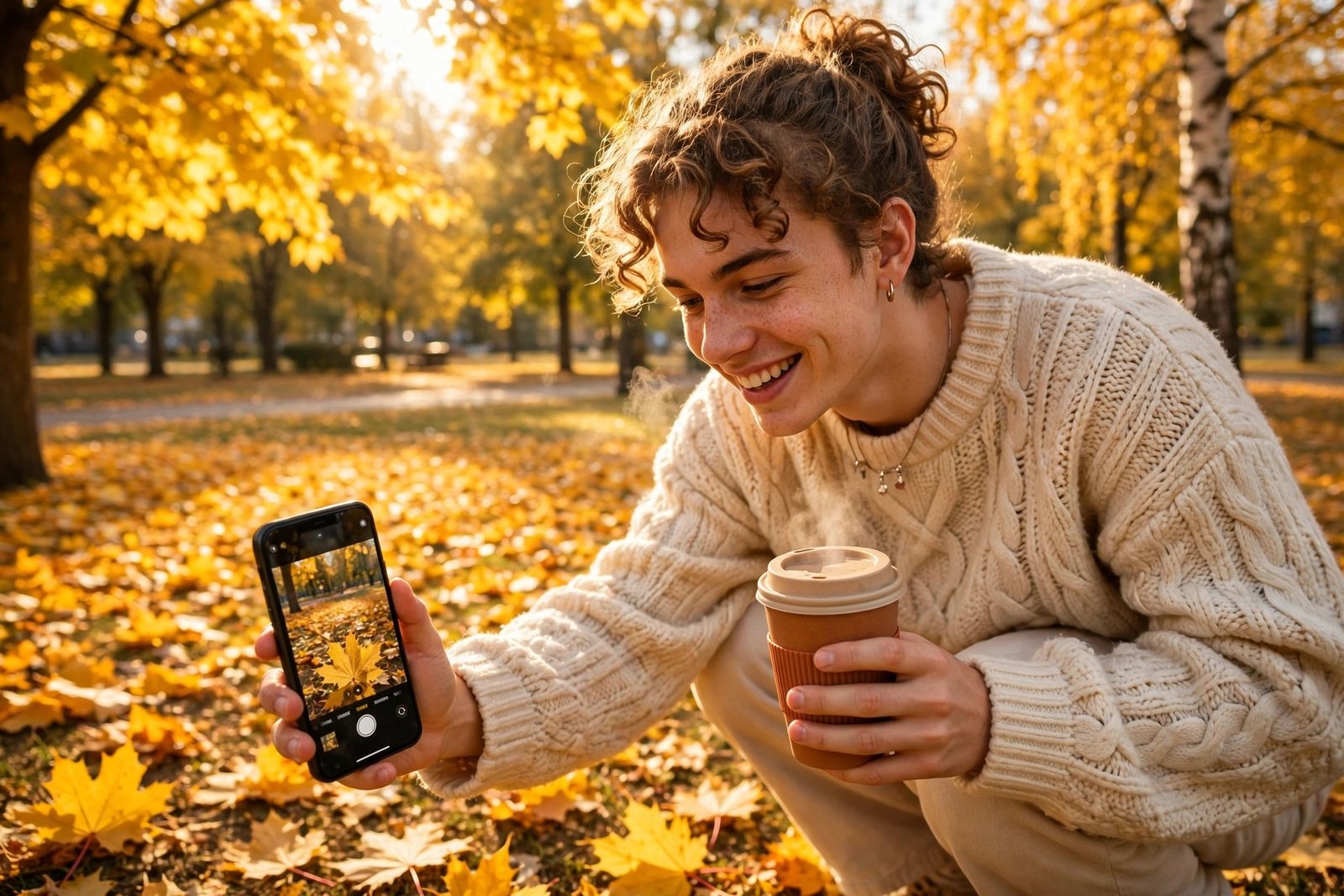
Scroll through TikTok in early November and you will see a familiar pattern: a swipeable set of photos, set to a mellow song, titled something like November dump. No single perfect shot. No long explanation. Just a jumble of cozy sweaters, coffee cups, falling leaves, Halloween costumes, birthday candles, and blurry nights out, all emptied out of someone’s camera roll at once.
That is the November dump, the monthly version of the photo-dump trend that has become one of social media’s most relatable formats. It is not a contest, not a filter, and not a polished highlight reel. It is a low-effort, high-feeling way to say: here is what my month actually looked like. This guide explains what a November dump is, why November inspires so many of them, where the format came from, and how to make one that feels like you.
What exactly is a November dump?
A photo dump is a collection of photos, and sometimes short videos, gathered together in a single post. Rather than one perfectly edited image, it is a low-effort collection that conveys a story or mood. A November dump applies that idea to a single month: the photos you took, saved, or almost deleted during November, posted together near the end of the month or in the first days of December as a recap.
The word dump is doing a lot of work here. It suggests emptying something out all at once, without arranging it into a perfect narrative. In practice, most dumps are lightly curated, even when they look random. Creators pick a mix of moments: a favorite meal, a screenshot of a song, a walk in the park, a friend laughing mid-sentence, a pet asleep in a sunbeam. The order may jump around, the lighting may not match, and a blurry photo may sit right next to a beautiful one. That controlled chaos is the point.
On TikTok, a November dump usually appears as a photo carousel, also called Photo Mode. Viewers swipe through still images at their own pace while a sound plays in the background. On Instagram, the classic version is a feed carousel. The platforms differ, but the feeling is the same: a small, honest album instead of a single showpiece.
Why November? The month practically begs for a recap
November is a hinge month in American life. It starts with Halloween costumes still in camera rolls and ends with Thanksgiving tables, early holiday lights, and the first real cold snaps. In between come fall foliage walks, cozy outfits, Friendsgiving gatherings, football weekends, and the strange, reflective mood that arrives as the year winds down.
That mix makes November unusually photogenic in an everyday way. It is not a vacation month for most people, so the photos are not all beaches and landmarks. They are kitchens, classrooms, offices, dorm rooms, dog parks, and living rooms. A November dump turns that ordinary material into something worth sharing, because the month itself already feels like a collection: a little spooky, a little grateful, a little tired, and a little hopeful about December.
From Instagram carousels to TikTok Photo Mode
Photo dumps first rose to popularity on Instagram, where the carousel feature lets users post multiple images in one post that viewers swipe through. Later, the format migrated to TikTok through Photo Mode, a carousel-style format where users can share multiple still images in a single post, set to audio, and swipe through each image or let the app scroll automatically.
That migration changed the dump in subtle ways. On Instagram, a dump often lives quietly in a feed, discovered by followers browsing profiles. On TikTok, a dump can travel through the For You Page, carried by a sound, a caption, or a relatable first slide. A viewer who has never met the creator can still feel a jolt of recognition from a photo of a rainy commute or a half-eaten slice of pie. The format rewards relatability over production value, which is why it suits ordinary months so well.
Industry guides note that photo dumps grew as a reaction to hyper-perfect feeds. After years of carefully posed photos, heavy filters, and highlight-reel pressure, many users, especially younger users, wanted something that felt more real. A dump says: I did not stage my life for this post. I just lived it, and here are the receipts. Even when the photos are chosen with care, the aesthetic of imperfection signals authenticity.
Why Americans are posting month recaps right now
There are a few reasons month recaps have stuck around instead of fading like many TikTok challenges. First, they are easy. You do not need to learn a dance, film a transition, or buy anything. You already have the photos on your phone. The hardest part is choosing which ones make the cut.
Second, they are social in a gentle way. A dump does not demand a performance. It invites comments like that looks cozy or I was there, and it lets friends see parts of your life that would never justify a standalone post. A screenshot of a text conversation, a photo of a new haircut, a picture of a book you finished: none of those needs its own announcement, but together they tell a story.
Third, dumps work as personal archives. Long after the likes fade, the post remains a time capsule. Many people say they enjoy scrolling back to old dumps to remember what a month felt like, not just what it looked like in posed photos. In that sense, a November dump is as much for the poster as for the audience.
Finally, the format fits how Americans actually use their phones in November. Between holiday travel, family gatherings, and shorter days, people take lots of quick, imperfect photos and have less time for elaborate editing. A dump turns that reality into a feature rather than a flaw.
What goes into a good November dump?
A good dump feels like a month, not like a photo shoot. Aim for variety: people, places, food, weather, work or school moments, small wins, and small messes. A strong set often includes a clear opener that hooks viewers, a few favorites in the middle, and a warm or funny closer that leaves a feeling behind.
Think in scenes rather than poses. A steaming mug on a cold morning tells more about November than a posed portrait in a sweater. A photo of friends mid-laughter beats a stiff group shot. A blurry concert photo, a grocery list, a sunset through a car window, a dog in a leaf pile: these are the images that make viewers feel they were there, or wish they had been.
Creators often mix photo types on purpose. A landscape next to a close-up, a selfie next to a screenshot, a day photo next to a night photo: the contrast keeps swiping interesting. The unifying thread is not color or composition. It is time. Every photo belongs to the same month, and together they add up to a mood.
Captions matter more than people expect. Short, nonchalant captions work best for dumps, because they preserve the low-effort feeling. November dump, november crumbs, little moments from November, or a single emoji can be enough. Some creators add a line about gratitude, growth, or simply surviving the month, especially around Thanksgiving. The caption should tie the images together without over-explaining each one.
How to make a November dump on TikTok, step by step
Making a TikTok dump is simpler than making a video, and you can do it entirely on your phone. Start by opening your camera roll and favoriting your November photos as you find them. Look for the whole month, not just the highlights: early November costumes, mid-month routines, late-month gatherings, and at least one photo that makes you smile for no obvious reason.
Next, open TikTok, tap the plus button, and tap Upload. Select multiple photos from your gallery. TikTok will switch into Photo Mode, its carousel format, and turn your selection into a swipeable post. You can include up to 35 photos in a single carousel, but most good dumps use far fewer. Five to ten slides usually hold attention best, because viewers can finish the set in one sitting without losing interest.
Put your strongest photo first. That first slide is your cover, and it is the only image people see before deciding whether to swipe. A warm, clear, or funny opener works better than a random screenshot. After that, arrange the rest so the energy rises and falls naturally: do not stack all your best photos at the start and leave only filler for the end.
Add a sound that fits the mood. A mellow, nostalgic, or cozy track suits most November dumps, and TikTok lets you add one sound to the post while viewers swipe. You can also add short text to individual slides, such as a date, a place, or a one-line joke, but keep text light. Too much text turns a photo dump into a slideshow presentation.
Finally, write your caption, add a few relevant hashtags such as November dump or photo dump, and check your privacy setting before you post. TikTok photo posts keep your previous post’s privacy setting, so confirm whether you want the dump public, friends-only, or private. Then tap Post, or save it as a draft if you want to sit with the selection overnight and trim it in the morning.
Caption ideas, sounds, and small touches that help
If you are stuck on a caption, keep it short and honest. November in photos. A month of small things. Thankful for these moments. November, you were something.
For music, choose a song you genuinely like rather than chasing the loudest trending sound. A November dump set to a song that means something to you will feel more personal, and viewers respond to that sincerity. If you do want a trending sound, browse TikTok’s sound library and listen to a few options with your photos in mind before committing.
A few small editing choices go a long way. Keep filters consistent but light, so the photos feel like they belong together without looking over-processed. Crop sparingly, and leave some imperfect edges in place. If a photo is meaningful but low quality, keep it anyway: in a dump, meaning beats resolution.
Mistakes to avoid, and a note on privacy
The most common mistake is overstuffing the dump. Thirty-five photos may be allowed, but a dump that long tests patience. If you have more than ten strong photos, consider splitting the month into two posts, such as early November and late November, or keeping the best set and saving the rest for a personal album.
Another mistake is over-editing. Heavy filters, identical poses, and perfectly color-matched slides defeat the purpose. Viewers can tell when a dump has been polished into a brand campaign, and the charm fades. Let a little mess stay in.
Privacy deserves a pause before you post. Dumps often include screenshots, addresses on packages, license plates, children’s faces, school names, or other people’s private moments. Before posting, zoom in on each slide and ask whether you would be comfortable if a stranger saw it. Crop or remove anything sensitive, and check with friends before including photos where they are clearly identifiable, especially if your account is public.
It is also worth remembering that a dump does not have to be public at all. Many people make monthly dumps for close friends, for a private account, or simply as a draft they revisit later. The trend is popular because it is flexible, not because every version must go viral. A November dump that only ten people see can still be a perfect record of your month.
November dump versus other monthly trends
Monthly dumps belong to a larger family of recap formats. Year-end recaps compress twelve months into a highlight reel. Weekly dumps capture a few intense days. Daily vlogs follow a routine in video form. What sets a monthly dump apart is its balance: long enough to show change, short enough to feel intimate.
November dumps also differ from seasonal photo challenges that assign a prompt to each day. Those challenges can be fun, but they require daily discipline. A dump requires only reflection at the end of the month. You live first, curate later, which is why the format appeals to busy people, students, parents, and anyone who loves their camera roll but hates homework-style posting.
Whether your November was cozy, chaotic, quiet, or all three at once, a dump is a simple way to honor it. Open your camera roll, find the photos that feel like November to you, and let them tell the story together.
Frequently asked questions
What is a November dump on TikTok?
A November dump is a photo carousel or slideshow post that collects photos and short clips from November into one post. It is the monthly version of the photo-dump trend, meant to recap the month in an informal, authentic way rather than through a single polished photo.
How many photos should I include in a November dump?
TikTok Photo Mode allows up to 35 photos in one carousel, but most creators find that five to ten slides work best. A tighter set keeps viewers swiping to the end and makes each photo feel chosen rather than leftover.
Do I need a trending sound for a November dump?
No. A sound helps set the mood while viewers swipe, but the photos matter more than the track. Choose a song you like and that fits your month, whether it is trending or simply meaningful to you.
Can I post a November dump on Instagram too?
Yes. Instagram is the original home of the photo dump, and its carousel format works the same way: multiple photos in one post that followers swipe through. Many people post a version on both platforms, sometimes with different photos or captions for each audience.
When should I post my November dump?
Most people post near the end of November or in the first few days of December, while the month is still fresh. There is no strict deadline, though. A late dump still works, especially if you frame it as a belated recap or a look back before the holidays.
Sources: Learn how photo dumps work from Later’s guide to photo dumps, read why the format caught on in this explainer on photo-dump popularity, and follow the step-by-step carousel instructions in Kadenzo’s TikTok Photo Mode guide. Current TikTok trend roundups, including photo-dump formats, are tracked at Async’s TikTok trends page.