
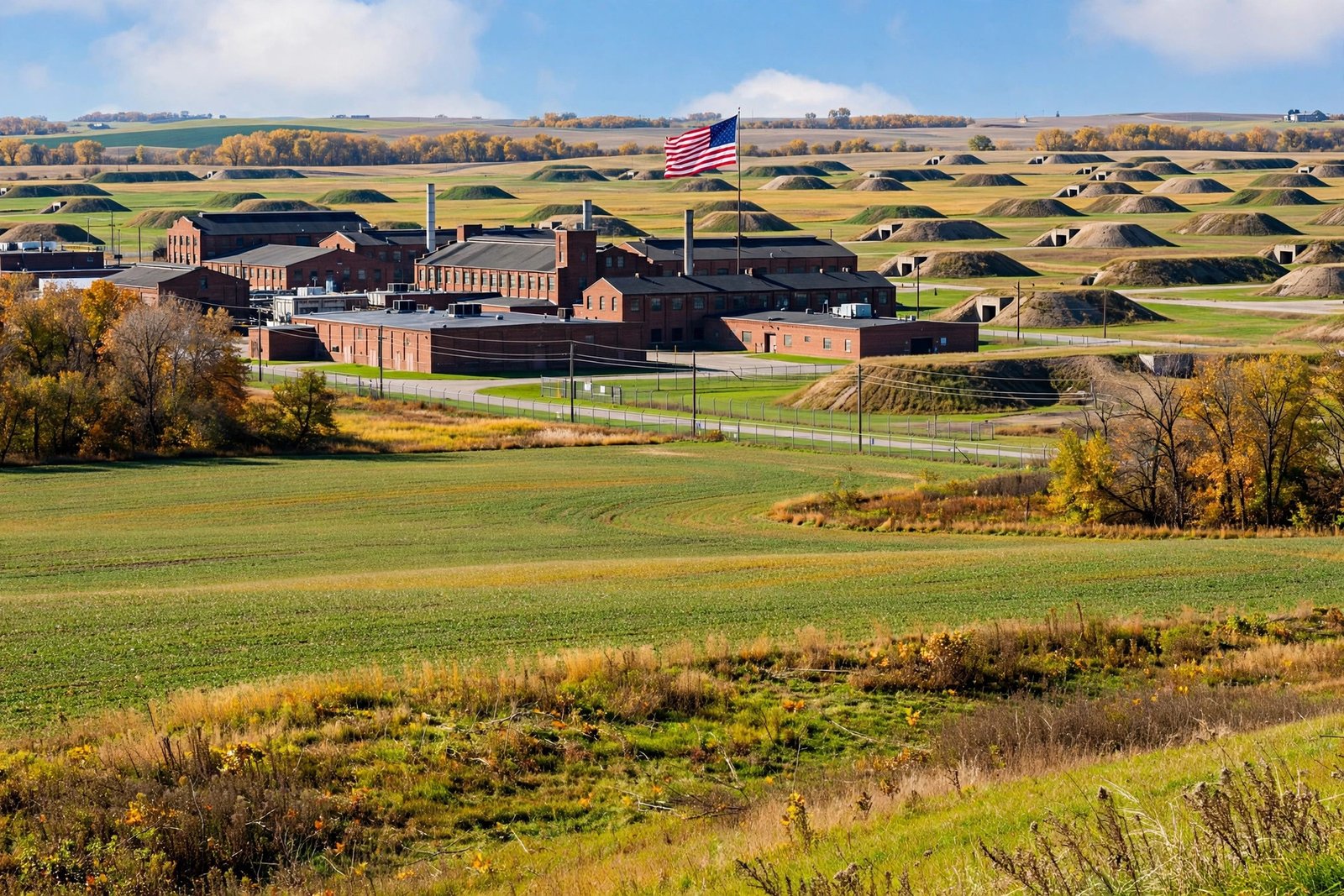
In the small southeastern Iowa town of Middletown, a quiet military installation has become the center of a national debate. The U.S. Army wants to blow up nearly five tons of aging, unstable explosives stored at the Iowa Army Ammunition Plant. Environmental groups sued to stop it. A federal appeals court first paused the plan, then cleared it. And President Donald Trump stepped in, ordering the Army to hold off until the court and Iowa’s incoming governor both agreed. Now, with the court’s green light, the Army says the controlled detonation will go ahead on Wednesday morning, the day before Thanksgiving.
Leave the material where it is, the Army says, and it could explode on its own, without warning and without any of the safety measures a planned blast would include. Detonate it on purpose, critics say, and a cloud of toxic lead dust could drift over homes, farms, the Mississippi River, and parts of Illinois.
What Is Lead Azide, and Why Is It Stored in Iowa?
Lead azide is a powerful primary explosive used to set off larger munitions. A tiny amount of it can trigger the main charge in an artillery shell or warhead, which is why it has been a staple of military ammunition production for generations. It is also volatile. Unlike the explosives it ignites, lead azide is sensitive to friction, shock, and heat, and it becomes more dangerous as it ages.
The Iowa Army Ammunition Plant, in Middletown, Iowa, has been making artillery shells and warheads with live explosives since World War II, operating for more than eight decades. The plant covers roughly 19,000 acres, or nearly 30 square miles, of rural Des Moines County in the southeastern corner of the state, near the border with Illinois and roughly 160 miles southeast of Des Moines. Middletown itself is a town of about 400 people, and the plant’s high-security gates sit right beside its flat cornfields.
For years, the plant stored lead azide in bunkers behind those gates, secured under layers of earth and concrete. Over time, it began to degrade and recrystallize inside its containers, a chemical change that makes it far more sensitive to friction and shock than when it was first stored.
How the Stockpile Became Dangerous
The Army discovered the degraded material in March 2026, during what it described as routine stockpile surveillance. Acting Army Secretary Adam Telle later said the inspection found lead azide housed in bunkers had been degrading. The Army notified the Environmental Protection Agency on or about March 12, according to court filings, and applied for emergency storage permits so the material could stay in place while a treatment plan was developed.
The core problem is simple and frightening: the recrystallized lead azide is now so sensitive that even disturbing the containers could set it off. Moving the drums, repackaging the material, or trucking it somewhere else would all require handling it, and handling it is precisely what the Army says it cannot safely do. The EPA’s own public notice put it plainly, saying the recrystallization had increased the material’s sensitivity to friction and shock, and that disturbing the containers could create an unacceptable risk of an unintentional detonation.
That leaves the Army with a stark choice: leave nearly five tons of unstable explosive in bunkers next to a small town and hope it does not go off by itself, or destroy it where it sits, on its own terms, with safety measures in place. Army officials have said repeatedly that a spontaneous explosion is possible, and that a controlled detonation is the only safe way to treat the material.
The Army’s Plan: A Controlled Detonation
The Army’s plan is to destroy 68 barrels containing about 9,500 pounds of material containing lead azide, in place, through an intentional, controlled detonation at the plant. The material would be blown up where it sits, secured under layers of earth and concrete, rather than moved anywhere. The Army has described the operation as an extensively mitigated, carefully controlled detonation, carried out with monitoring before, during, and after the blast.
The detonation was first scheduled for Friday, November 20. After pushback from the public and elected officials, the Army moved it to Monday, November 23, which Telle described as the latest possible moment before a forecasted temperature drop that would risk further destabilization of the material. The Army then moved it again, to Wednesday, November 25, saying the new date would allow for optimal weather conditions and for all mitigation measures to be put in place.
An Army public advisory announced the planned detonations and instructed residents to vacate the area for most of the day. Officials at the plant have regularly updated Middletown officials about the plan, and the city clerk has shared each update on the city’s Facebook page, so residents have been able to follow the shifting schedule in real time.
The EPA Emergency Permit
None of this could happen without a permit. The plant already holds a federal hazardous waste permit, but the lead azide is stored in a location that permit does not cover. So the EPA’s Region 7 office issued an emergency permit, effective November 13, 2026, authorizing the storage and treatment of the lead azide hazardous waste by in-place, intentional detonation. The permit runs through February 11, 2027.
The EPA said the permit was necessary to address what it called an imminent and substantial endangerment. Its public notice explained that the Army had evaluated a range of alternatives for treating the lead azide, and that the Secretary of the Army had selected in-place, controlled, intentional detonation as the treatment method. The permit requires the Army to collect samples and monitor conditions before, during, and after the detonation, to notify the public before and after the blast, to carry out cleanup, and to file reports.
The Army, in a joint statement with the Department of Health and Human Services and the EPA, said the entire interagency team was working together to ensure the controlled detonation in Middletown would be conducted in the safest fashion possible. Telle later said the Army, Navy, EPA, FBI, CDC, FEMA, and every other agency involved were unanimous in supporting the plan.
The Lawsuit and the Court’s Temporary Halt
Environmental groups did not accept the plan. The Iowa Environmental Council and the Sierra Club sued the EPA over the emergency permit, arguing that the agency had failed to require the permit conditions needed to protect human health and the environment, had approved open detonation without fully considering less dangerous alternatives, and had given the public inadequate notice. Their emergency motion warned that the blast would create a plume of lead dust that could blanket homes and communities, possibly as far away as 100 miles or more.
On Thursday, November 19, the Eighth U.S. Circuit Court of Appeals temporarily stayed the EPA’s emergency permit while it considered the groups’ emergency motion. The court did not say when it would rule. The Army, meanwhile, argued in a Justice Department filing that the court’s order did not stop it from acting under a separate legal authority, an emergency munitions and explosives exemption under federal environmental law.
The dispute drew heavy pushback from concerned Iowans and politicians, who worried about the plume spreading over a vast swath of Iowa, the Mississippi River, and into parts of Illinois.
President Trump’s Pause, Then the Court’s Green Light
The standoff reached the White House on Monday, November 23. President Donald Trump said he had ordered the military not to proceed until the Eighth Circuit agreed the operation could go forward, and he made the decision subject to the incoming governor-elect, Rob Sand, agreeing as well. In a social media post, Trump wrote that the weather was optimal for the planned response and that he felt the proper course was to get rid of the long-term problem, but that he had ordered the military to hold off until the court and Sand approved.
Trump also warned that if Sand or the courts did not agree, the Army would have no choice but not to proceed, and he said he would hold the incoming governor responsible for any death or destruction if the stored munitions exploded on their own. In an earlier post that day, Trump wrote that military officials had advised him that a highly controlled detonation was far safer than letting the situation fester, not knowing when the materials might detonate by themselves.
Hours later, the Eighth Circuit lifted its temporary hold. The three-judge panel found that the EPA had adequately incorporated safeguards to minimize the dispersal of lead dust into the environment and to mitigate the risks of potential exposure, and that the Army had evaluated a full range of alternatives before concluding that in-place, controlled, intentional detonation was the best course of action to prevent an uncontrolled explosion. The court acknowledged the very real risks of the planned detonation, but said the degraded explosives presented a risk of an uncontrolled and unplanned explosion, which would occur without the benefit of the safety measures the permit puts in place.
After the ruling, Telle said on X on Monday evening that the Army would go ahead with the detonation on Wednesday morning as previously scheduled, and that Iowa Governor Kim Reynolds had given her support. Sand, for his part, wrote on X on Monday afternoon that the administration should make the decision based on the information from the people brought in to do the job months ago, who had been on the ground in Middletown for weeks.
What Happens on Detonation Day
The plan is for the detonation to take place on Wednesday morning, November 25, the day before Thanksgiving, based on forecast wind conditions. The Army has said the operation will follow the EPA permit’s safety measures, including sampling and monitoring before, during, and after the blast, public notifications, cleanup, and reporting.
Residents near the plant have been told to vacate the area for most of the day, as they were for the original Friday date.
Whether Wednesday is the final date will depend on the weather and on any further legal action. The environmental groups’ underlying challenge to the permit continues even though the emergency stay has been lifted, and the permit itself remains valid through February 11, 2027, giving the Army a window of months if the Wednesday attempt is delayed again.
The Health Concerns in Middletown and Beyond
At the heart of the dispute is lead. Lead azide contains lead, and lead is a toxic metal with no safe level of exposure, particularly for children. Critics of the plan worry that even a controlled detonation will send lead dust into the air, where wind could carry it over homes, farmland, and waterways. The environmental groups’ filing warned of a plume reaching communities 100 miles or more away, and residents in Iowa and across the river in Illinois have asked how far the dust could travel and how long it would linger in soil and water.
The Army and the EPA say the permit’s safeguards are designed to limit exactly that risk. The permit requires monitoring around the blast, and the Army has said the detonation will take place under weather conditions chosen to keep the plume as contained as possible. The court’s ruling accepted that the EPA had built in safeguards to minimize the dispersal of lead dust and to mitigate exposure risks.
Still, the dispute has exposed a deeper frustration in Middletown and the surrounding towns. Residents learned of the plan only days before the first scheduled blast, after the Army had known about the degrading material since March. A community meeting was held on October 15, but public notice of a specific date did not come until November 15, five days before the first planned detonation. For a town of about 400 people living beside a 19,000-acre munitions plant, that short notice felt like too little, too late.
What Comes Next
If the Wednesday detonation goes ahead, the immediate question will be what the monitoring shows: how much lead was released, where it settled, and whether the cleanup required by the permit is carried out. The EPA permit requires the Army to report its results, and those reports will become part of the public record. The legal fight is not over either: the Eighth Circuit lifted the emergency stay, but the environmental groups’ petition for review of the permit itself is still pending, and it could shape how the military and the EPA handle aging explosives at other installations.
For now, Middletown waits. A town that has lived beside the plant for more than eighty years is about to hear the loudest sound its neighbor has ever made, on the morning before Thanksgiving, while the country watches to see whether a controlled explosion can solve a problem that nobody wanted to face.
For more on the developing story, see the CNN report on the court’s decision, the Wall Street Journal coverage of the Army’s plan, the CNN explainer on what is known so far, the New York Post report on President Trump’s pause, the EPA public notice of the emergency permit, the CNN report on the judge’s temporary halt, and the environmental groups’ emergency court filing.
Related Reading
If you enjoyed this story, you may also like these articles from Famus News:
- US Navy SEALs: History of America’s Elite Warriors
- Women in the US Army: History and Milestones
- Veterans Day: History From Armistice Day 1918
FAQ
Why does the Army want to detonate the explosives instead of moving them?
The lead azide has recrystallized inside its containers, making it sensitive to friction and shock. The Army and the EPA say disturbing the containers to move or repackage the material could set it off, so destroying it in place through a controlled detonation is the safest option.
How much material is involved?
About 9,500 pounds, or nearly five tons, of material containing lead azide, packed into 68 barrels stored at the Iowa Army Ammunition Plant in Middletown, Iowa.
When is the detonation scheduled?
The Army says the controlled detonation will take place on Wednesday morning, November 25, 2026, the day before Thanksgiving, after the court lifted its temporary stay on Monday, November 23. The date has already shifted several times, from Friday, November 20, to Monday, then Tuesday, then Wednesday.
Why did President Trump pause the plan?
On Monday, November 23, Trump ordered the military not to proceed until the Eighth Circuit agreed the operation could go forward and until Iowa Governor-elect Rob Sand agreed as well. Hours later, the court lifted its hold, and the Army said it would proceed on Wednesday.
What are residents worried about?
Lead dust. Critics worry the blast will send toxic lead into the air over homes, farms, the Mississippi River, and parts of Illinois. The EPA permit requires monitoring before, during, and after the detonation, along with cleanup and public reporting, and the court found those safeguards adequate.