
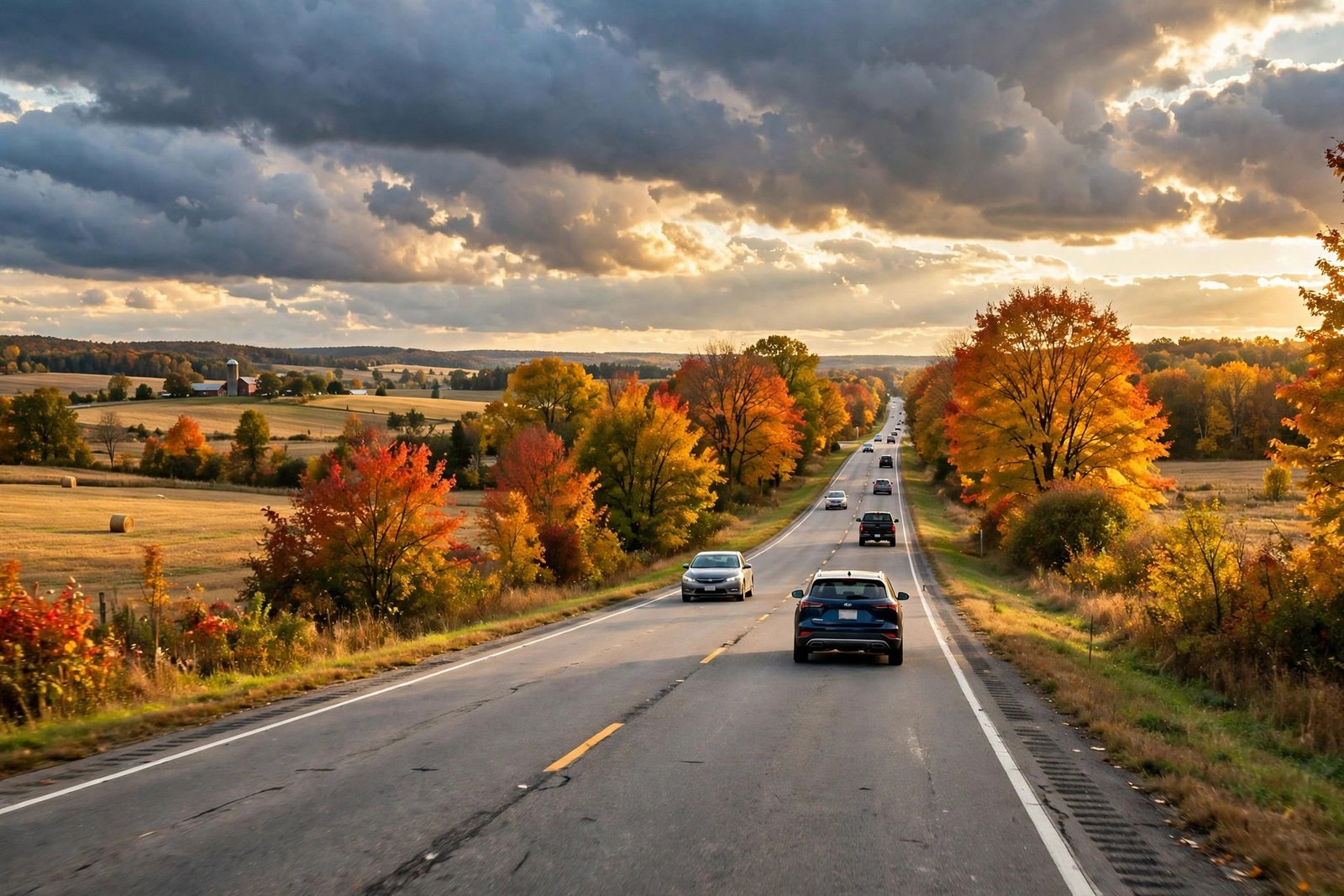
Thanksgiving falls on Thursday, November 26, 2026, and tens of millions of Americans will be on the move in the days around it. AAA projects 81.5 million Americans will travel at least 50 miles from home between Tuesday, November 24 and Monday, November 30, with 72.9 million of them driving. That is a lot of people sharing the roads and the skies during one of the busiest travel weeks of the year, and the weather will have a real say in how smoothly it all goes.
The early outlook for Thanksgiving week is encouraging in one important way: the National Weather Service Climate Prediction Center favors warmer-than-normal temperatures across most of the lower 48 states for the holiday week. No part of the country leans colder than normal. But warmer does not mean dry, and it does not mean trouble-free. The West Coast and the Southeast lean wetter than normal, a powerful storm is set to dump heavy snow on the Sierra Nevada in the days just before the holiday, and a coastal low could bring rain and wind to the busy Interstate 95 corridor. This is a year to check the forecast for your route, not just your destination, and to build extra time into every leg of the trip.
The Big Picture: A Warmer-Than-Normal Holiday Week
The headline for Thanksgiving week, Monday, November 23 through Sunday, November 29, is warmth. The Climate Prediction Center outlook gives the West Coast and the northern Plains and Upper Midwest into Michigan the strongest lean toward above-normal temperatures, with odds of 50 to 60 percent. Texas, the Mid-South and Alabama look close to normal, and nowhere in the lower 48 leans colder than normal. That is good news for anyone who remembers Thanksgivings when an Arctic blast turned a drive home into a white-knuckle trip.
The precipitation picture is more mixed. The West Coast and the Southeast both lean wetter than normal for the holiday week, which fits the active pattern already underway. Pacific storms are lining up to bring rain to Washington, Oregon and California, with mountain snow in the Cascades and the Sierra Nevada. In the Southeast and along the Gulf Coast, moisture from the south raises the chance of rain during the holiday and into the weekend. The Old Farmer’s Almanac, which publishes its own long-range holiday travel map, expects a mix of sunshine, rain and snow across the country, with rain across the Northeast and Atlantic Corridor on Thanksgiving Day, rain and snow around the Lower Lakes, and snow over the Upper Midwest.
Temperatures are also expected to vary by region. The Northeast, Mid-Atlantic, Great Lakes and Northern Tier may see above-average temperatures in the week leading up to Thanksgiving, while colder-than-average conditions are expected across the Southwest, Southern Rockies, Southern Great Plains and Lower Mississippi Valley, according to Fox Weather analysis of National Weather Service data. So the warm lean is real, but it is not uniform, and the South Central part of the country could feel noticeably chillier than the Northeast on the holiday itself.
The Storm Before the Holiday: Sierra Snow and Plains Snow
Before Thanksgiving week even begins, a strong storm system is set to make travel difficult in the West. A plume of Pacific moisture arrives on the West Coast on Wednesday, November 18, bringing heavy mountain snow across the Sierra Nevada, then the Great Basin and the central Rockies on Thursday, November 19. The National Weather Service in Reno issued a Winter Storm Warning for the Sierra and northeastern California above 5,500 feet from 4 AM Wednesday through 4 AM Friday, with a Winter Weather Advisory for the Greater Reno-Carson City-Minden area from Wednesday afternoon through Thursday morning.
The snowfall totals are serious. Heavy snow is possible in the Sierra, with total accumulations of 1 to 2 feet, and around 4 feet above 8,000 feet, with gusts up to 45 mph. Snow levels will lower on Thursday, bringing accumulating snow to western Nevada valleys and foothills and likely affecting commutes. The National Weather Service advice is blunt: complete travel over Sierra passes ahead of the warning start to avoid dangerous travel and major delays, and carry chains if you must go. Conditions ease briefly on Friday, but another storm arrives late in the weekend, keeping an active pattern going into Thanksgiving week.
The Weekend Before Thanksgiving: A Coastal Low on the East Coast
While the West deals with snow, the East Coast faces its own travel headache in the days just before Thanksgiving week. The Weather Channel points to Saturday as the better travel day in the Northeast, before rain associated with a coastal low potentially pushes north on Sunday along the Interstate 95 corridor. AccuWeather says a potential coastal storm could interrupt the Northeast’s extended dry stretch, with rain and wind possible from Saturday through Monday.
The National Weather Service in Mount Holly says confidence is increasing that a coastal low will develop off the Southeast and potentially affect New Jersey, eastern Pennsylvania and Delaware Sunday into Monday. Farther north, the National Weather Service in New York says the storm could produce 1 to 2 inches of rain, with locally higher amounts, late Sunday into early next week. Current guidance gives the region roughly a 30 to 60 percent chance of rain, while some scenarios could produce wind gusts of 30 to 40 mph.
That combination of rain and gusty wind is exactly the kind of weather that slows the I-95 corridor, the busiest highway in the Northeast, and that can delay flights in and out of New York, Philadelphia, Boston and Washington. If you are driving from the Carolinas into the Northeast on Sunday, expect showers and storms spreading north along the corridor, and if you are flying, build in a buffer. There is a silver lining: by Thanksgiving Day itself, the early-week storm system is expected to move away from the East Coast, according to Fox Weather analysis. The system shifts south, bringing the potential for severe storms across Texas, the Gulf Coast and parts of the Southeast, while rain chances increase in those areas during Thanksgiving and the following weekend.
Thanksgiving Week, Day by Day: Tuesday and Wednesday Travel
Tuesday and Wednesday before Thanksgiving are traditionally the busiest travel days of the year, and in 2026 they are also the days when the weather pattern turns active in the West and the South. The National Weather Service Climate Prediction Center identifies a moderate risk of heavy precipitation in northern California and southwestern Oregon on Tuesday and Wednesday, November 24 and 25, along with the potential for heavy mountain snow and strong winds in parts of the West. Federal forecasters also identify a slight risk of heavy precipitation from portions of the Gulf Coast through the Tennessee and Lower Mississippi valleys and the Southeast beginning Tuesday.
For drivers, that means the two busiest road days coincide with the wettest stretch of the week in two big regions. The Tuesday and Wednesday afternoon rushes are already the worst times to be on the road, according to INRIX, the traffic-data company that works with AAA, and adding heavy rain or mountain snow to that mix will slow things further. If you can travel on Tuesday or Wednesday morning instead of the afternoon, do it. If your route crosses the Sierra, the Cascades or the Rockies, check road conditions and chain requirements before you leave, and keep your gas tank at least half full.
Thanksgiving Day Itself: What to Expect Region by Region
On Thanksgiving Day, Thursday, November 26, the national picture looks like a patchwork. The Climate Prediction Center identifies a slight risk of heavy precipitation across much of the Mid-Atlantic and Northeast urban corridor from Thanksgiving Day through Saturday, November 28, along with a slight risk of high winds in the region during the travel period. That does not mean a major Thanksgiving storm is guaranteed, only that the risk is in the forecast, and travelers in the corridor should keep an umbrella handy and allow extra time for the drive to dinner.
In the Northeast and Atlantic Corridor, the Old Farmer’s Almanac predicts rain and mild temperatures on Thanksgiving Day, with New York City and Philadelphia in the rain zone. Snow is possible in parts of the Northeast, the Appalachians, the Lower Lakes and the Upper Midwest during Thanksgiving week, and the Almanac expects flurries and snow showers across the Upper Midwest, including areas around Green Bay, Duluth and Minneapolis. If you are spending the holiday in the Upper Midwest, a white Thanksgiving is a real possibility, and some locations in Montana, Idaho, Wyoming and Colorado have a 70 to 90 percent historical chance of having snow on the ground for the holiday.
In the South, the story is rain rather than snow. The storm system that clears the East Coast early in the week shifts south, bringing the potential for severe storms across Texas, the Gulf Coast and parts of the Southeast, with rain chances increasing during Thanksgiving and the following weekend. Most of the country will be able to travel and celebrate without weather stopping them, but a meaningful minority will hit rain, snow or wind somewhere along the way.
The Return Trip and How to Travel Smart
The return trip deserves as much attention as the outbound leg. AAA’s travel period runs through Monday, November 30, and INRIX expects Sunday and Monday to be the busiest days on the road as people head home. The weather will still be active. The slight risk of heavy precipitation across the Mid-Atlantic and Northeast corridor runs from Thanksgiving Day through Saturday, November 28, and rain chances stay elevated in the Southeast and Gulf Coast through the weekend. Friday is also Black Friday, which puts extra cars on the roads around shopping centers in every city. If you can delay your return to Monday, or travel early in the morning on Sunday, you will likely have an easier trip.
A few simple habits make a big difference when holiday weather turns tricky. First, check the forecast for your whole route, not just your destination. A National Weather Service forecast for your starting point, your destination and the places along the way will tell you more than any single city’s forecast. Second, build slack into your schedule. The busiest driving windows are Tuesday and Wednesday afternoons outbound and Sunday and Monday inbound, and those are exactly the windows when bad weather hurts most. Traveling in the morning, or leaving a day earlier if you can, can turn a stressful trip into a smooth one. For flights, the first flight of the day is the least likely to be delayed by weather that builds through the afternoon.
Third, prepare your car like winter is already here, because in the mountains and the Upper Midwest it is. Check your tires, top off your fluids, and pack a blanket, water, snacks, a phone charger and a flashlight. And never drive through flooded roads. It takes only a small amount of moving water to sweep a car away. Finally, stay flexible and stay kind. Flight crews, gate agents and highway workers are dealing with the same weather you are. Thanksgiving is about getting together, and the best way to make sure that happens is to arrive safely, even if you arrive a little later than planned.
Related reading
AAA Forecasts 81.5 Million Americans Will Travel for Thanksgiving 2026
Thanksgiving Travel 2026: The Best and Worst Days to Drive and Fly
Macy’s Thanksgiving Day Parade 2026: Your Complete Guide
Frequently Asked Questions
Will it snow on Thanksgiving Day 2026?
Snow is possible in parts of the Upper Midwest, the Great Lakes, the Appalachians and the Northeast during Thanksgiving week, and the Old Farmer’s Almanac expects flurries and snow showers around Green Bay, Duluth and Minneapolis. However, the current outlook does not show a major coast-to-coast Thanksgiving snowstorm, and much of the country leans warmer than normal.
What is the best day to travel for Thanksgiving 2026?
Saturday before Thanksgiving looks like the better travel day in the Northeast, before a coastal low brings rain on Sunday. In general, traveling in the morning on Tuesday or Wednesday beats the busy afternoon rushes, and the Weather Channel and AAA both point to early travel as the smartest move.
Will rain affect Thanksgiving travel on the East Coast?
Yes, rain is a real possibility. A coastal low could bring 1 to 2 inches of rain to parts of New Jersey, eastern Pennsylvania, Delaware and the New York area late Sunday into early next week, and the Climate Prediction Center flags a slight risk of heavy precipitation across the Mid-Atlantic and Northeast corridor from Thanksgiving Day through Saturday, November 28.
Is Thanksgiving week 2026 warmer or colder than normal?
Warmer than normal is favored across most of the lower 48 states, with the strongest lean along the West Coast and from the northern Plains into Michigan at 50 to 60 percent odds. Texas, the Mid-South and Alabama look near normal, and no part of the lower 48 leans colder than normal in the Climate Prediction Center outlook.
How many Americans are traveling for Thanksgiving 2026?
AAA projects 81.5 million Americans will travel at least 50 miles from home between Tuesday, November 24 and Monday, November 30, 2026. That includes 72.9 million driving and 5.96 million flying domestically, slightly below last year’s 81.6 million travelers.