
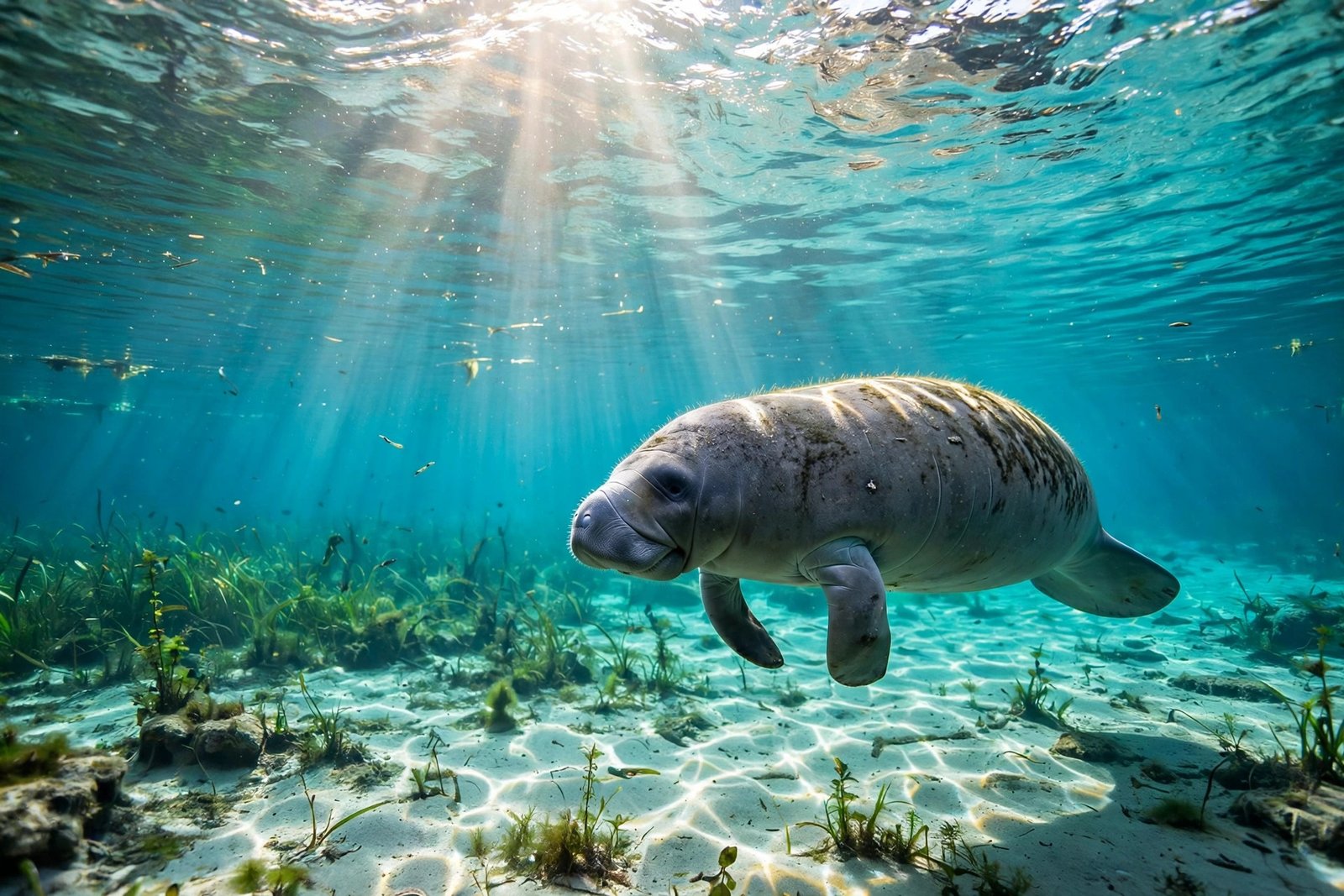
Every winter, one of Florida’s most beloved wild animals makes a quiet, slow-moving journey that most visitors never see coming. As cold fronts sweep down the peninsula and the water in bays and coastal rivers begins to cool, Florida manatees leave their wide summer roaming grounds and gather in a handful of warm-water refuges. The result is one of the most remarkable wildlife spectacles in the United States: hundreds of gentle, gray giants resting nose to tail in crystal-clear springs, so close you can watch them breathe, nurse their calves, and drift through sunlit water from a boardwalk just a few feet away.
Manatee season in Florida runs from November 15 through March 31 at the state’s best-known viewing sites, and the timing is no accident. Those are the months when cold water becomes a genuine threat to these tropical animals, and when the springs that stay warm all year become a matter of survival. If you plan a trip around a cold snap, arrive early, and follow the viewing rules, you can witness something truly special without disturbing the animals you came to see.
Why manatees need warm water in winter
Manatees are tropical marine mammals, and despite their size, they are surprisingly vulnerable to cold. The Florida Fish and Wildlife Conservation Commission explains that manatees need access to water warmer than 68 degrees Fahrenheit to survive prolonged cold weather. When water temperatures drop below that threshold, manatees begin to lose body heat, their digestion can be impaired, and they can develop a serious and sometimes fatal condition known as cold stress.
That simple temperature line explains the whole winter migration. Through the warm months, Florida manatees spread out across rivers, estuaries, bays, and coastal waters, grazing on seagrass and freshwater plants. As fall turns to winter and cold fronts push Gulf and Atlantic water temperatures down, they start moving toward the places that stay warm no matter what the weather does: natural springs and the warm-water outflows near power plants.
Florida’s springs are the stars of this story because their temperature barely changes all year. Water bubbling up from the Floridan Aquifer emerges at around 72 degrees Fahrenheit, day after day, summer and winter alike. For a manatee, a spring run is like a heated room in a cold house. Once the surrounding bay drops below 68 degrees, the choice is obvious, and hundreds of animals may crowd into a single spring system on a cold morning.
The stakes are real. The Commission warns that disturbing manatees at warm-water sites can cause them to leave protected warm water and swim into potentially life-threatening cold water. That is why the viewing rules at springs are strict, and why a respectful distance matters far more here than at an ordinary wildlife viewing spot. You are not just watching animals; you are watching animals that are sheltering for their survival.
When is the best time to see manatees?
The official manatee season at many protected sites runs from November 15 to March 31, and the best viewing days within that window are cold ones. Your best chances for seeing manatees inside of Three Sisters Springs, for example, come on cold winter days when Gulf water temperatures fall below 68 degrees, particularly during cold fronts and high tides.
That can feel counterintuitive to a visitor planning a Florida vacation. A warm, sunny January afternoon might be perfect beach weather, but it is often a poor manatee day, because the animals may have dispersed back into the bay. A chilly morning after a front passes, on the other hand, can bring a remarkable gathering into the springs. If manatees are the main reason for your trip, watch the forecast the way you would for any wildlife outing: look for a cold snap, plan to arrive early in the morning, and accept that wildlife never follows a schedule.
Three Sisters Springs: the crown jewel of manatee season
If you see only one manatee site, make it Three Sisters Springs in Crystal River. Part of the Crystal River National Wildlife Refuge, this spring system sits in Kings Bay on Florida’s Gulf Coast, roughly an hour northwest of Tampa. It is managed in partnership by the City of Crystal River and the U.S. Fish and Wildlife Service, and during manatee season it becomes one of the most important warm-water refuges in the state.
Three Sisters Springs is reached from land by a boardwalk, and during the winter season visitors typically arrive through the Three Sisters Springs Center and take a shuttle to the boardwalk entrance. From the boardwalk, you look down into clear, turquoise spring water where manatees rest in groups, sometimes so close together that they seem to be piled on top of one another. Volunteers and interpretive programs during manatee season help visitors understand what they are seeing and why the rules matter.
The sanctuary rules here are the strictest you will encounter, and they exist for good reason. From November 15 to March 31, the marked manatee sanctuaries are closed to swimming and other water activities, and in-water access can also close when conditions require it. The springs themselves are beautiful in any season, but in winter the priority is the animals. Enjoy them from the boardwalk, keep voices low, and resist any urge to get closer than the rules allow.
Crystal River is also famous as a place where guided, in-water manatee experiences are offered under strict regulations in Kings Bay outside the closed sanctuary areas. If swimming with manatees is on your list, book with a reputable, permitted operator, listen carefully to the passive observation briefing, and understand that the experience is about floating quietly and letting curious manatees approach you, never chasing, touching, or pursuing them. A responsible operator will be clear about all of this before you ever get in the water.
Blue Spring State Park: hundreds of manatees in a spring run
On the other side of the peninsula, Blue Spring State Park near Orange City offers one of the most accessible and rewarding manatee experiences in Florida. Here, hundreds of manatees gather in the spring run during the winter months, where the spring water holds steady at 72 degrees year-round. A boardwalk runs alongside the spring run, giving visitors a long, elevated view of animals resting, swimming slowly, and surfacing to breathe.
Blue Spring has its own remarkable recovery story. In the early 1970s, only a small number of manatees were documented wintering in the spring run. By the 2000s, the winter count had grown into the hundreds, and in recent years the park has recorded record seasonal counts. That growth reflects decades of protection, habitat work, and the simple fact that a safe, warm refuge will be used when it is available.
More places to see manatees in winter
Beyond the two best-known springs, Florida offers several other excellent winter viewing sites, each with its own character. Manatee Lagoon in Riviera Beach, on the Atlantic side, offers a free observation deck overlooking the warm-water outflow of a power plant, along with indoor exhibits and docent tours. Tampa Electric’s Manatee Viewing Center at Apollo Beach, near Tampa, is another free site where visitors watch manatees gather in a warm-water discharge canal, with a boardwalk, viewing platforms, and educational displays.
Lee County Manatee Park near Fort Myers sits along a canal warmed by a neighboring power plant and offers a boardwalk, volunteer naturalists, and kayak rentals on the Orange River. Ellie Schiller Homosassa Springs Wildlife State Park, farther up the Gulf Coast, combines a spring setting with a wildlife park experience and is a good choice for families traveling with children who want more than a single viewing stop.
Viewing rules every visitor should know
The rules for watching manatees are simple, and they all come back to one idea: give the animals space. Manatees are a protected species, and it is illegal to harass, feed, disturb, or harm them. That protection is backed by both state and federal law, and it applies whether you are on a boardwalk, in a kayak, or on a boat.
On land, the rule is straightforward: stay on designated boardwalks and viewing areas, keep a respectful distance, and never try to touch, feed, or call out to manatees. Speak quietly around resting animals, especially in the early morning when many are sleeping in the warm water. A resting manatee may look like a log, but it is conserving energy it needs to get through the winter.
In the water, passive observation is the standard. That means floating quietly, avoiding sudden movements, and never chasing, cornering, or pursuing a manatee. If a manatee approaches you on its own, enjoy the moment without reaching for it. Do not enter marked sanctuaries or closed areas, and never go ashore in a refuge area. Kayakers and paddleboarders should keep a wide berth, paddle slowly near warm-water sites, and avoid blocking the channels manatees use to enter and leave the springs.
If you see an injured, distressed, sick, or dead manatee, do not try to help it yourself. Report it to the Florida Fish and Wildlife Conservation Commission’s Wildlife Alert Hotline at 888-404-FWCC (3922) so trained responders can assist. Your call could save an animal, and it is one of the most useful things any visitor can do.
Boat safety during manatee season
For boaters, manatee season brings an extra responsibility. Manatees are large but surprisingly hard to spot in the water, and collisions with boats are one of the leading causes of manatee injury and death. The Commission’s advice is simple and memorable: go slow and look out below.
Wear polarized sunglasses, which cut glare and make it easier to spot a manatee’s back, snout, or the circular swirl its movement leaves on the surface. Slow down in and near manatee protection zones, and obey every posted speed sign. During colder months, seasonal manatee protection zones require boaters and personal watercraft users to reduce speed in or avoid certain areas, and those zones are marked by waterway signs, with maps available through the Commission.
Keep a sharp lookout in shallow water, near seagrass beds, and around the entrances to springs and warm-water outflows, where manatees congregate. If you see manatees ahead, slow to idle speed or stop and wait for them to pass. Never try to power through a group, and never follow a manatee with your engine running close behind it. A few minutes of patience costs nothing and can prevent a serious injury.
Conservation: a recovery story still in progress
The Florida manatee’s conservation story is one of real progress and unfinished business. The West Indian manatee, which includes the Florida manatee, was downlisted from endangered to threatened under the federal Endangered Species Act in 2017, reflecting decades of population growth and conservation work. A January 2025 proposal from the U.S. Fish and Wildlife Service would keep the Florida manatee listed as threatened while listing the Antillean manatee separately as endangered, recognizing that the two populations face different threats.
Yet threatened does not mean safe. The Marine Mammal Commission notes that Florida manatees continue to be threatened by loss of warm-water habitat, periodic die-offs from red tides and unusually cold weather, and the loss of seagrass that manatees depend on for food. The unusual mortality event declared on Florida’s east coast in 2021, driven largely by starvation linked to seagrass loss, was a stark reminder that population gains can be fragile.
Warm-water habitat is itself under pressure. As older power plants close or change how they operate, some of the artificial warm-water outflows manatees have come to rely on may disappear, making natural springs like Three Sisters and Blue Spring more important than ever. Protecting those springs, restoring seagrass, and keeping boat speed zones enforced are all part of the same job: making sure the winter refuges manatees need are still there when the next cold front arrives.
Planning your manatee season trip
A little planning goes a long way. Pick a cold-front window if you can, arrive early in the morning when manatees are most likely to be gathered in the springs and crowds are thinner, and dress for standing outdoors on a boardwalk in winter weather. Bring binoculars for the far side of a spring run, a camera with a zoom lens if you have one, and polarized sunglasses for any time on the water.
Above all, go with the mindset of a guest in the manatees’ winter home. These animals have traveled a long way to reach warm water, and they will leave again when spring warms the bays. For a few winter months, Florida’s springs belong to them first and to us second. Watching them on those terms is not a lesser experience. It is the whole point.
Frequently asked questions
When is Florida manatee season?
At the best-known protected viewing sites, manatee season runs from November 15 through March 31. Within that window, the best viewing days are cold ones, when water temperatures in bays and rivers drop below 68 degrees Fahrenheit and manatees gather in warm springs. Check each site’s own calendar before traveling, since some viewing centers follow different seasonal dates.
Why do manatees gather at springs in winter?
Manatees need water warmer than 68 degrees Fahrenheit to survive prolonged cold. Florida’s springs hold steady at around 72 degrees all year, so they offer a reliable warm-water refuge when surrounding waters cool. Prolonged exposure to cold water can cause cold stress, a serious and sometimes fatal condition, which is why the springs matter so much in winter.
Can you swim with manatees in winter?
Marked manatee sanctuaries, including the core sanctuary at Three Sisters Springs, are closed to swimming and other water activities from November 15 to March 31. Guided in-water experiences may be available in permitted areas of Kings Bay outside the closed sanctuaries, under strict passive-observation rules. Always book with a permitted operator and follow their briefing exactly.
What should you do if you see an injured manatee?
Do not try to rescue or handle the animal yourself. Call the Florida Fish and Wildlife Conservation Commission’s Wildlife Alert Hotline at 888-404-FWCC (3922) and describe the location and what you observed so trained responders can assist.
Are Florida manatees endangered?
The Florida manatee is currently listed as threatened under the federal Endangered Species Act, after the West Indian manatee was downlisted from endangered in 2017. A 2025 federal proposal would keep the Florida manatee as threatened while listing the Antillean manatee separately as endangered. Manatees remain fully protected, and it is illegal to harass, feed, disturb, or harm them.
For official guidance on viewing manatees responsibly, see the Florida Fish and Wildlife Conservation Commission’s winter wildlife safety reminders, the Three Sisters Springs visitor FAQs, and the Marine Mammal Commission’s Florida manatee species profile.