
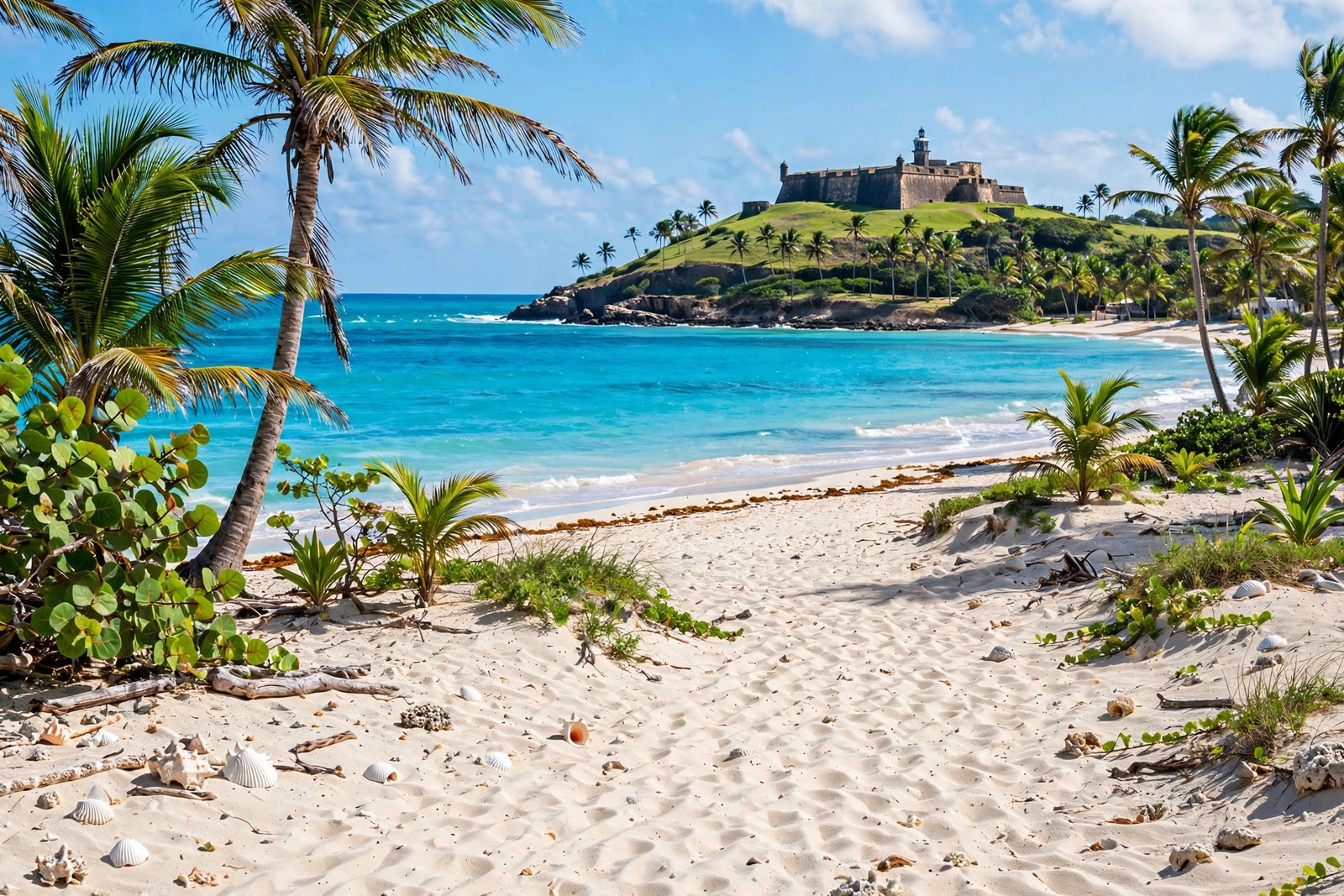
Ask most Americans how many territories the United States has, and you will get a shrug. The answer surprises almost everyone: the United States has five permanently inhabited territories, home to more than 3.6 million people — yet their residents cannot vote for president and have no voting member of Congress.
The five are Puerto Rico, Guam, the U.S. Virgin Islands, American Samoa, and the Commonwealth of the Northern Mariana Islands. They stretch from the Caribbean to the far western Pacific, each with its own history, culture and relationship with Washington. Most residents are U.S. citizens; one territory’s people are U.S. nationals, not citizens.
What Is a U.S. Territory, Anyway?
A U.S. territory is land under American sovereignty that has not been admitted to the Union as a state. Congress draws its authority from the Territory Clause in Article IV, Section 3 of the Constitution, which gives it the power to make all needed rules for territory belonging to the United States — and Congress has used it to set different rules for each territory.
All five inhabited territories are classified as unincorporated, a distinction from early twentieth-century Supreme Court decisions known as the Insular Cases: in an unincorporated territory, the full Constitution does not automatically apply; only fundamental rights are guaranteed. Of the fourteen U.S. territories, only Palmyra Atoll is incorporated.
The territories are also organized or unorganized, depending on whether Congress has passed an organic act setting up their government. Four of the five are organized; American Samoa is unorganized and operates under its own constitution, adopted in 1967. The Interior Department’s Office of Insular Affairs coordinates federal administration of the territories, except for Puerto Rico.
The Five Inhabited Territories at a Glance
According to the 2020 Census, the five inhabited territories had a combined population of about 3.62 million, over 90 percent of it in Puerto Rico alone. The 2020 count: Puerto Rico 3,285,874; Guam 153,836; the U.S. Virgin Islands 87,146; American Samoa 49,710; and the Northern Mariana Islands 47,329. Every territory except Guam lost population between 2010 and 2020, with the U.S. Virgin Islands recording the steepest drop, just over 18 percent.
Two territories sit in the Caribbean, Puerto Rico and the U.S. Virgin Islands; two sit in the North Pacific, Guam and the Northern Mariana Islands; and American Samoa sits in the South Pacific. Their capitals are San Juan, Hagåtña, Charlotte Amalie, Saipan and Pago Pago. Each is self-governing, with a locally elected governor and legislature, and each uses the U.S. dollar.
Puerto Rico: The Giant of the Territories
Puerto Rico is by far the largest U.S. territory, larger in population than more than a dozen states. The island sits in the Caribbean and has been under the American flag since 1898, when the United States acquired it from Spain. Its residents have been U.S. citizens since 1917 and can live and work anywhere in the United States, carry a U.S. passport and serve in the military. What they cannot do, while living on the island, is vote for president or send a voting member to Congress.
Puerto Rico’s political status has been debated for more than a century. The island uses the title commonwealth, but that label carries no legal weight under federal law. Its people have voted in nonbinding referendums on statehood, independence and continued territorial status, with statehood winning a majority in the most recent votes — but those results do not bind Congress, which alone can admit new states.
Guam: America’s Western Pacific Outpost
Guam is the largest and most populous of the Mariana Islands, a U.S. territory in the western Pacific also acquired from Spain in 1898. Congress established its local government and granted U.S. citizenship to the people of Guam through the Organic Act of Guam in 1950. In the 2020 Census, Guam’s population was 153,836, the largest of the four smaller territories and the only one that did not lose population between 2010 and 2020.
Guam sits far closer to Asia than to the continental United States and hosts major American military installations. The capital is Hagåtña, official languages include English and Chamorro, and the economy rests on the military presence, tourism and the island’s role as a western Pacific hub. Guam uses a mirror code tax system.
U.S. Virgin Islands: Purchased from Denmark
The U.S. Virgin Islands are a group of Caribbean islands that the United States purchased from Denmark in 1917. The three main islands are St. Thomas, St. Croix and St. John, and the capital, Charlotte Amalie, sits on St. Thomas. In the 2020 Census, the population was 87,146, a drop of just over 18 percent from 2010 — the largest percentage decline of any territory.
Residents born in the Virgin Islands on or after February 25, 1927, were declared U.S. citizens, and anyone born there after that date is a citizen at birth. The territory is organized under an Organic Act passed by Congress in 1954 and uses a mirror code tax system like Guam.
Northern Mariana Islands: The Newest Citizens
The Commonwealth of the Northern Mariana Islands, usually called the CNMI, entered into a political union with the United States under a covenant approved by Congress in 1976. The covenant did not take full effect until November 4, 1986, when qualifying residents became U.S. citizens; people born in the CNMI on or after that date are citizens at birth.
The CNMI is the smallest territory by population. In the 2020 Census, it counted 47,329 residents, down just over 12 percent from 2010. Saipan is the capital island, and official languages include English, Chamorro and Carolinian. The CNMI is the only inhabited territory whose residents are eligible for Supplemental Security Income, an exception from its covenant.
American Samoa: Nationals, Not Citizens
American Samoa stands apart from every other inhabited territory: people born there are U.S. nationals, not U.S. citizens. That distinction shapes daily life there in ways that surprise mainland Americans.
American Samoa is an unorganized, unincorporated territory in the South Pacific, about 2,600 miles southwest of Hawaii. The United States took control of the eastern Samoan islands in 1899, and the territory operates under its own constitution, adopted in 1967. In the 2020 Census, its population was 49,710, down just over 10 percent from 2010.
U.S. nationals can live and work anywhere in the United States without a visa and carry a U.S. passport. But they cannot vote in any federal or state election or hold elected office that requires citizenship, and becoming a citizen requires naturalization while living in the states. In 2021, the Tenth Circuit Court of Appeals ruled that Congress, not the courts, decides citizenship questions for unincorporated territories, and the Supreme Court declined to hear the case in 2022. The territory also runs its own immigration system, and even U.S. citizens need a valid passport or certified birth certificate to enter.
Citizenship: Who Is a Citizen and Who Is a National?
People born in Puerto Rico, Guam, the U.S. Virgin Islands and the Northern Mariana Islands acquire U.S. citizenship at birth. People born in American Samoa acquire U.S. nationality, but not citizenship, unless they have a U.S. citizen parent. Foreign nationals living in the four citizen territories can apply for citizenship by naturalization.
Citizenship in the territories comes from federal statute, not from the Fourteenth Amendment’s guarantee that anyone born in the United States is a citizen. A U.S. citizen born in San Juan has the same passport and the same right to live and work anywhere in the country as a citizen born in Ohio — but only while living in a state. Move back to the island, and the right to vote for president disappears.
For American Samoans the gap is wider: a national who moves to the mainland still cannot vote until naturalizing, and naturalization requires living outside American Samoa. Some want full citizenship; others argue that birthright citizenship imposed from Washington could undermine the communal land system and traditional matai governance.
Voting and Representation in Congress
No territory has voting representation in Congress. Each inhabited territory elects a single non-voting delegate to the U.S. House of Representatives, except Puerto Rico, which elects a resident commissioner to a four-year term rather than the standard two-year term. These representatives can introduce legislation, serve on committees and vote in committee, but they cannot vote on the final passage of a bill. The territories have no representation in the Senate at all.
Territory residents also cannot vote in presidential elections. The Constitution allocates electoral votes only to states, and the 23rd Amendment extended that right to the District of Columbia specifically, not to the territories. Territory residents can, however, vote in presidential primaries and help choose who appears on the general election ballot.
The result is a persistent paradox: more than 3.6 million Americans live under the flag, pay federal payroll taxes and serve in the military at high rates, yet have no vote for the commander in chief or in the Congress that writes their laws.
Taxes: What Residents Pay and What They Don’t
The tax rules are the part of territorial life most people get wrong. Bona fide residents are generally exempt from federal income tax on money earned within their territory — but payroll taxes and self-employment taxes still apply, and income earned outside the territory remains fully taxable by the IRS.
The core rule: if you qualify as a bona fide resident of a U.S. territory for the entire tax year, income you earn from sources within that territory is not included in your federal gross income. Instead, you pay income tax to your territorial government. Qualifying requires three tests: physical presence in the territory for at least 183 days during the tax year, a tax home in the territory, and no closer connection to the mainland or a foreign country. Federal employees are an exception — their wages are not excluded even if they are bona fide residents of Puerto Rico or American Samoa.
Workers in all five territories pay Social Security and Medicare taxes under the same rules as on the mainland, and self-employed residents earning $400 or more owe self-employment tax. Guam, the U.S. Virgin Islands and the Northern Mariana Islands use mirror code systems that copy the federal tax code as local law, while Puerto Rico and American Samoa have their own tax codes. Living in a territory is not living tax-free — it is living under a different tax system.
Everyday Life: Travel, Passports and the Rest
For mainland Americans, visiting most of the territories feels like domestic travel: U.S. citizens do not need a passport for Puerto Rico, the U.S. Virgin Islands, Guam or the Northern Mariana Islands. American Samoa is the exception: because it controls its own immigration system, all visitors, including U.S. citizens, must carry a valid passport or certified birth certificate to enter.
Life in the territories runs on American systems with local color. The dollar is the currency everywhere, and English is an official language in all five, alongside Spanish in Puerto Rico, Chamorro in Guam and the Northern Mariana Islands, and Samoan in American Samoa. The territories drive on the right and follow federal law in most areas, while running their own local governments, schools and courts.
What is easy to miss from the mainland is how different daily life can be: the territories are islands, far from the continental United States, and shipping costs, storm exposure and distance shape everything from grocery prices to medical care. Federal benefits work differently, too: the Supreme Court ruled in 2022, in United States v. Vaello Madero, that Congress is not required to extend Supplemental Security Income to Puerto Rico’s residents.
Frequently Asked Questions
How many inhabited U.S. territories are there?
Five U.S. territories are permanently inhabited: Puerto Rico, Guam, the U.S. Virgin Islands, American Samoa, and the Commonwealth of the Northern Mariana Islands. The United States also administers nine uninhabited territories, mostly small Pacific islands and atolls.
Are people born in U.S. territories American citizens?
People born in Puerto Rico, Guam, the U.S. Virgin Islands and the Northern Mariana Islands are U.S. citizens at birth. People born in American Samoa are U.S. nationals, not citizens, unless they have a U.S. citizen parent, and they cannot vote until they naturalize.
Can residents of U.S. territories vote for president?
No. Territory residents cannot vote in presidential general elections, because the Constitution allocates electoral votes only to states and the District of Columbia. They can vote in presidential primaries, and moving to a state restores the right.
Do territories have representation in Congress?
Each territory sends one non-voting delegate to the U.S. House, except Puerto Rico, which sends a resident commissioner serving a four-year term. They can introduce bills and vote in committee, but cannot vote on final passage. No territory has a senator.
Do people in U.S. territories pay federal taxes?
Bona fide residents generally do not pay federal income tax on income earned within their territory, but they do pay Social Security and Medicare taxes like mainland workers, and income earned outside the territory is fully taxable by the IRS.
Do you need a passport to visit a U.S. territory?
U.S. citizens do not need a passport to visit Puerto Rico, the U.S. Virgin Islands, Guam or the Northern Mariana Islands. American Samoa is the exception: even U.S. citizens need a valid passport or certified birth certificate to enter.
Related reading
- USA Facts by the Numbers
- The American Flag: Stars, Stripes, Meaning and History
- USA Time Zones Explained
Sources: U.S. Census Bureau, 2020 Population of U.S. Island Areas Just Under 339,000 (census.gov); U.S. Census Bureau, 2020 Census Population Counts for the Northern Mariana Islands (census.gov); Territories of the United States (wikipedia.org); US Territories List: Citizenship, Rights, and Status (legalclarity.org); Do US Territories Pay Federal and Local Taxes? (legalclarity.org).