
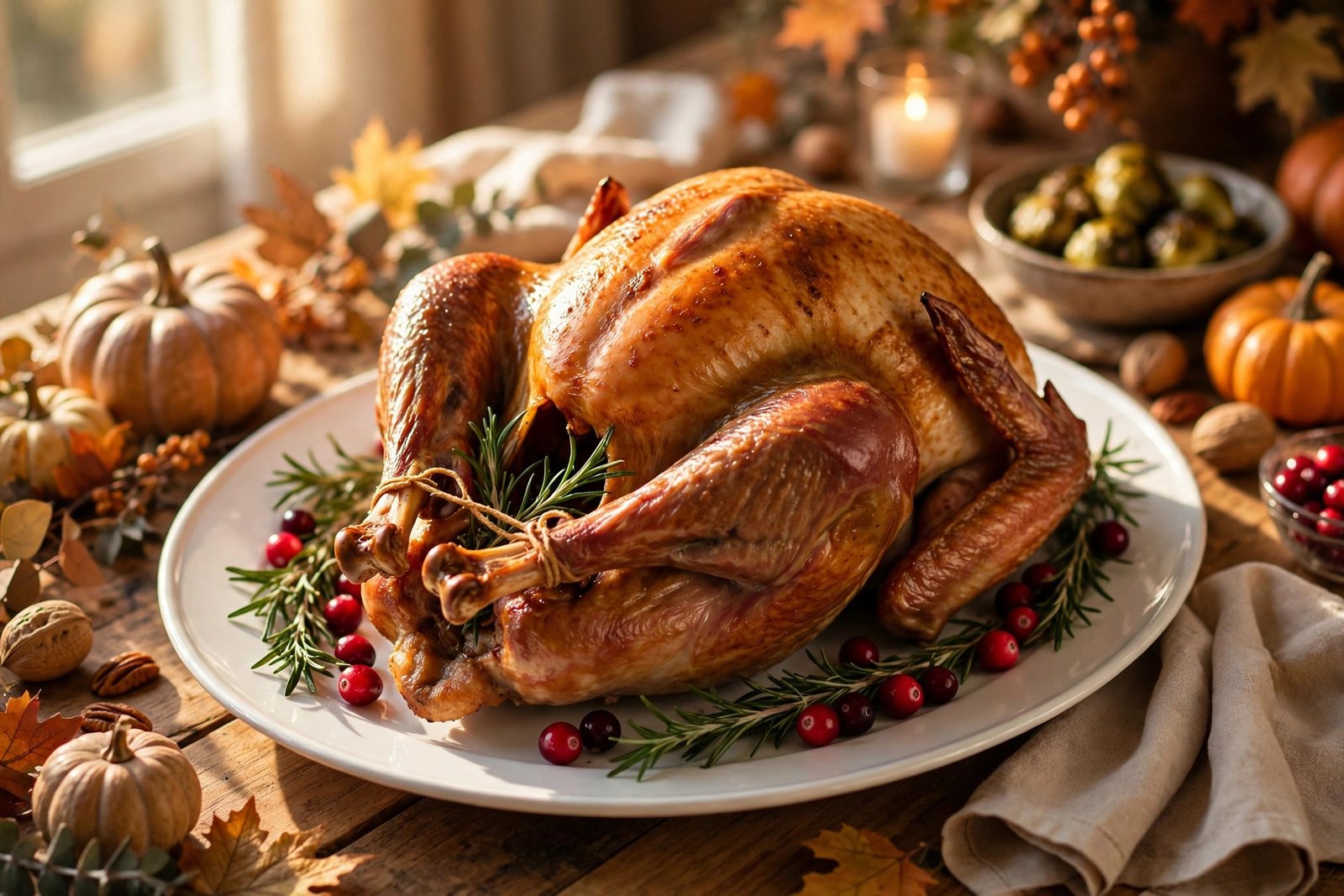
Thanksgiving is less than three weeks away, and for millions of American families the first big question of the holiday season is the same one it is every year: how much is the turkey going to cost? Thanksgiving falls on Thursday, November 26, in 2026, and this year the answer is a little harder to swallow than it was last fall. Turkey prices are up — noticeably, in some parts of the country — and the bird at the center of the table is doing most of the work of pushing the whole holiday dinner bill higher.
How Much Does a Turkey Cost in 2026?
The most useful number for shoppers comes from the U.S. Department of Agriculture, which tracks the prices grocery stores advertise in their weekly circulars. In its report covering ads running through November 5, the USDA found conventional frozen whole turkeys advertised at a national average of about $1.26 a pound across more than 3,000 stores. A year earlier, at the same point in the season, the same birds were advertised at roughly $1.03 to $1.09 a pound. That is an increase of roughly 20 percent in a single year.
The USDA’s follow-up report, released November 6 and covering ads running through November 12, showed the advertised average easing slightly to $1.19 a pound for frozen conventional whole turkeys under 16 pounds, and $1.18 a pound for birds over 16 pounds. A year earlier those same categories averaged 93 cents and 92 cents a pound. In other words, no matter which week you check, the advertised price is running about 26 cents a pound higher than last fall.
What does that mean at the checkout? A typical 16-pound frozen turkey at $1.19 a pound costs about $19. A 15-pound bird at the prices seen in early October would run about $19.35. That is a real increase — last year the same bird would have cost roughly $15.50 — but it is still a modest bill for the centerpiece of a meal that feeds a crowd. Many stores will cut turkey prices much further as Thanksgiving approaches, sometimes to well under a dollar a pound, especially for shoppers who spend a minimum amount or use a store loyalty card.
Other ways of measuring the price tell a similar story. An analysis by Alabama Cooperative Extension, based on the USDA’s grocery store reports for the first three full weeks of October, found that a turkey hen under 16 pounds averaged $1.29 a pound in 2026, up from $1.04 a pound in 2025 — an increase of about 25 percent. The same analysis put the cost of a traditional Thanksgiving meal basket at $75.08 in 2026, up from $68.38 in 2025, an increase of about 10 percent. The turkey, in other words, rose faster than the rest of the meal.
Why Turkey Prices Went Up This Year
There is no single reason turkey costs more this fall. Like most food prices, it is the result of several pressures arriving at once, and the turkey industry has had a particularly bumpy couple of years.
The biggest factor is supply. The USDA said in October that wholesale turkey prices are running high because of tight supplies of whole birds, and it forecast frozen hens at about 175 cents a pound wholesale this fall, a little above last fall’s 172 cents. When fewer birds are available, processors and retailers have less room to discount, and the price shoppers see creeps up. The industry has been working through the after-effects of avian influenza outbreaks that reduced flocks in recent years, and rebuilding a turkey flock takes time — a bird raised for Thanksgiving is the product of months of planning, not something a farm can produce on short notice.
Feed and labor costs are the second pressure. Turkeys eat corn and soybeans, and the farmers who raise them pay for fuel, labor, packaging, and transport, all of which remain more expensive than they were a few years ago. Those costs do not show up on a price tag all at once, but they accumulate through the supply chain, from the farm to the processing plant to the grocery store’s meat case.
There is also a timing effect that makes early-November prices look worse than they are. The cheapest turkey prices of the year almost always appear in the final ten days before Thanksgiving, when supermarkets use the bird as a loss leader to get shoppers through the door. The prices measured in late October and early November are real, but they are not the final prices.
What the Whole Thanksgiving Dinner Costs in 2026
The turkey is only part of the bill. The American Farm Bureau Federation has priced a classic Thanksgiving dinner for ten people every year since 1986, using the same menu — turkey, stuffing, sweet potatoes, rolls with butter, peas, cranberries, a vegetable tray, pumpkin pie with whipped cream, and coffee and milk — so that one year can be compared fairly with the next. Its 2025 survey put the classic dinner at $55.18, or about $5.52 per person, down 5 percent from $58.08 in 2024 and well below the record $64.05 set in 2022.
The Farm Bureau’s 2026 survey had not been released as of early November — its volunteer shoppers check prices in the first week of November, and results are usually published the week before Thanksgiving — so there is no official 2026 figure yet. But the early signals point to a modest increase. The Alabama Cooperative Extension analysis of October grocery prices put a traditional meal basket at $75.08, about 10 percent above 2025, though its basket is not identical to the Farm Bureau’s. A state-by-state check of Walmart prices by SuperMoney found an average of $65.81 for dinner for ten, while a MoneyLion analysis estimated a national average of $52.70, with the cheapest dinners in Oklahoma at $49.59 and the most expensive in Hawaii at $71.57.
The honest answer, then, is that a classic Thanksgiving dinner for ten will most likely cost somewhere in the mid-$50s to mid-$60s this year, depending on where you live and where you shop. The South remains the cheapest region, and the West the most expensive, a pattern that has held for years. And one item on the menu is actually cheaper than last year: the USDA’s fall wholesale forecast for eggs is about $1.20 a dozen, down from $1.92 a year earlier, which is good news for anyone baking pies.
The Deals: How to Pay Less for Your Bird
Even in a year when turkey prices are up, a careful shopper can still bring home a cheap bird. Supermarkets treat Thanksgiving turkey as the centerpiece of the biggest grocery week of the year, and the competition for your holiday shop is fierce. Here are the strategies that work best.
Watch for the loss-leader price. In the week before Thanksgiving, many chains advertise frozen turkeys for well under a dollar a pound, sometimes as low as 39 or 49 cents a pound, often with a minimum purchase of $25 or $35. These are the lowest prices of the year, and they are worth planning your big shop around. Check the weekly circular the weekend before Thanksgiving, and be ready to buy when the price drops.
Consider the store-brand bundle. Aldi announced in October that it would sell a complete Thanksgiving meal for ten people for under $39, with the products marked by a turkey logo on store shelves from October 14 through November 25. The bundle follows the core items in the Farm Bureau’s classic menu, and at under $4 a person it is at least $16 below the Farm Bureau’s most recent national average. Other discount grocers run similar promotions, and they are worth comparing against your regular store’s prices.
Buy the size you need, not the size on sale. A 20-pound turkey at 79 cents a pound costs more in total than a 14-pound turkey at $1.19 a pound, and the extra meat becomes leftovers you may not want. Plan on about one to one and a half pounds per person if you want leftovers, and about a pound per person if you do not. A smaller bird also cooks faster and more evenly.
Check the price per pound, not the sticker. A $15 turkey sounds cheap until you realize it weighs 12 pounds and the $22 bird next to it weighs 20. The per-pound price, printed on the shelf tag and the package label, is the only fair comparison, and it is the number the USDA tracks for a reason.
Fresh vs. Frozen, Conventional vs. Organic
The cheapest turkey in the store is almost always a conventional frozen whole bird, and the USDA’s November 6 report shows why: $1.19 a pound, against $1.46 a pound for a conventional fresh bird of the same size. Fresh turkeys cost more because they have a shorter shelf life and a more expensive supply chain, and most food experts say a properly thawed frozen turkey tastes just as good as a fresh one.
Specialty birds cost considerably more. The same USDA report lists antibiotic-free frozen whole turkeys at $2.55 a pound, kosher frozen turkeys at $2.99 a pound, and USDA organic frozen turkeys at $3.49 a pound. An organic 16-pound bird at that price costs nearly $56 — roughly three times the price of a conventional bird. For shoppers who care about how the turkey was raised, those premiums may be worth it, but they are a choice, not a necessity.
Whatever you buy, check the label for the weight and the sell-by date, and look for a package that is cold, intact, and free of ice crystals inside the wrapping, which can be a sign that the bird thawed and refroze at some point.
Thawing and Cooking Safely
A frozen turkey is only a bargain if it is thawed in time, and this is where many Thanksgiving plans quietly fall apart. The USDA says to allow about one day in the refrigerator for every four to five pounds, which means a 16-pound bird needs about three to four days in the fridge. If you are serving dinner on Thursday, November 26, a 16-pound turkey should go into the refrigerator on Sunday, November 22, or Monday, November 23, at the latest. Bigger birds need longer — a 20-pound turkey needs four to five days.
Never thaw a turkey on the kitchen counter. Bacteria grow quickly at room temperature, and the outside of the bird can reach unsafe temperatures while the inside is still frozen solid. The refrigerator is the safest method. If you are short on time, the cold-water method works: submerge the wrapped bird in cold water, change the water every 30 minutes, and allow about 30 minutes per pound.
When it comes to cooking, the USDA’s rule is simple: turkey is done when a meat thermometer reads 165 degrees Fahrenheit in the thickest part of the breast, the innermost part of the thigh, and the innermost part of the wing. Do not rely on the little pop-up timer that comes in some birds, and do not trust color alone. Let the turkey rest for 20 minutes after it comes out of the oven before carving.
What to Expect in the Final Week
If history is any guide, the best prices of the season are still ahead. The USDA’s advertised averages in early November are a snapshot of the season’s opening weeks, not its finale. In the final days before Thanksgiving, chains compete aggressively, and the advertised price of a frozen turkey often falls well below the early-November average.
That said, shoppers should not count on prices returning to last year’s levels. The wholesale market is tighter than it was a year ago, and the gap of roughly 26 cents a pound is more likely to narrow than to disappear entirely. The realistic hope is a week-of-Thanksgiving sale price somewhere between last year’s levels and this year’s early-season average — a bird that costs a few dollars more than it did in 2025, but not dramatically more.
Thanksgiving dinner has never been cheap, and this year it will cost a little more than last year. But the turkey itself, even at 2026 prices, remains one of the best values in the grocery store: a 16-pound bird that feeds ten people with leftovers for roughly $19 on sale. Buy early, watch the circulars, thaw on time, and cook to temperature, and the bird will be the least stressful part of the holiday.
FAQ
How much does a Thanksgiving turkey cost in 2026?
USDA grocery advertising data shows conventional frozen whole turkeys advertised at about $1.19 a pound in early November 2026, and about $1.26 a pound in late October. A typical 16-pound bird therefore costs roughly $19 at advertised prices, though week-of-Thanksgiving sale prices are often lower.
Why are turkey prices higher this year?
Supplies of whole birds are tight, which has pushed wholesale prices up — the USDA forecast frozen hens at about 175 cents a pound wholesale this fall, versus 172 cents last fall. Higher feed, labor, and transport costs through the supply chain also contribute.
How much will a full Thanksgiving dinner cost in 2026?
The Farm Bureau’s 2026 survey had not been released as of early November. Its 2025 survey priced a classic dinner for ten at $55.18. Early 2026 estimates range from about $53 to about $66 for ten people, depending on the menu and the region, with the South cheapest and the West most expensive.
When is the cheapest time to buy a turkey?
The deepest discounts usually appear in the final ten days before Thanksgiving, when supermarkets use turkey as a loss leader. Check the weekly circular the weekend before the holiday and be ready to buy when the price drops, often with a minimum purchase requirement.
How long does it take to thaw a turkey?
Allow about one day in the refrigerator for every four to five pounds. A 16-pound turkey needs three to four days, so for a Thursday, November 26 dinner, start thawing on Sunday, November 22, or Monday, November 23.
Related Reading
Planning the rest of your holiday? Read our guide to the best and worst days to travel for Thanksgiving 2026, our Thanksgiving leftovers recipes guide, and our early-season holiday shopping forecast.
Sources: Alabama Cooperative Extension System — Thanksgiving Dinner Costs Rise, but Savvy Shoppers Can Save; USDA Agricultural Marketing Service — Weekly Grocery Store Turkey Feature Activity, November 6, 2026; Dunlap.Today — USDA weekly turkey ad report summary, October 30, 2026; Cheap Simple Living — Aldi’s Under-$39 Thanksgiving Dinner for 10; Daily Vitality — How Much Does Thanksgiving Dinner Cost in 2026?; SuperMoney — Thanksgiving Dinner Cost by State in 2026; MoneyLion — The Price of Thanksgiving Dinner in Every State.