
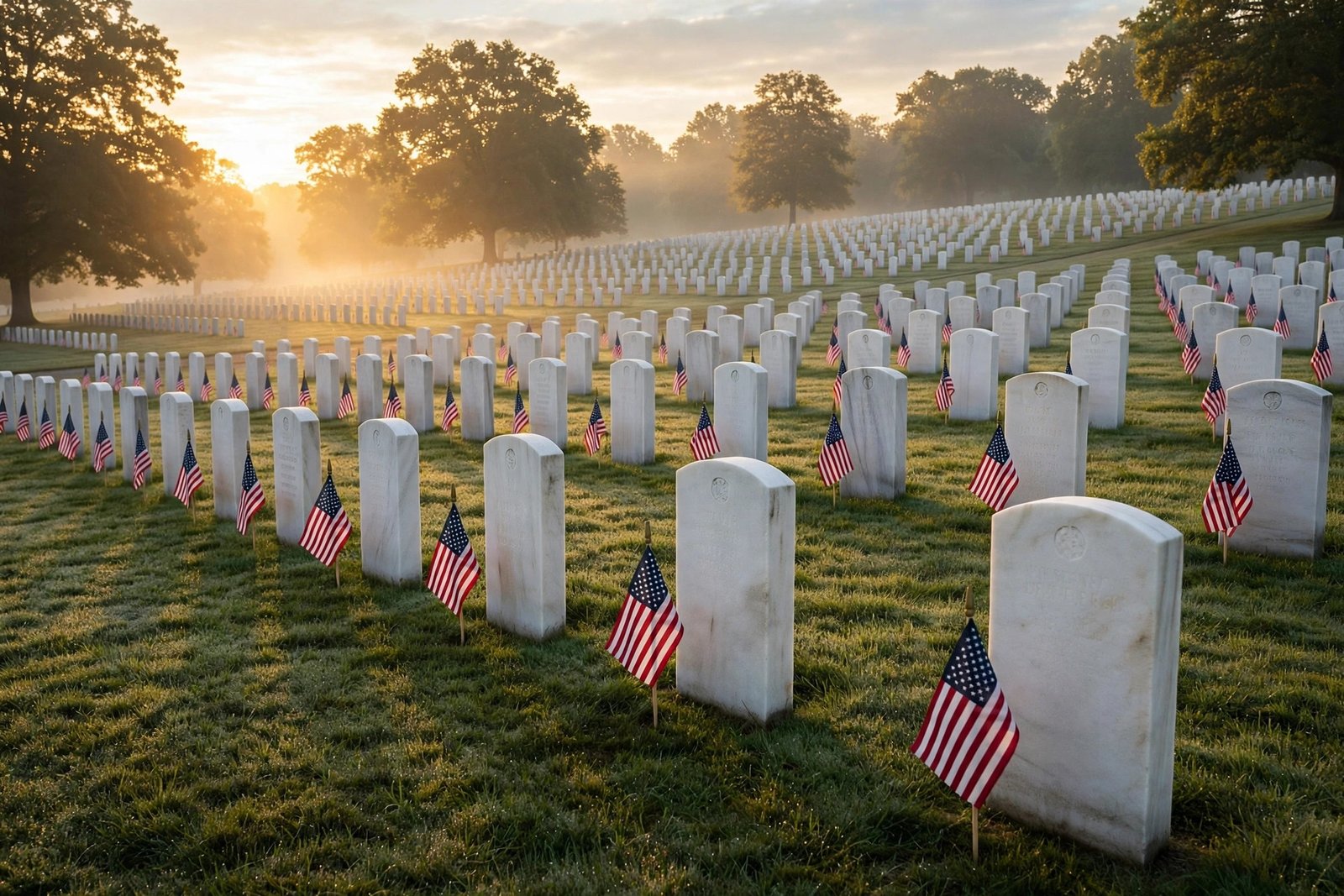
Tomorrow, Wednesday, November 11, 2026, America will observe Veterans Day — a federal holiday that honors every person who has served in the United States Armed Forces. It is a day of parades and school assemblies, of flags on front porches and free meals for veterans, and of a solemn ceremony at Arlington National Cemetery that begins at 11 a.m. sharp. But the date itself is the story. November 11 was chosen because, at the eleventh hour of the eleventh day of the eleventh month of 1918, the guns of World War I fell silent.
That is why Veterans Day is not just another holiday on the calendar. It began as Armistice Day, a day of remembrance for the end of the “war to end all wars,” and it took more than half a century of laws, a world war, a war in Korea, and a failed experiment with Monday holidays to become the day we know now. This is the story of how America’s day for its veterans came to be — and what makes it different from Memorial Day, the other great military holiday on the American calendar.
The Eleventh Hour of the Eleventh Day
World War I was known at the time as the Great War, and by the autumn of 1918 it had ground Europe down for four years. The fighting, however, did not end with a surrender or a treaty. It ended with an armistice — a temporary cessation of hostilities — between the Allied nations and Germany, which went into effect at 11 a.m. on November 11, 1918. For that reason, November 11, 1918, is generally regarded as the end of the war, even though the war did not officially end until the Treaty of Versailles was signed on June 28, 1919, in the Palace of Versailles outside Paris.
The symmetry of the moment — the eleventh hour of the eleventh day of the eleventh month — fixed itself in the public memory. It was a time that was easy to remember and hard to forget, and it gave the new holiday a date that carried its own meaning. From the very beginning, November 11 was not an arbitrary date on the calendar. It was the hour the killing stopped.
That meaning would be tested again and again over the decades that followed, as the country argued about whether the day should honor only the veterans of one war or all of them, and whether it should stay fixed to November 11 or move to a Monday for the sake of a long weekend. Each time, the country came back to the date.
The First Armistice Day, 1919
One year after the guns fell silent, President Woodrow Wilson proclaimed November 11 as the first commemoration of Armistice Day. In his proclamation, Wilson wrote that the reflections of Armistice Day would be “filled with solemn pride in the heroism of those who died in the country’s service and with gratitude for the victory, both because of the thing from which it has freed us and because of the opportunity it has given America to show her sympathy with peace and justice in the councils of the nations.”
The first Armistice Day was observed with parades, business suspensions, and two minutes of silence at 11 a.m. Communities across the country marked the hour the war had ended, and the day was dedicated, in Wilson’s framing, to the cause of peace as much as to the memory of the war. It was, at the start, a day set aside primarily to honor the veterans of World War I — the men who had fought in what many at the time believed would be the last great war.
That hope did not last. Within a generation, America would fight a second world war on a far greater scale, and then a war in Korea. The holiday’s narrow focus on the veterans of one war would soon feel out of date, and the country would have to decide what Armistice Day meant when there were new veterans to honor.
A Federal Holiday for World Peace
In 1938, Armistice Day became a legal federal holiday. An Act approved on May 13, 1938, made the 11th of November in each year a legal holiday — “a day to be dedicated to the cause of world peace and to be thereafter celebrated and known as ‘Armistice Day.’” The language of the act is telling: the holiday was still framed as a celebration of peace, and it was still primarily a day set aside to honor the veterans of World War I.
That framing held through the Second World War, even as the scale of American service expanded beyond anything the drafters of the 1938 act could have imagined. World War II required the greatest mobilization of soldiers, sailors, Marines, and airmen in the nation’s history, and after it came the fighting in Korea. By the early 1950s, there were millions of American veterans whose service had nothing to do with the armistice of 1918, and the name of the holiday no longer fit the people it was supposed to honor.
The push to change it came from the veterans themselves. Veterans service organizations urged Congress to broaden the holiday, and in 1954, Congress acted. The 83rd Congress amended the Act of 1938 by striking out the word “Armistice” and inserting the word “Veterans” in its place. With the approval of that legislation — Public Law 380 — on June 1, 1954, November 11 became a day to honor American veterans of all wars.
1954: From Armistice Day to Veterans Day
President Dwight D. Eisenhower signed the bill into law on June 1, 1954. Eisenhower, himself a veteran and the former Supreme Allied Commander in Europe during World War II, understood exactly what the change meant. Later that same year, on October 8, 1954, he issued the first Veterans Day Proclamation, and he created a Veterans Day National Committee to organize the observance, chaired by the head of the Veterans Administration. Since the Department of Veterans Affairs became a Cabinet department in 1989, the Secretary of Veterans Affairs has chaired that committee.
The renaming was a simple change of one word, but it transformed the holiday. Armistice Day had looked backward, to a single hour in 1918. Veterans Day looked at the people standing in front of us: every American who had worn the uniform, in wartime or in peacetime, living or deceased. It was no longer a day about the end of a war. It was a day about the people who serve.
That is also why Veterans Day is a day of thanks as much as a day of remembrance. Its focus is on living veterans in particular — the men and women who are still with us to share their experiences — even as it honors all who served. It is a celebration of service, not only a mourning of loss.
The Monday Experiment and the Return to November 11
The holiday’s history took an odd detour in the late 1960s. Congress passed the Uniform Monday Holiday Act in 1968 — Public Law 90-363, signed on June 28, 1968 — which moved several federal holidays, including Veterans Day, to Mondays so that federal employees would get three-day weekends. Under that law, Veterans Day was observed on the fourth Monday in October.
The first Veterans Day under the new law was observed on October 25, 1971, and it was, by all accounts, a confusing occasion. The change stripped the holiday of its historical date, and many Americans felt that the commemoration of November 11 was a matter of historic and patriotic significance that should not be moved for convenience. State after state resisted, and many continued to observe the holiday on November 11 regardless of the federal schedule.
Congress listened. On September 20, 1975, President Gerald R. Ford signed Public Law 94-97, which returned the annual observance of Veterans Day to its original date of November 11, beginning in 1978. The restoration preserved the historical significance of the date and helped focus attention on the purpose of the holiday. Since 1978, Veterans Day has been observed on November 11 no matter what day of the week it falls on — a Tuesday in 2025, a Wednesday in 2026. Today, the holiday sits in federal law at 5 U.S.C. 6103 as “Veterans Day, November 11.”
How America Honors Veterans Today
The national focal point for Veterans Day is the ceremony at Arlington National Cemetery, and it follows a tradition that goes back to the holiday’s earliest years. The ceremony begins at 11 a.m. — the hour the armistice took effect in 1918 — with a wreath-laying at the Tomb of the Unknown Soldier. It then continues inside the Memorial Amphitheater, with the presentation of colors and featured speakers honoring all who have served. The President or Vice President typically lays the wreath, and the Tomb itself is guarded around the clock by sentinels of the Old Guard, the Army’s oldest active-duty infantry regiment.
Beyond Arlington, the day is observed in communities across the country. There are parades in towns large and small, ceremonies at schools and veterans’ halls, and moments of silence at 11 a.m. Churches ring bells, and flags are flown at full staff — a contrast with Memorial Day, when flags fly at half-staff until noon. Many businesses offer free meals or discounts to veterans, and the Department of Veterans Affairs and veterans service organizations use the day to connect veterans with the benefits and services they have earned.
There is also a quieter tradition that belongs to the day: thanking a veteran in person. Because Veterans Day honors living veterans above all, it is the one military holiday on which the right thing to say is simply “thank you for your service” — to a neighbor, a coworker, a family member, or a stranger wearing a veteran’s cap. The day was built for that kind of direct, personal gratitude.
Veterans Day vs. Memorial Day: The Difference That Matters
Veterans Day and Memorial Day are the two great military holidays in America, and they are routinely mixed up — not least because both are marked by official ceremonies at Arlington National Cemetery and by parades in communities across the country. But they honor different people, for different reasons, and they grew out of different wars.
Memorial Day commemorates American service members who died while serving in the military. It took shape after the Civil War, when people in communities across the country began decorating the graves of fallen soldiers with flowers in the springtime. The first large-scale official observance, then called Decoration Day, was proclaimed on May 5, 1868, by General John A. Logan, commander-in-chief of the Grand Army of the Republic, who designated May 30 as a day for strewing flowers on the graves of fallen comrades. The first national observance took place at Arlington National Cemetery on May 30, 1868, where James A. Garfield, then an Ohio member of Congress and a Civil War veteran, spoke. Memorial Day is observed on the last Monday in May, and it is a solemn day of remembrance — a day for mourning, not celebration.
Veterans Day, by contrast, honors all service men and women — particularly living veterans — and it is a day of thanks and celebration. It began in 1919, grew out of the end of World War I, and has been fixed to November 11 since 1978. A simple way to remember the distinction: Memorial Day is for those who never came home; Veterans Day is for all who served, above all those who did come home.
That distinction is why the etiquette of the two days differs. On Memorial Day, the appropriate act is remembrance — visiting a cemetery, placing a flag or flowers on a grave, observing the National Moment of Remembrance at 3 p.m. On Veterans Day, the appropriate act is gratitude — thanking a veteran, attending a parade, supporting a veterans organization. Confusing the two is a common mistake, and an understandable one, but getting it right is a small act of respect in itself.
Frequently Asked Questions
When is Veterans Day 2026?
Veterans Day 2026 falls on Wednesday, November 11, 2026. Veterans Day is always observed on November 11, regardless of what day of the week it falls on, under federal law.
What is the difference between Veterans Day and Memorial Day?
Veterans Day, on November 11, honors all American veterans — everyone who has served in the Armed Forces, especially living veterans. Memorial Day, on the last Monday in May, commemorates service members who died while serving in the military. Veterans Day is a day of thanks; Memorial Day is a day of remembrance.
Why is Veterans Day on November 11?
November 11 marks the armistice that ended the fighting in World War I, which went into effect at 11 a.m. on November 11, 1918 — the eleventh hour of the eleventh day of the eleventh month. The date was first observed as Armistice Day in 1919 and has been kept ever since, even after the holiday was renamed Veterans Day in 1954.
When did Armistice Day become Veterans Day?
In 1954, Congress amended the 1938 law that had created Armistice Day, replacing the word “Armistice” with “Veterans.” President Dwight D. Eisenhower signed the change into law on June 1, 1954, so that November 11 would honor American veterans of all wars, not only the veterans of World War I.
What happens at Arlington National Cemetery on Veterans Day?
The national ceremony begins at 11 a.m. with a wreath-laying at the Tomb of the Unknown Soldier, followed by a ceremony inside the Memorial Amphitheater with the presentation of colors and featured speakers. The President or Vice President typically lays the wreath.
Related reading
- Pearl Harbor: December 7, 1941 — A Date Which Will Live in Infamy
- Iwo Jima Flag Raising: The Story Behind the Iconic Photograph
- The Old Guard: Sentinels of the Tomb of the Unknown Soldier
Sources: U.S. Department of Veterans Affairs — History of Veterans Day, VA News — Veterans Day Originated at the End of World War I, HISTORY — Memorial Day vs. Veterans Day, Military.com — Veterans Day vs. Memorial Day, Moraine Park Technical College — History of Veterans Day.