
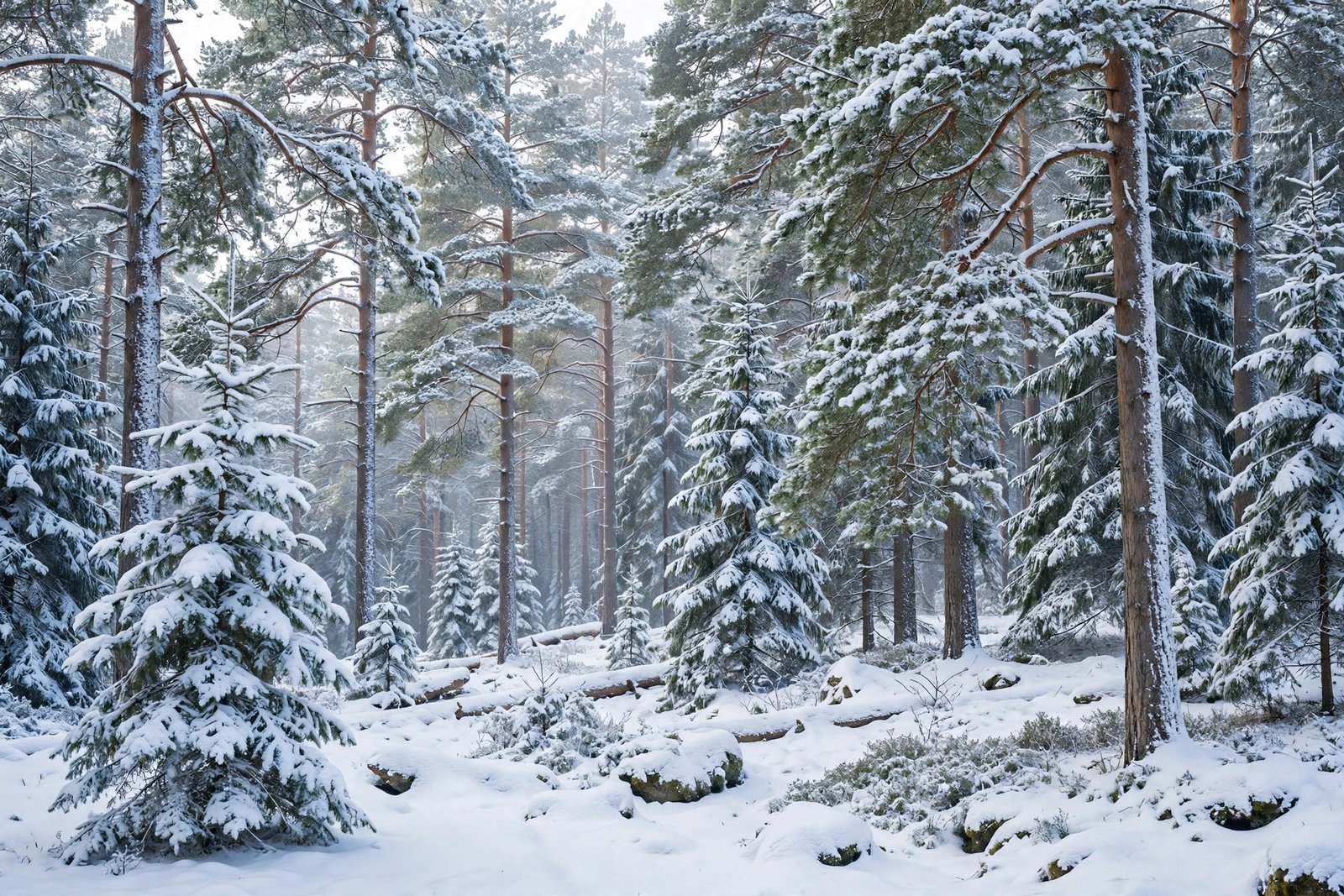
At dawn on December 16, 1944, the quiet of the Ardennes forest was shattered by the roar of more than a thousand German guns. Over 200,000 German troops and nearly 1,000 tanks surged forward in Hitler’s last great offensive — a desperate gamble to split the Allied armies and seize the port of Antwerp. The attack caught the Allies by surprise and drove a deep wedge, or “bulge,” into their lines. The battle that followed, fought across the bitterly cold winter of 1944–45, became the largest battle ever fought by the United States Army, involving more than 600,000 American troops. It also became one of the most famous stands in American military history, above all at the crossroads town of Bastogne, where surrounded paratroopers answered a German demand to surrender with a single word: “NUTS!”
The Battle of the Bulge lasted about 41 days, from December 16, 1944, to January 25, 1945. When it ended, the German offensive had been destroyed, but the cost was terrible: about 89,000 American casualties, including roughly 19,000 killed, and more than 100,000 German casualties. This is the story of Hitler’s last gamble, the American soldiers who stopped it, and the frozen winter that tested them all.
Hitler’s Last Gamble
By December 1944, the war in Europe was going badly for Germany. Allied armies had landed in Normandy in June, liberated Paris in August, and pushed to the German border by autumn. In the east, the Soviet Red Army was grinding westward. Most German generals believed the war was lost and wanted to husband their remaining strength for defense. Hitler disagreed.
His plan, code-named Wacht am Rhein — “Watch on the Rhine” — was audacious to the point of fantasy. Three German armies would smash through the thinly held Ardennes sector in Belgium and Luxembourg, cross the Meuse River, and drive all the way to Antwerp, cutting off the British and Canadian armies in the north from the Americans in the south. Hitler believed the shock of such a defeat would shatter the Allied coalition and buy Germany time to negotiate a peace that left the Nazi regime in place.
The Ardennes was chosen precisely because the Allies thought it was quiet. The dense forest, poor roads, and harsh winter weather made it seem unsuitable for a major offensive — the same reasoning that had blinded the French in 1940. The sector was held by only four American divisions, several of them exhausted from earlier fighting or newly arrived and inexperienced, spread thin across a 75-mile front. They were there to rest and refit. Hitler counted on surprise, bad weather that would ground Allied aircraft, and speed. For the first days, he got all three.
The Surprise Attack: December 16, 1944
The attack opened at 5:30 a.m. on December 16, 1944, with a massive artillery barrage along the whole front. German infantry and tanks followed, pouring through gaps in the American line. In the north, the German Sixth Panzer Army drove toward the Elsenborn Ridge, where American troops held firm and denied the attackers the roads they needed. In the center, the Fifth Panzer Army pushed toward St. Vith and Bastogne. In the south, the Seventh Army protected the flank.
Some American units were overrun almost immediately. Others fought desperate delaying actions that bought precious time. At Lanzerath Ridge, a small intelligence and reconnaissance platoon of just 18 men held off a German battalion for an entire day. At St. Vith, American defenders held the vital road junction for nearly a week, throwing the German timetable into chaos. The regimental history of the 110th Infantry, which held the line along the Our River, describes how the German attack opened at 5:30 a.m. on December 16 with a heavy artillery barrage. Every hour of delay mattered, because the German plan depended on speed — their tanks needed to reach the Meuse River within days, and they were already falling behind schedule.
The weather helped the attackers at first. Low clouds and fog kept Allied planes on the ground, and the Germans advanced under a sky their enemies could not contest. But the same weather that hid them also slowed them: icy roads, fuel shortages, and traffic jams of German vehicles choked the narrow forest routes. German spearheads began to run out of gasoline, and some tank crews abandoned their vehicles and walked.
The Malmedy Massacre
The battle also produced one of the war’s most notorious atrocities. On December 17, 1944, near Malmedy, Belgium, troops of the 1st SS Panzer Division under Joachim Peiper captured a group of American soldiers from the 285th Field Artillery Observation Battalion. The prisoners were herded into a field, and German troops opened fire on them. More than 80 Americans were murdered. A few survivors escaped by playing dead and brought word of the massacre to American lines.
The Malmedy Massacre hardened American resolve. Word spread quickly through the ranks, and many American soldiers who heard it fought with a new determination. The National WWII Museum records the massacre as one of the most brutal war crimes committed against American troops in Europe. Peiper’s unit was later tried for the murders, and the massacre remains a grim reminder that the Battle of the Bulge was fought not only against an army, but against a regime that had abandoned the laws of war.
Bastogne: The Stand of the 101st Airborne
The most famous episode of the battle took place at Bastogne, a small Belgian town where seven roads crossed — the key to movement through the Ardennes. On December 18, the 101st Airborne Division, rushed from rest camps in France in open trucks, arrived just ahead of the Germans. The division’s commander, Maj. Gen. Maxwell Taylor, was away in Washington, so the acting commander was Brig. Gen. Anthony McAuliffe. Alongside the paratroopers were elements of the 10th Armored Division and other units, about 15,000 men in all, soon surrounded by far larger German forces.
On December 19, the Germans closed the ring around Bastogne. The defenders, short on food, medicine, and ammunition, fought off attack after attack in freezing cold and deep snow. They had no winter clothing — many had been rushed forward in summer uniforms — and they dug foxholes in the frozen ground with whatever tools they had. Medics worked in makeshift aid stations as the wounded piled up.
On December 22, the German commander sent a demand for surrender under a flag of truce. McAuliffe’s reply became legend. When his staff brought him the demand, he laughed and said, “Aw, nuts!” His written reply to the Germans read, in full: “To the German Commander. NUTS! The American Commander.” The Germans, puzzled, asked what it meant and were told it meant “Go to hell.” The attacks resumed, but Bastogne did not fall.
Relief came on December 26, when tanks of the 4th Armored Division, spearheading Gen. George S. Patton’s Third Army, broke through to the town. Patton had turned his entire army north in one of the great feats of maneuver in military history, pivoting three divisions ninety degrees in the middle of winter and driving them into the German flank. The U.S. Army’s account notes that Patton’s Third Army arrived at Bastogne and relieved the garrison on December 26, 1944. The siege was over, but the fighting in the Ardennes was not.
Patton’s Counterattack and the Turning of the Tide
While Bastogne held, the wider battle hung in the balance. On December 23, the weather finally cleared, and Allied aircraft returned to the skies in force, strafing German columns and dropping supplies to the surrounded troops at Bastogne. The resupply flights, flown by C-47 transport planes, dropped ammunition, food, and medicine to the defenders — a lifeline that arrived just in time.
Patton’s Third Army attacked northward into the southern flank of the bulge, while the U.S. First Army, reinforced and reorganized under Field Marshal Montgomery’s temporary command in the north, held the northern shoulder. The German advance had reached its farthest point — the town of Celles, just a few miles short of the Meuse — on December 24. By Christmas, the offensive had stalled. The Germans were out of fuel, out of reserves, and increasingly exposed.
On January 1, 1945, the Luftwaffe launched Operation Bodenplatte, a massive last-ditch air attack on Allied airfields. It destroyed a number of Allied planes on the ground but cost Germany hundreds of aircraft and pilots it could not replace — a self-inflicted wound that weakened the Luftwaffe for the rest of the war. On January 3, the Allies began their counteroffensive, and the bulge was slowly squeezed shut. The U.S. Army Center of Military History’s official campaign history traces the Ardennes fighting in full detail, from the German planning to the final Allied advance.
The End: January 25, 1945
By January 25, 1945, the German lines had been pushed back to roughly where they started, and the U.S. Army dates the official end of the battle to that day. The offensive had lasted about 41 days and failed completely. Germany had spent its last reserves — men, tanks, aircraft, and fuel — on an attack that gained nothing permanent. The Western Front’s defenses were now stripped bare, and the Allies crossed the Rhine River in force within weeks. The war in Europe would end less than four months later.
The cost was appalling on both sides. The U.S. Army’s official count put American dead at 19,246, with more than 23,000 taken prisoner and tens of thousands more wounded — a total of well over 80,000 casualties, with commonly cited figures of about 89,000. As Oxford University Press’s account notes, the battle was America’s greatest — and bloodiest — of World War II, involving some 32 divisions and 610,000 men. German losses were greater still, roughly 100,000 men, plus hundreds of tanks and aircraft that could never be replaced.
For the American soldiers who fought there, the battle became a defining memory. They remembered the cold most of all — the cold that froze feet in boots and rations in their cans. It was, in the words of Winston Churchill, “an ever-famous American victory,” but one bought at a price the men who paid it never forgot.
Why the Battle of the Bulge Still Matters
The Battle of the Bulge was the largest battle ever fought by the U.S. Army — bigger than Normandy, bigger than any battle in American history before or since. More than 600,000 Americans took part, along with British and other Allied troops. Its scale alone would make it historic, but its meaning runs deeper.
First, it destroyed Germany’s ability to keep fighting a mobile war in the West. The men, tanks, and fuel thrown into the Ardennes were the last reserves the German army had. When the offensive failed, there was nothing left to stop the Allied drive into Germany itself.
Second, it proved the resilience of the American citizen-soldier. The men who held the line in the Ardennes were not an elite force — they were ordinary infantrymen, cooks, clerks, and engineers, many of them in their first battle, who held their ground when everything around them collapsed. The stand at Bastogne, the defense of St. Vith, the delaying actions at Elsenborn Ridge — these were the work of soldiers who refused to panic.
Third, the battle became a permanent part of American memory. The 101st Airborne’s “NUTS!” reply is still retold every December in Bastogne, where the town throws nuts to the crowds in celebration. The National WWII Museum in New Orleans, the U.S. Army’s own Battle of the Bulge feature, and the battlefields of Belgium and Luxembourg keep the story alive for new generations. Every year on December 16, veterans, families, and historians gather to remember the men who fought through the coldest winter of the war.
Visiting the Battlefields Today
The Ardennes battlefields are still there to walk. In Bastogne, the Mardasson Memorial honors the American soldiers who fought in the battle, and the Bastogne War Museum tells the story through the eyes of four fictional characters — an American soldier, a German soldier, a Belgian schoolteacher, and a young boy. The foxholes of the 101st Airborne can still be seen in the Bois Jacques, the woods east of the town, preserved as they were in the winter of 1944.
Across the region, small cemeteries and monuments mark where men fell — at Malmedy, at St. Vith, at the crossroads and villages whose names mean little to most Americans but everything to the families of the men who fought there. The Ardennes American Cemetery in Neupré, Belgium, holds the graves of more than 5,300 American war dead, most of them from the Battle of the Bulge. It is a quiet place, and a fitting one, for remembering the largest battle the U.S. Army ever fought.
FAQ
When was the Battle of the Bulge?
The battle began on December 16, 1944, when German forces launched a surprise offensive through the Ardennes forest, and it ended on January 25, 1945 — about 41 days of fighting in the bitter winter of 1944–45.
Why is it called the Battle of the Bulge?
The German attack drove a deep wedge, or “bulge,” into the Allied front lines in Belgium and Luxembourg. War correspondents picked up the term, and it stuck. At the time, the U.S. Army called it the Ardennes Campaign.
How many Americans fought in the Battle of the Bulge?
More than 600,000 American troops took part, making it the largest battle ever fought by the U.S. Army. About 89,000 Americans became casualties, including roughly 19,000 killed, according to commonly cited figures and the U.S. Army’s official count of 19,246 dead.
What does “NUTS!” mean in the Battle of the Bulge?
On December 22, 1944, Brig. Gen. Anthony McAuliffe, acting commander of the 101st Airborne Division at Bastogne, answered a German demand to surrender with a one-word reply: “NUTS!” When the Germans asked what it meant, they were told it meant “Go to hell.” The reply has become one of the most famous moments of World War II.
Who won the Battle of the Bulge?
The Allies won. The German offensive failed to reach the Meuse River or Antwerp, and by January 25, 1945, German forces had been pushed back to their starting positions. Germany lost about 100,000 men and its last reserves, leaving it unable to stop the Allied advance into Germany.