
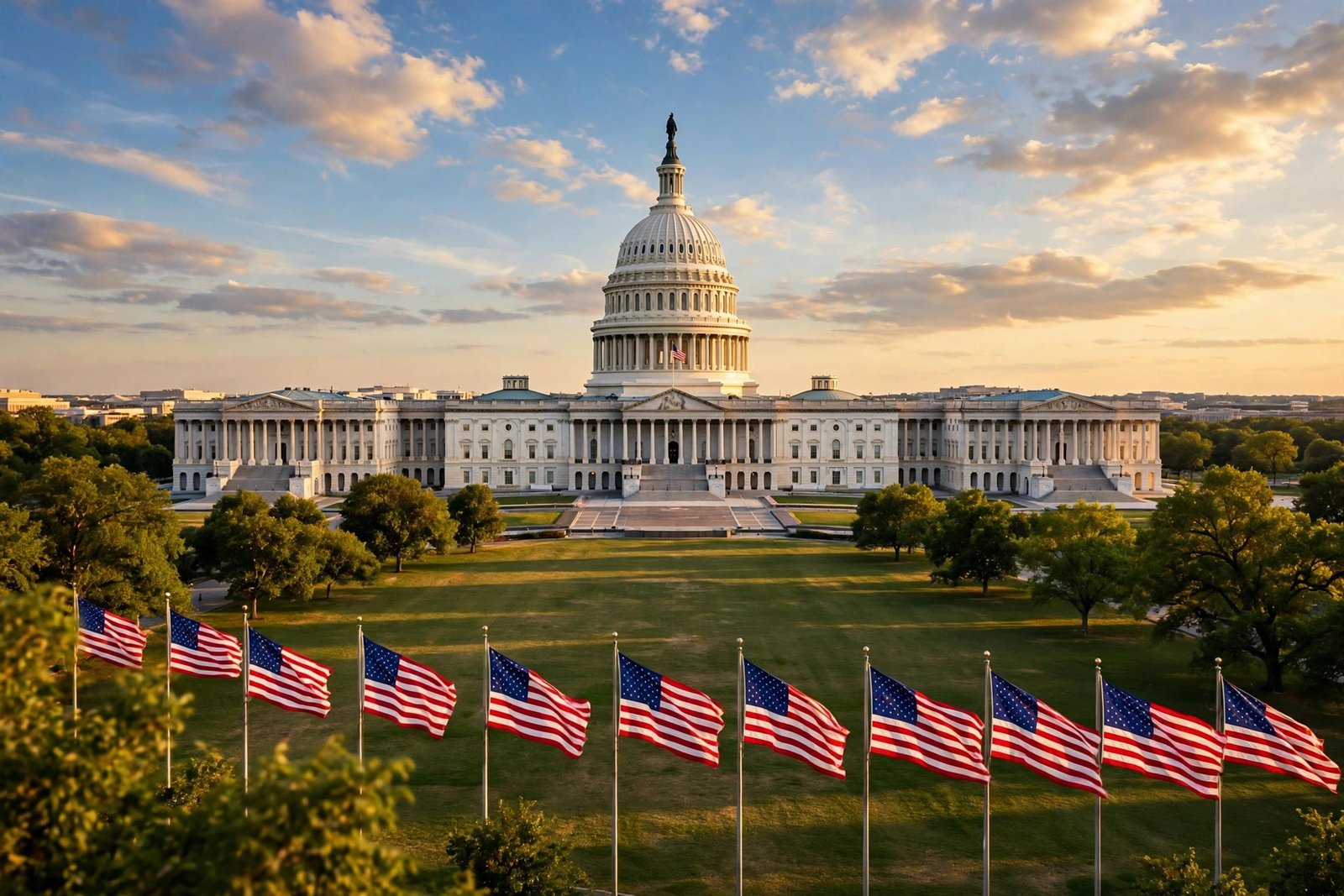
American voters delivered a political earthquake on November 3, 2026. Democrats swept both chambers of Congress in the midterm elections, winning the House and the Senate and ending Republican control of Capitol Hill. Few forecasters had predicted the sweep in full, and it sets up two years of divided government, with Democrats running Congress while President Donald Trump remains in the White House.
The scale of the win is still coming into focus because votes are still being counted in some races. But the outcome itself is settled. The Associated Press called control of the Senate late on election night and the House early the next morning, and every major decision desk has confirmed the same result: Democrats will hold majorities in both chambers when the new Congress is sworn in on January 3, 2027.
What happens between now and then matters just as much as what happens after. The outgoing Republican-led Congress returns for a lame-duck session starting the week of November 9, with government funding set to expire on December 11 and the annual defense policy bill still unfinished. Here is what the sweep means, what the lame duck can and cannot do, and what to watch next.
The results, in numbers
In the Senate, Democrats hold at least 54 seats, with Alaska and Mississippi still uncalled. That count includes the two independents who caucus with Democrats. Republicans hold 44 seats. Democrats flipped seven Republican-held seats and lost none of their own, according to race calls by the Associated Press. The flipped seats came in North Carolina, South Carolina, Texas, Ohio, Kansas, Iowa and Maine, including wins in states that President Trump carried by wide margins in 2024.
The individual results tell the story of how broad the wave was. In Texas, James Talarico defeated Ken Paxton, the first Democrat to win a Texas Senate seat since 1988. In Kansas, Adam Hamilton became the first Democrat to win a Senate race since 1932. In South Carolina, Annie Andrews defeated Senator Darline Graham. In Maine, Troy Jackson unseated longtime Senator Susan Collins. In Ohio, former Senator Sherrod Brown returned to the chamber by defeating incumbent Jon Husted.
In the House, Democrats hold at least 240 seats, with some races still being counted. That is a gain of about 30 seats, built on more than 30 flipped districts, and it clears the 218 seats needed for a majority with room to spare. Some projections suggest the final Democratic total could climb higher still. Either way, it will be the party’s largest House majority in well over a decade.
The sweep extended well beyond Washington. Democrats netted five governorships, with wins in Texas, Georgia, Ohio, Iowa and Nevada, and they will hold most of the nation’s governorships for the first time since 2010. They also picked up hundreds of state legislature seats, gaining full control of state government in Wisconsin, Minnesota, Pennsylvania, Nevada and Michigan. Those state-level wins will shape redistricting after the 2030 census.
How the night unfolded
The first big call came late on election night, when the Associated Press called the Senate for Democrats. The House followed in the early hours of Wednesday morning. By Wednesday morning, the picture was clear: Democrats had won every Senate battleground race, all of the toss-up House seats, and several districts rated as leaning Republican.
President Trump told The New York Times on election night that he was willing to accept the midterm results and looked forward to working with Democrats. He has also said he plans to use his veto aggressively against legislation he opposes. That tension will define the next two years.
The reactions from party leaders came quickly. House Minority Leader Hakeem Jeffries of New York, the leading candidate to become Speaker, called it a change election and said House Democrats needed to deliver dramatic change. Senate Minority Leader Chuck Schumer spoke of a generational remake of the Senate map. House Speaker Mike Johnson conceded the House majority, saying it was very difficult to overcome more than a century of midterm history.
What is a lame-duck session?
A lame-duck session is the stretch of Congress between an election and the day the new Congress is sworn in. During that window, the outgoing members, including those who lost their elections or are retiring, are still in charge. That is why Republicans keep control of the House and the Senate until the new Congress convenes on January 3, 2027.
Lawmakers return to Washington on November 9, six days after Election Day, and the session is expected to run until Christmas, with a Thanksgiving break. Until January 3, Mike Johnson remains Speaker of the House, and Republican leaders set the agenda in both chambers. The Democrats who won on Tuesday cannot take their seats or chair committees until the new Congress is sworn in.
What the lame duck can and cannot do
The lame-duck Congress can do anything a normal session of Congress can do. It can pass laws, confirm nominees, fund the government and send bills to the president’s desk. What it cannot do is bind the next Congress. Any bill that does not pass before the new Congress is sworn in dies and has to start over from scratch in January.
That creates a strange set of incentives. Republicans, who are about to lose power, have one last chance to pass their remaining priorities, including through the budget reconciliation process, which cannot be blocked by a Senate filibuster. But after Tuesday’s losses, it is far from clear the party still has the votes for a final package.
Democrats, meanwhile, have little reason to strike deals they could get on better terms in January, when they will control both chambers. They will likely push for a short-term extension of government funding that delays the bigger spending decisions until 2027, when they will have far more leverage.
The December 11 deadline
The most urgent item on the lame-duck agenda is money. Government funding under the current stopgap runs out on December 11. Unless Congress passes full-year spending bills or another stopgap by then, a shutdown begins.
The stopgap, known as a continuing resolution and formally cited as Public Law 119-113, extended government funding as well as authorizations for surface transportation programs and other federal programs. Several other programs expire around the same time, including the National Flood Insurance Program’s authorization and borrowing authority.
Completing all 12 annual spending bills before December 11 looks like a tall order, given the limited time and the wide gap between what the president wants, including a large defense increase, and what Democrats want, including more money for domestic programs. The most likely outcome is another short-term stopgap, perhaps running into March, that pushes the final spending decisions into the new Congress.
The unfinished defense bill
The other must-pass item is the annual defense policy bill, the National Defense Authorization Act, known as the NDAA. It stalled in the Senate in July and remains unfinished. Congress has passed a defense authorization bill every year for more than six decades, because it sets policy for the military and carries pay and benefits provisions that troops and their families depend on.
Whether the lame-duck Congress finishes it, or leaves it for the new Democratic Congress in January, is an open question. The same goes for the farm bill, which expired on September 30. If Congress does not act by December 31, farm programs revert to permanent law from the 1930s and 1940s, although crop insurance and food assistance continue for now.
Health programs are also on the clock. Mandatory funding for the Community Health Center Fund and a temporary increase in Medicare payments to doctors both end on December 31, along with Temporary Assistance for Needy Families funding. A bipartisan permitting reform bill is also in play, and Majority Leader John Thune has said a debt-limit increase could come in the lame duck, with the limit possibly reached as soon as February 2027.
What the sweep means for legislation in 2027
When the 120th Congress is sworn in on January 3, 2027, Democrats will control the congressional agenda and the committees in both chambers. That gives them broad investigative and subpoena power, as well as control over Senate confirmations for judges and executive branch nominees. Hakeem Jeffries is poised to become the first Black Speaker of the House, and Chuck Schumer is expected to return as Senate Majority Leader.
But control of Congress is not the same as control of Washington. President Trump remains in the White House, and he holds the veto pen. Democrats fall short of the 60 votes needed to break a Senate filibuster, so they will need Republican support to pass most legislation, and they lack the two-thirds majority required to override a veto. That means many Democratic bills may pass the House only to stall in the Senate or on the president’s desk.
Democrats ran on two main themes, affordability and anti-corruption, and early plans include restoring expired health care subsidies, raising the federal minimum wage and reversing tariffs. Investigations are expected to be a major part of the agenda as well. The tension between investigating and legislating may define the next two years: investigations make headlines, but relief on prices is what voters asked for most.
In the House, the Democratic majority is large enough that no single faction can easily block a bill, a sharp change from the slim Republican majority, where a handful of members could shut down the floor. In the Senate, though, Democrats will need between four and six Republicans to pass funding bills and most other legislation. Nominations need only a simple majority, which is why control of the Senate matters so much for judges and appointments.
The governor races that also mattered
The congressional sweep was not the only story of the night. In five key swing states, Republican candidates for governor who had questioned or challenged Joe Biden’s 2020 victory all lost. Congressman Andy Biggs lost in Arizona, Congressman John James lost in Michigan, State Treasurer Stacy Garrity lost in Pennsylvania and Congressman Tom Tiffany lost in Wisconsin. Billionaire Rick Jackson lost in Georgia, central to President Trump’s efforts to overturn the 2020 results.
Biggs and Tiffany had voted in January 2021 to overturn the 2020 results as House members, and both signed onto a lawsuit seeking to invalidate results in four states Biden won. Garrity appeared at a rally in Pennsylvania on January 5, 2021, calling on state lawmakers to decertify the results. Tiffany, Garrity and Jackson have since acknowledged that Biden won. Biggs and James have not.
What to watch next
The first test comes quickly. Watch whether the lame-duck Congress reaches a funding deal before December 11, or whether the government shuts down and the fight rolls into January. Watch whether the defense bill gets finished, and whether Republicans rush through judicial confirmations before they lose the Senate.
Then watch January 3, when the new Congress is sworn in. The first bills Democrats introduce, the first hearings they schedule and the first nominees they confirm or block will show what kind of majority they intend to be. And watch the White House: a president who says he will work with Democrats, and also says he will use his veto aggressively, will have to choose, bill by bill, which promise to keep.
The direction of American politics for the next two years is already set: Democrats run Congress, President Trump runs the executive branch, and neither side can govern alone.
Frequently asked questions
When does the new Congress take over?
The new Congress, the 120th Congress, is sworn in on January 3, 2027. Until then, the outgoing Republican-led Congress remains in charge, including during the lame-duck session that begins the week of November 9.
What is a lame-duck session?
It is the session of Congress between an election and the swearing-in of the new Congress. The members who were voted out or are retiring are still in office, and they can still pass laws, but anything left unfinished dies when the new Congress begins.
Can Democrats pass laws on their own in January?
Not entirely. They will control both chambers, but they hold 54 Senate seats at most, short of the 60 needed to break a filibuster, and they lack the two-thirds majority needed to override a veto. Most major bills will need some Republican votes and the president’s signature.
Will the government shut down on December 11?
It could. Government funding under the current stopgap expires on December 11. Congress must pass full-year spending bills or another stopgap by then to avoid a shutdown. A short-term extension into early 2027 is seen as the most likely outcome.
Who will lead the new Congress?
Hakeem Jeffries of New York is poised to become Speaker of the House, which would make him the first Black Speaker in American history. Chuck Schumer of New York is expected to return as Senate Majority Leader. House Speaker Mike Johnson has said he will not run for House minority leader.
Why did five election deniers lose governor races?
Five Republican candidates who had questioned or tried to block Joe Biden’s 2020 victory lost governor races in Arizona, Michigan, Pennsylvania, Wisconsin and Georgia. The results matter because governors play a major role in election administration and redistricting ahead of the 2028 presidential race.
Related reading
For more on how the 2026 midterms were set up, see Midterm Elections November 3, 2026: What’s on the Ballot. To understand how the remaining votes are handled after Election Day, read After Election Day: How Votes Are Counted and Certified in 2026. And for an unusual election-week story, see FEC Filing System Goes Offline During the Midterms.
Sources: The Associated Press, as reported by Flashpoint Updates and Tangle; Times Now; Al Jazeera; the National Association of Counties; Nacionale; and Learning Forward.