
Of all the surprises in the November 3, 2026 midterm elections, one of the clearest was this: AI data centers lost. Not just in one town or one state, but across the country, in red states and blue states alike, at the ballot box and in the governor’s races that will decide where the next wave of giant server farms can be built.
The Associated Press reported on November 6 that data centers took a beating in the midterms, and a reckoning may be ahead for tech giants. Opposition to the energy-hungry facilities was woven into the platforms of Democrats who flipped governorships in data-center hot spots, featured in hundreds of millions of dollars of TV advertising, and decided dozens of local referendums. A tougher regulatory environment is expected to follow, even if President Donald Trump, perhaps the industry’s biggest champion, stalls any federal crackdown.
This was not a single-issue election. Data-center regulation was not on most midterm ballots, and it was not among the top issues for most voters. But in community after community, skepticism about the giant buildings powering artificial intelligence blended with the fight over affordability, and candidates promising to slow the buildout won.
The results at a glance
Start with the governor’s races, where the winners will have the most direct say over what is built. Democrats who pledged to clamp down on data centers upended longtime Republican control in Texas, Ohio, Georgia, Nevada and Iowa, all data-center hot spots. They also flipped at least five governors’ offices and took full control of state governments in five more states: Wisconsin, Minnesota, Pennsylvania, Nevada and Michigan.
The pattern held down the ballot. Data Center Watch, a project of AI security consultancy 10a Labs, found the vast majority of winning candidates had expressed support for stronger regulation or even a moratorium. Among governors, 32 of the 34 victorious candidates support stronger regulation or restrictions, and 12 support bans or moratoriums.
The money followed the message. According to advertising firm AdImpact, campaigns spent more than $380 million on television ads mentioning data centers, with Democrats outspending Republicans by more than three to one. In a season dominated by arguments about the cost of living, data centers were a persistent presence in attack ads.
Why so many communities said no
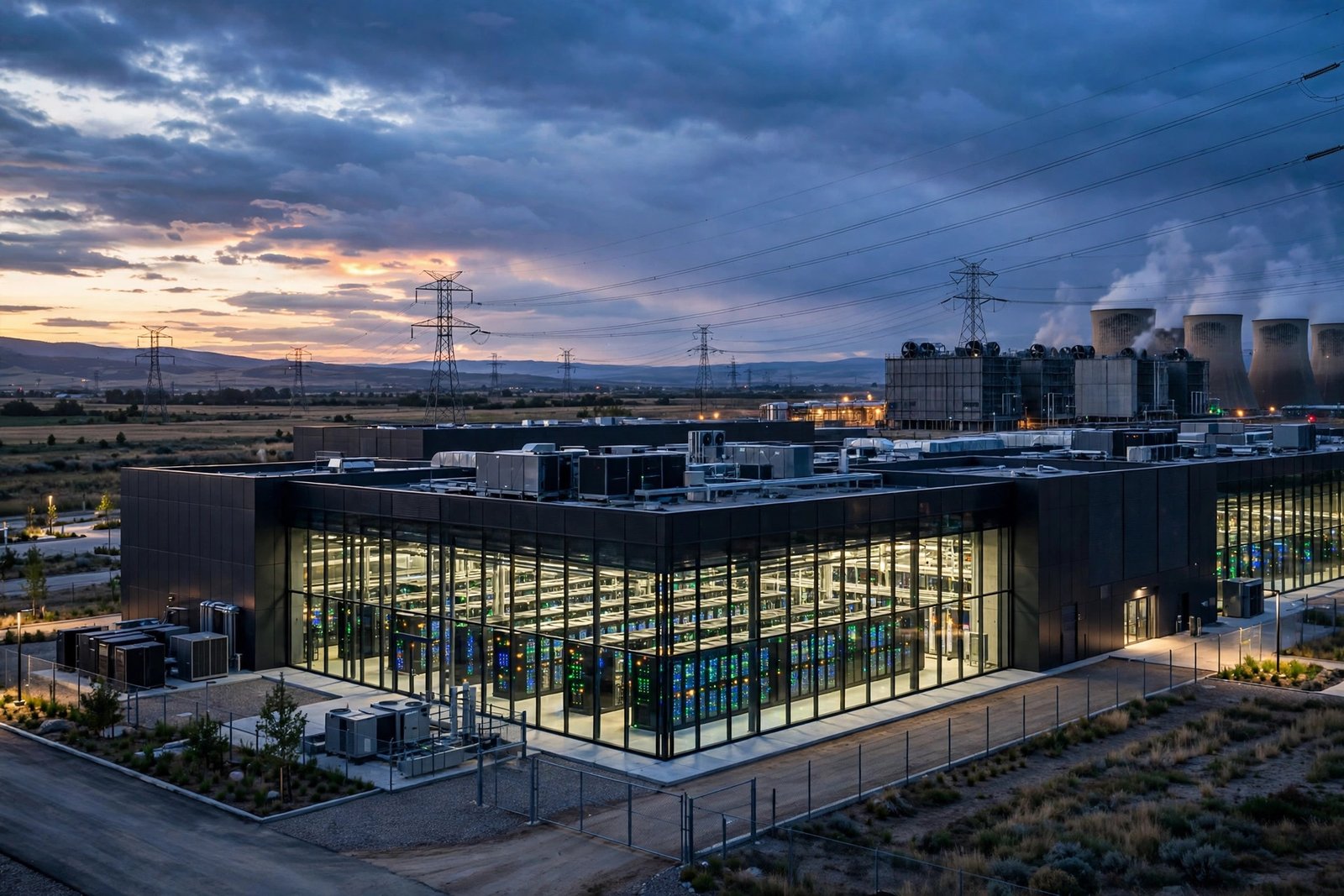
To understand the backlash, it helps to know what a modern AI data center is. These are not the modest server rooms of a decade ago. They are enormous industrial buildings, sometimes covering many acres, filled with computers that train and run AI systems such as ChatGPT and Claude. They run around the clock and consume staggering amounts of electricity and water.
Electricity is the first concern. A large data center can draw as much power as a small city, and residents worry the new demand will raise their utility bills, strain the local grid, or force expensive upgrades that customers end up paying for. In Texas, newly elected Democratic agriculture commissioner Clayton Tucker, the first Democrat elected to that office since 1986, said his pledge to fight data-center development was critical to victory. Ranchers everywhere he went worried about their dwindling water supplies. “You know, there’s an old saying around here that whiskey’s for drinking and water’s for fighting,” Tucker told the Associated Press. “And that’s exactly what happened.”
Water is the second concern, especially in drought-prone states, where aquifers are already stressed and the prospect of a thirsty new neighbor is genuinely frightening. Noise is a third complaint: cooling systems, generators and truck traffic can hum and rumble day and night. And then there is land. A data-center campus can swallow farmland or open space a community valued, while creating few permanent jobs once construction ends. As one Ohio farmer put it after her town voted for a ban, “We’re just a little farm town, and we would much rather just have a cornfield or have some sort of industry that provides an income to a larger amount of people.”
What made the issue so potent in 2026 is that it cut across the usual political divides. The AP Voter Poll found that about three-quarters of U.S. voters oppose a new data center in their community, with majorities opposed in red and blue states alike, including traditionally Republican states such as Wyoming, West Virginia, Louisiana and Mississippi. Yet the same poll found the issue was not particularly motivating: only about one-quarter said AI data centers were crucial to their vote for Congress, well below the shares that named government corruption or the cost of living. The backlash was broad, but the affordability argument, higher bills and strained resources, gave it its edge.
The ballot-box scoreboard
The clearest verdict came in local referendums. According to polling and data science firm Redbud Consulting, voters cast ballots overwhelmingly in favor of restricting data centers. Redbud tracked 47 referendums in 44 municipalities in 12 states, including 21 in Ohio, eight in Maine, seven in Illinois and four in Kansas. Restrictions were approved in 44 of the 45 elections where counting was complete.
In Piqua, Ohio, voters approved a ban on data centers with a capacity of more than 25 megawatts, effectively ruling out any large-scale project, with about two-thirds of the vote. The result jeopardizes a data center worth more than $1 billion planned by Meta, even though it had already been approved. Alisha Lange, a farmer who helped lead Save Piqua, wept with joy at the result. “Democrat, Republican, that didn’t matter,” she said. “People want their town back.”
Ohio was the epicenter. Nearly half of the country’s local ballot measures to restrict data-center construction were in Ohio, and nearly all passed easily. Some rejected specific projects, others limited power and water use, and 11 towns passed total or near-bans. Thanks to cheap land and decades-long sales-tax exemptions, Ohio already has about 200 data centers, fifth-most in the country. Local opposition had already hampered at least 45 projects in the second quarter of 2026, per Data Centre Watch.
These results add to restrictions already imposed by nearly 600 jurisdictions, according to the research group Electric Choice, including entire states such as New York and Texas. Local ballot measures have a more direct effect than any gubernatorial action, because cities and townships control zoning and property taxes. They change the rules on the ground, project by project, town by town.
The governors who will decide what happens next
The governor’s races may matter even more. In Texas, Democrat Gina Hinojosa defeated Republican Governor Greg Abbott, who had touted Texas as the epicenter of AI development before clamping down late in the campaign. Hinojosa has said she would block a permit for a data center if it wasn’t a good deal for Texans or residents hadn’t gotten a say. Morgan Stanley called her election the most important election result for data-center development, and Texas is poised to overtake northern Virginia as the largest global data-center market by 2030, according to commercial real estate firm JLL.
In Ohio, Democrat Dr. Amy Acton won the governor’s race after pledging to block a data-center project unless it met certain standards. Morgan Stanley said her election creates significant risk of project delays, and her campaign mantra was: “Ohio is open for business, but we are not up for sale.” Once she takes office in January, she can issue executive orders halting state data-center permitting, or increase scrutiny through appointments to agencies such as the public utilities commission.
In Wisconsin, Governor-elect David Crowley, a Democrat, changed his position during the campaign under pressure from his Republican opponent, moving from opposing any moratorium to supporting one, as well as abolishing the state’s sales-tax exemption for data-center operators and developers. Crowley told the AP he is now discussing what he will propose, including requiring developers to disclose more about their water and energy use, ensuring a community supports a project before it can go forward, and insulating ratepayers and taxpayers from the energy costs of the projects.
The wave extended beyond the Democrats. Incoming governors in Iowa and Nevada pledged to stop AI tax breaks. Byron Donalds, the next governor of Florida, has promised a measure requiring data centers to source their own electricity rather than plugging into the grid. Even Republican Vivek Ramaswamy, who lost the Ohio governor’s race to Acton, floated a plan to require data centers to provide free electricity for nearby residents. On this issue, as one consultant put it, it is hard to tell from a quote alone which party is speaking.
All told, about 40% of pending U.S. data-center capacity is planned for states where newly elected governors have promised to stop or pause construction, according to market intelligence company Cleanview. That is on top of 46 local ballot measures approved or on track to pass that also stall development, per Bloomberg Economics, at least 17 of them outright bans.
Wall Street felt it first
Investors reacted fast. On the Thursday after the election, the Nasdaq sank 11% below its all-time high amid worries that construction may slow as borrowing gets costlier. The S&P 500 dropped more than 4% and the Nasdaq 100 fell 6.4%, erasing $2.3 trillion in market value.
Morgan Stanley warned that decisive results for Democrats carry greater expectations for restrictions that, under new state regulations, could split the country into areas open to new data centers and those without. Bloomberg Intelligence estimated Tuesday’s results stand to shrink the $1.4 trillion in expected 2027 AI infrastructure spending by roughly 5% to 7%, and that as much as 10 gigawatts of capacity could fail to come online next year as planned.
The industry’s response
The tech industry has not been idle. OpenAI published a framework the Thursday after the election with new commitments to host communities. The company asked policymakers to write clear rules for how the industry builds, to protect residents and share the benefits broadly. OpenAI also said it will avoid nondisclosure agreements in negotiations and ensure residents don’t pay for the electricity to power those projects.
The Data Center Coalition, an industry association, echoed that developers need to keep building trust with officials and communities. A coalition official, Dan Diorio, said the industry knows many midterm winners have vowed to impose a moratorium, and warned host communities could miss out on tax revenue or payments from tech companies. Communities that prohibit data centers risk seeing investment, jobs and tax revenue move elsewhere.
What bills and rules could come next
So what actually happens now? The first wave of action will come from the states, not Washington. Democratic lawmakers are expected to introduce a wave of AI and data-center bills in the new year, and the governors-elect have already sketched them: moratoriums, requirements that developers disclose water and energy use, community-consent rules, and measures to shield ratepayers and taxpayers from the projects’ energy costs. Some states may end sales-tax exemptions for data-center operators, or shift to a prove-it-first model awarding tax breaks only after developers deliver results.
At the federal level, the picture is more complicated. President Trump is perhaps the industry’s biggest champion, and he can stall a federal crackdown. But Democrats now control both chambers of Congress, and they are expected to use hearings to press the industry on electricity costs, water use and community impacts. Any federal action is more likely to come indirectly, through energy policy, grid regulation and the tax code.
The map may simply split. Morgan Stanley’s warning, that the country could divide into areas open to new data centers and those that are not, is already taking shape. Developers are expected to shift projects toward states and towns that still welcome them, while states that voted for restrictions become harder and costlier places to build. One analyst put it bluntly: “We’ve gone from the question of who is going to pass a moratorium to where can I even construct one of these things now?”
Frequently asked questions
Why do people oppose AI data centers?
The main concerns are electricity and water use, higher utility bills, noise from cooling systems and generators, and the loss of farmland or open space. Data centers also create relatively few permanent jobs once construction ends.
Did voters actually reject data centers in the midterms?
Yes, in large numbers. Restrictions were approved in 44 of the 45 local referendums where counting was complete, and about three-quarters of voters told the AP Voter Poll they oppose a new data center nearby. Candidates who pledged to clamp down on data centers also won governor’s races in Texas, Ohio, Georgia, Nevada and Iowa.
Will data centers stop being built in the United States?
No. The industry still plans to build, and developers are expected to shift projects toward states that welcome them. But about 40% of pending U.S. data-center capacity is in states where newly elected governors promised to stop or pause construction, so the buildout will likely slow there.
What is OpenAI doing about the backlash?
OpenAI published a framework the week of the election with new commitments to host communities, including avoiding nondisclosure agreements and ensuring residents don’t pay for the electricity to power the projects.
Could federal law restrict data centers?
A sweeping federal crackdown is unlikely while President Trump, a strong supporter of the industry, holds the White House and the veto. But Democrats, who now control Congress, are expected to push state-level bills and use oversight hearings to press the industry on costs, water and community impacts.
Related reading
To understand the power grid these facilities plug into, read How the U.S. Power Grid Works: How Electricity Reaches America. For another angle on America’s energy future, see U.S. Nuclear Energy Explained. And for the wider context of a fast-changing month, read November 2026 Changes in the USA: What’s New This Month.
Sources: The Associated Press report of November 6, 2026, “AI data centers took a beating in the midterm elections. A reckoning may be ahead for tech giants,” as carried by The Week, Texas Politics and News Laundry (also carried by U.S. News on November 6); CNBC-TV18; Malay Mail; and Village Voice News.