
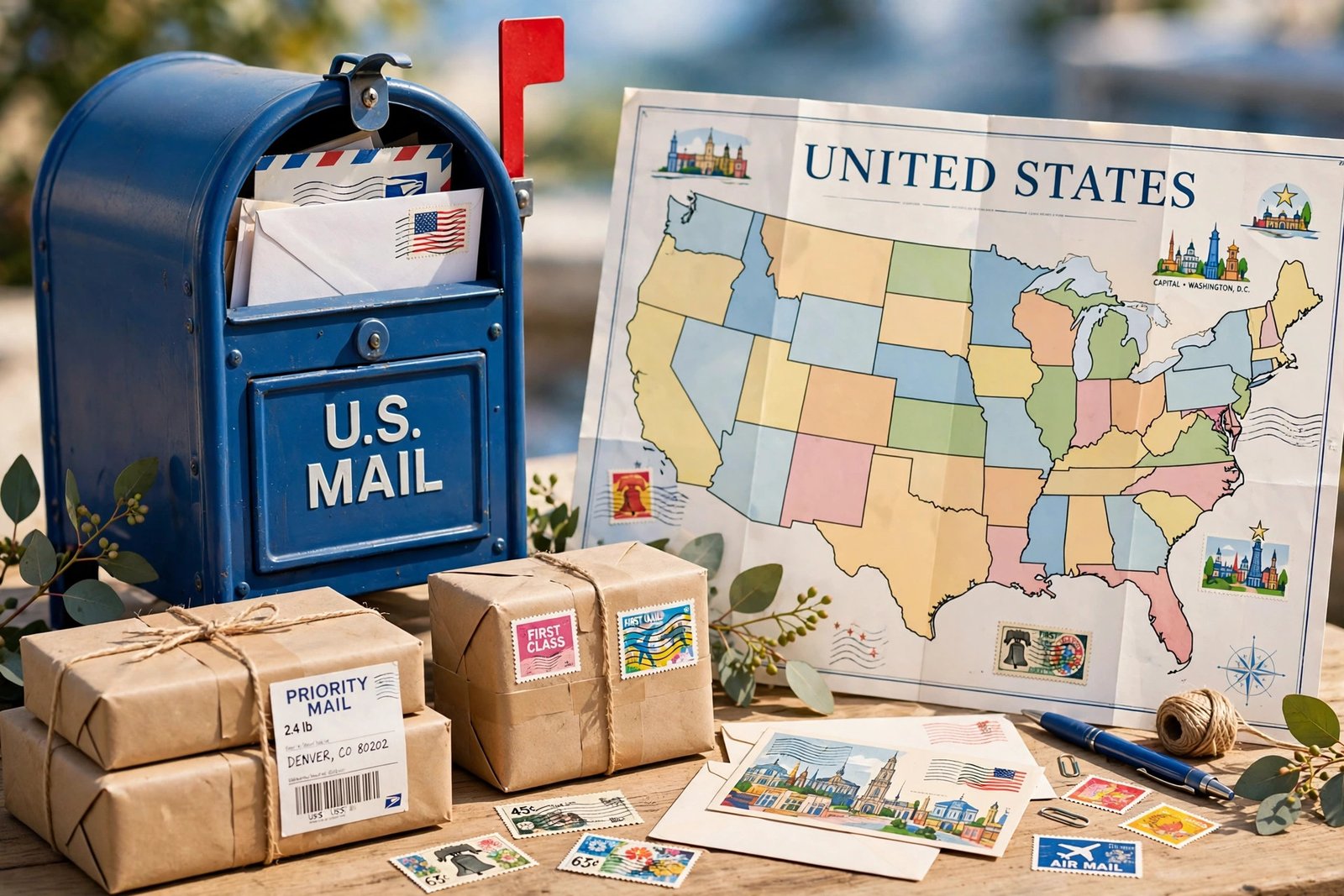
You write it on every envelope, type it into every online checkout, and use it to look up the weather, find a restaurant, or check a delivery. It is five little digits, and most Americans know theirs by heart. But have you ever stopped to wonder what a ZIP code actually means? Those five numbers are not random. They are a carefully designed map of the United States, invented in the 1960s to help the mail move faster, and they still shape how letters, packages, and even data travel across the country today.
ZIP stands for Zone Improvement Plan, and the system was introduced by the United States Postal Service on July 1, 1963. Before that, sorting mail was slow, manual work. The ZIP code changed that, giving every address in America a short numeric code that machines and people could read at a glance. In 1983, the system grew again with ZIP+4, which added four more digits for even greater precision. This is the story of how ZIP codes work, what each digit means, and the fun facts hiding inside those five numbers.
What Is a ZIP Code?
A ZIP code is a postal code used by the United States Postal Service, known as USPS, to sort and deliver mail efficiently. The basic format is five digits, and every address in the United States has one. When you write a ZIP code on an envelope, you are telling the Postal Service exactly which region, sorting center, and local post office should handle your letter, long before a carrier ever sees the street address. The USPS explains the system and offers a free lookup tool on its website, where you can find the ZIP code for any U.S. address at the USPS ZIP Code Lookup tool.
The Problem ZIP Codes Were Invented to Solve
By the early 1960s, the American mail system was under strain. The volume of mail was growing fast, the country was growing fast, and sorting it all by hand was becoming slower and more expensive. The Post Office Department had already introduced postal zones in large cities in 1943, during World War II, when staffing shortages made sorting harder. A letter addressed to Chicago might carry a zone number like Chicago 7, Illinois, which told sorters which part of the city should get it. That helped, but it only covered big cities, and every city had its own zones.
Postal inspector Robert Moon is considered the father of the ZIP code. He submitted his proposal for a nationwide coding system in 1944 while working as a postal inspector, and he is described as the undisputed father of the first three digits of the code. His idea was simple: give every address in the country a number that machines could read and sort quickly. Another inspector, H. Bentley Hahn, developed the last two digits. The phrase Zone Improvement Plan is credited to D. Jamison Cain, a Postal Service executive, and the name was chosen to suggest that mail would zip along faster when senders used the code.
On April 30, 1963, Postmaster General John A. Gronouski announced that the ZIP code would begin on July 1, 1963. By that July, a five-digit code had been assigned to every address in the country. Use of the new code was not mandatory at first, and the Post Office had to persuade a skeptical public to learn five new digits. It launched a cheerful cartoon character called Mr. ZIP, who appeared on posters, stamps, and television, urging Americans to use the code. Within a few months, ZIP codes were already appearing on a large share of the mail, and by 1967 the Post Office required bulk mailers to presort by ZIP code. You can read the full history on the History.com account of the July 1, 1963 launch and in the Wikipedia overview of the ZIP code system.
How to Read a ZIP Code: What Each Digit Means
Every digit in a ZIP code has a job, and once you know the pattern, you can read a ZIP code the way you read a map. The first digit designates a broad geographic region of the country, running from zero in the Northeast to nine in the far West. Zero covers New England, New Jersey, Puerto Rico, and the Virgin Islands. One covers New York, Pennsylvania, and Delaware. Two covers the Washington, D.C. area and the Southeast. Three covers the Deep South. Four covers the Midwest around Ohio, Michigan, Indiana, and Kentucky. Five covers the upper Midwest. Six covers the central states. Seven covers the South Central states, including Texas. Eight covers the Mountain West. Nine covers the West Coast, Alaska, and Hawaii.
The second and third digits narrow things down to a sectional center facility, which is a large mail processing center that serves a region around a city. Together, the first three digits point to a sorting hub and the area it serves. The last two digits designate a specific post office or a delivery zone within a larger city. So a ZIP code like 90210 tells a sorting machine, in order, that the letter is going to the West Coast, to the Los Angeles area sorting center, and then to the Beverly Hills post office. That is the whole journey in five digits.
ZIP+4: Four More Digits, Added in 1983
Twenty years after the launch, the Postal Service needed more precision. Mail volume kept growing, and five digits were no longer enough to sort mail down to the block or building level. In 1983, the Postal Service introduced an expanded system called ZIP+4. It keeps the original five digits and adds a hyphen and four more digits, for a total of nine. The first five numbers still identify the area and the delivery office. The next two numbers denote a delivery sector, which may be several blocks, a group of streets, a group of post office boxes, several office buildings, a single high-rise, a large apartment building, or a small geographic area. The final two numbers narrow it further, to one side of a street, a floor of a building, or a single high-volume mail receiver.
ZIP+4 was never made mandatory for ordinary mail, and most Americans still write only the five-digit code. Businesses and bulk mailers use ZIP+4 widely, because it speeds up sorting and can earn postage discounts. The Postal Service approved price incentives for first-class mail bearing ZIP+4 in October 1983, which helped the longer code catch on with big mailers. If you have ever seen a nine-digit ZIP code on a bill or a shipping label, that is ZIP+4 at work, and you can look up the full nine-digit code for an address using the USPS lookup tool.
Unique ZIP Codes: When One Address Gets Its Own Code
Most ZIP codes cover a neighborhood or a town, but some are assigned to a single address. These are called unique ZIP codes, and they go to organizations that receive enough mail to justify their own code: government agencies, universities, large businesses, military bases, and famous buildings. The White House has its own ZIP code, 20500, and the President’s mail uses the ZIP+4 code 20500-0001, while the First Lady’s is 20500-0002. The Pentagon has its own code, and so do many federal agencies in Washington, D.C.
New York City alone has dozens of buildings with their own exclusive ZIP codes, including the Empire State Building and the Chrysler Building. The General Electric headquarters in Schenectady, New York, holds the famously easy-to-remember ZIP code 12345, which is also a favorite in movies and television whenever a fictional address needs a ZIP code. One of the most unusual unique codes belongs to the J.W. Westcott II, a mail boat that delivers mail to ships passing through the Detroit River. Mail addressed to a ship’s crew can be delivered straight to the boat, using its own exclusive ZIP code, 48222.
Unique codes are also used for post office boxes. The lowest ZIP code in the country, 00501, is a unique code assigned exclusively to the Internal Revenue Service center in Holtsville, New York. It handles tax returns and IRS mail, and it is not a place where anyone lives. On the other end of the scale, the highest ZIP code in use is 99950, in Ketchikan, Alaska. There is no ZIP code 00000, and 99999 does not exist as a deliverable code either. The range of real, deliverable ZIP codes runs from 00501 to 99950.
Fun Facts About ZIP Codes
Once you know how the system works, the trivia starts to fall into place. Beverly Hills, California, is 90210, one of the most famous ZIP codes in the world thanks to television, but the code itself is just the system working as designed: nine for the West, zero and two for the Los Angeles sorting area, and ten for the Beverly Hills post office. The first digit tells you the region at a glance, which is why East Coast codes start with zero or one and West Coast codes start with nine.
Here are a few more facts worth knowing. There are more than 41,000 ZIP codes in the United States, and the count changes as codes are added or retired. Some ZIP codes cover enormous rural areas, while others cover a single city block or a single building. The smallest ZIP code by area is a tiny code in Puerto Rico that covers only a few thousand square feet. ZIP codes are used far beyond mail delivery: they help set insurance rates, plan store locations, target advertising, and study public health, which is why businesses and researchers treat them as a quick shorthand for place and community.
How to Find and Use a ZIP Code Correctly
Finding the right ZIP code is easy, and getting it right matters. A wrong ZIP code can send your letter to the wrong post office, delay a package, or cause an online order to fail at checkout. The most reliable source is the official USPS ZIP Code Lookup tool, which is free and uses the Postal Service’s own database. Type in the street address, city, and state, and it returns the correct five-digit code and the ZIP+4 version. You can also find ZIP codes on the USPS website, which has tools for tracking packages, finding post offices, and calculating postage.
When you write an address, put the ZIP code on the same line as the city and state, after the state abbreviation, like this: Springfield, IL 62701. If you know the ZIP+4, add a hyphen and the four digits after the five-digit code. Use the two-letter state abbreviation in capital letters, and write the city and state clearly. For international mail coming into the United States, the ZIP code goes in the same place, and the country name, USA, goes on the last line. Keep the address block neat and the ZIP code legible, and the machines will do the rest.
One last tip: if you move, update your address with the Postal Service and with the businesses that send you mail. Your old ZIP code will not follow you, and mail addressed to your old code will go to your old post office. Set up mail forwarding, and check your new ZIP code with the lookup tool before you print new stationery or update your accounts. Five digits may seem small, but they are the key that unlocks the whole American mail system.
FAQ
What does ZIP stand for? ZIP stands for Zone Improvement Plan. The name was chosen to suggest that mail travels more efficiently, or zips along, when senders use the code. The phrase is credited to D. Jamison Cain, a Postal Service executive.
When were ZIP codes introduced? ZIP codes were introduced nationwide on July 1, 1963, by the United States Post Office Department, now the United States Postal Service. Postmaster General John A. Gronouski announced the launch on April 30, 1963. Use was voluntary at first, and bulk mailers were required to presort by ZIP code starting in 1967.
What do the five digits of a ZIP code mean? The first digit is a broad region, from zero in the Northeast to nine in the far West. The second and third digits point to a sectional center facility, a large mail processing center. The final two digits designate a specific post office or a delivery zone within a larger city.
What is ZIP+4? ZIP+4 is an expanded code introduced in 1983. It adds a hyphen and four digits to the five-digit code, narrowing the destination to a delivery sector such as a city block, a group of streets, a single high-rise building, or a large apartment building. It is widely used by businesses and bulk mailers but is not required for ordinary mail.
What is the lowest ZIP code in the United States? The lowest ZIP code in use is 00501, assigned exclusively to the Internal Revenue Service center in Holtsville, New York. The highest is 99950, in Ketchikan, Alaska. There is no ZIP code 00000, and 99999 is not a deliverable code.
Does the White House have its own ZIP code? Yes. The White House has its own ZIP code, 20500. The President’s mail uses the ZIP+4 code 20500-0001, and the First Lady’s uses 20500-0002.