
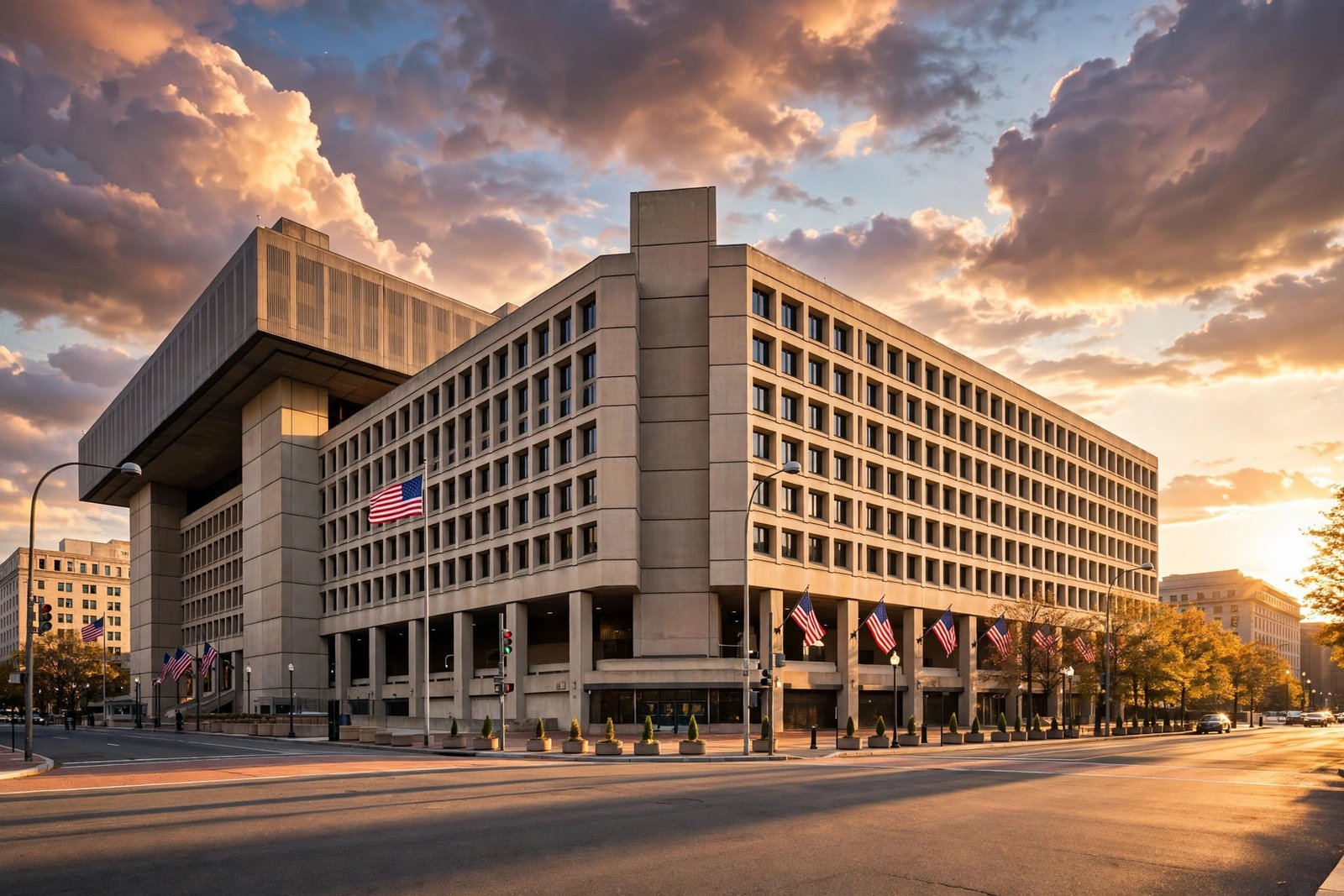
On Friday, November 20, 2026, news broke that the FBI is investigating an apparent breach of one of the most sensitive law enforcement databases in the United States. CNN, citing two people briefed on the investigation, reported that hackers appear to have gained access to the National Crime Information Center — the NCIC — the nationwide system that police officers and federal agents rely on every single day to check warrants, run background checks, and track down stolen property.
The report raised immediate questions across the country. How did intruders get into a system that is supposed to be among the most closely guarded in American law enforcement? What information, if any, did they see or take? And could the breach put police officers — or ordinary Americans — at risk?
As of this writing, many of those questions do not have answers. The FBI has declined to comment publicly, and officials have not said what data may have been compromised, who may be behind the intrusion, or how the attackers got in. What follows is everything that has been confirmed or credibly reported so far — and what is still unknown.
What Is the NCIC — and Why Does It Matter?
The National Crime Information Center is the FBI’s central database of criminal justice information, and it has been called the lifeline of law enforcement. The system was launched on January 27, 1967, with just five files and 356,784 records. Today it is run by the FBI’s Criminal Justice Information Services Division, known as CJIS, out of Clarksburg, West Virginia.
As of 2023, the NCIC held 22 files with more than 18 million active records, and it handles millions of transactions every day, with responses measured in fractions of a second. More than 100,000 criminal justice and law enforcement agencies use the system, from small-town police departments to federal agencies. Its records cover fugitives, missing persons, criminal histories, convicted sex offenders, protection orders, gang members, and people who pose a threat to officers, along with stolen property ranging from vehicles and guns to license plates and boats.
For most Americans, the NCIC is invisible — until the moment it matters. Its most recognizable use is the routine traffic stop. When an officer pulls a driver over and runs a check from the patrol car, the NCIC is the system answering back: whether the car is reported stolen, whether the driver has an outstanding warrant, whether the person is listed as missing, or whether there is a warning that the individual may be dangerous. That instant answer is why officers and the FBI itself describe the database as essential to officer safety.
It is worth understanding what the NCIC does not contain, too. According to retired FBI supervisory special agent Jason Pack, who spoke to Fox News about the incident, the database does not hold classified intelligence or sensitive FBI investigative case files. But it does store personally identifiable information, including names, dates of birth, and Social Security numbers — the kind of data that can be misused if it falls into the wrong hands.
What Happened on November 20
CNN first reported the suspected breach on Friday, November 20, citing two people briefed on the investigation. According to the report, the FBI discovered the intrusion in recent days. The New York Post, citing CNN’s reporting, said FBI officials learned of the intrusion earlier in the week.
Fox News, citing three sources familiar with the matter, went further, reporting that hackers had breached the NCIC database. The FBI is now investigating the hack to determine the unauthorized entry point, but for now it is unclear what information was compromised, the sources said.
Reuters also carried the story on November 20, reporting that the FBI was investigating a suspected breach of the nationwide database used by federal, state, and local law enforcement agencies to share criminal justice information. The Associated Press confirmed the apparent hack to its own reporting, citing a person familiar with the matter who spoke on the condition of anonymity because the person was not authorized to speak publicly.
The news reached the White House quickly. Asked about the subject on Saturday, November 21, President Donald Trump said in a Fox News Channel interview with Kayleigh McEnany: “We just heard about it and I will say that it’s not good.” FBI Director Kash Patel appeared on Fox News on Thursday, as the bureau was examining the suspected intrusion, and highlighted the agency’s efforts to strengthen cybersecurity protections, according to the Jerusalem Post.
What the FBI Has — and Hasn’t — Confirmed
Here is where the story stands on the facts. The FBI has not publicly confirmed the breach. The bureau declined to comment on Saturday, November 21, when asked about the apparent hack by the Associated Press, and it did not immediately respond to requests for comment from CNN or Fox News.
That silence leaves a long list of open questions. Investigators have not disclosed how the attackers gained access. No hacker or group has been publicly named. And the scope of the problem — what data, if any, was viewed, changed, or taken, and whose records were in it — was not immediately clear, according to the Associated Press.
There are a few reassuring details in the reporting so far. Fox News noted that there is no indication yet that any records were altered or that the system is experiencing an outage. The database appears to still be running, and police agencies have not reported a disruption to NCIC service. That matters, because an outage of the system itself would be felt immediately in patrol cars and dispatch centers across the country.
It is also important to be precise about what has been reported. The reporting describes an “apparent” or “suspected” breach, based on sources familiar with the investigation — not a confirmed intrusion announced by the FBI. Until the bureau speaks publicly, the story rests on the accounts of those sources, and responsible reporting has to keep that distinction front and center.
The September Breach: A Pattern Emerging?
The apparent NCIC intrusion would mark the second intrusion involving an FBI system in recent months, according to CNN and Reuters. The earlier incident came in September 2026, when the extortion hacking group known as ShinyHunters targeted an FBI recruitment website and stole sensitive personal information belonging to FBI employees.
USA Today reported that the September theft involved personal data on thousands of FBI employees, taken through the bureau’s job portal website. That incident put the bureau’s own workforce in the crosshairs and raised questions about the security of the FBI’s outward-facing systems.
No official link has been drawn between the September incident and the apparent NCIC breach, and no reporting has suggested the same group is behind both. But the back-to-back incidents have sharpened scrutiny of how well federal law enforcement systems are protected. Two apparent intrusions in about two months is a pattern that lawmakers, security experts, and the public will want explained — even if the two incidents turn out to have nothing to do with each other.
Why Police Officers Are Worried
For the officers who use the NCIC every day, the most alarming possibility is not that information was stolen, but that it was changed. Retired FBI supervisory special agent Jason Pack, who worked on the bureau’s incident response team, warned on Fox News on Saturday that a cyber intrusion into the NCIC could endanger police officers during traffic stops if hackers altered records inside the database.
The concern is straightforward. The NCIC feeds criminal records to patrol cars nationwide. If a warrant record were deleted, an officer might release someone who should have been arrested. If a warning flag about a dangerous individual were removed, an officer might walk up to a car window without knowing the risk. And if false information were inserted, an innocent person could be wrongly detained. None of this has been reported to have happened — Pack was describing a risk investigators must rule out, not an event that has occurred. But it explains why the bureau’s incident response team must quickly determine whether data was manipulated inside the system.
Pack said investigators will examine IP logs and metadata to determine how the attackers got in, including whether they exploited a compromised password among the system’s more than 100,000 users, breached a state terminal, or infiltrated through a third-party vendor. Each of those paths points to a different fix — and a different set of people who need to be warned.
A Week of Outages — Connected or Coincidence?
The NCIC news arrived at the end of a week in which the country had already encountered a string of digital outages in government and the private sector. Trump administration officials have said those outages were caused by routine efforts to upgrade computer systems and fix vulnerabilities, rather than by a cyberattack, according to the Associated Press.
There was no immediate indication that the FBI incident was related to those outages. But the timing has fueled public anxiety and a wave of speculation online. Cybersecurity experts caution that coincidence and connection are two different things, and that the outages and the NCIC incident should not be lumped together without evidence. The FBI’s investigation will have to answer the question of whether the timing means anything at all.
What Happens Next
The FBI’s investigation is now the center of the story. The bureau’s incident response team will be working to answer three questions: how the intruders got in, what they touched, and whether anything was changed or taken. The answers will determine what happens next — from quiet system patches to notifications for affected individuals to a public accounting of what went wrong.
If personal information was taken, the people whose records were exposed may need to be notified, and the FBI may face questions about how a system with more than 100,000 authorized users guards its credentials. If records were altered, the bureau and its state partners will face the painstaking work of auditing the database and restoring its accuracy — a task on which officer safety depends.
Congress is also likely to take an interest. Federal lawmakers have oversight of the FBI, and a breach of the nation’s central law enforcement database is the kind of event that draws hearings and demands for briefings. For now, though, the public record consists of sourced reporting and a bureau that has said nothing at all. Until the FBI speaks, the most honest summary is also the simplest: an apparent breach is under investigation, its scope is unknown, and the system that police officers depend on every day is under a microscope.
Related Reading
More on federal systems, outages, and the technology Americans rely on every day:
- FAA Nationwide Ground Stop: November 2026 Flights Grounded
- Microsoft 365 Outage November 2026: Outlook Down
- FEC Filing System Offline After the Midterms
Frequently Asked Questions
What is the NCIC?
The National Crime Information Center is the FBI’s central database of criminal justice information. Launched in 1967 and run by the FBI’s Criminal Justice Information Services Division, it holds records on fugitives, missing persons, criminal histories, stolen property, and more, and it is used by more than 100,000 law enforcement and criminal justice agencies across the country.
Has the FBI confirmed the NCIC breach?
No. As of Saturday, November 21, the FBI had declined to comment on the apparent hack. The story was first reported by CNN, citing two people briefed on the investigation, and was confirmed to the Associated Press by a person familiar with the matter. Fox News, citing three sources, reported that hackers had breached the database.
What information may have been affected?
That is not yet known. The scope of the intrusion, including whether sensitive law enforcement information was accessed or stolen, remains unclear. The NCIC stores personally identifiable information such as names, dates of birth, and Social Security numbers, but it does not hold classified intelligence or FBI investigative case files.
Was this the first time the FBI was hacked in 2026?
No. In September 2026, the extortion group ShinyHunters breached an FBI recruitment website and stole personal data belonging to thousands of FBI employees. The apparent NCIC intrusion would be the second reported breach of an FBI system in about two months, though no official link has been drawn between the two incidents.
Is the NCIC system still working?
There has been no indication of an outage. Reporting on November 21 noted no sign that records had been altered or that the system was experiencing disruption, and police agencies have not reported a loss of NCIC service. The FBI is investigating how the intruders gained entry and whether any information was compromised.