
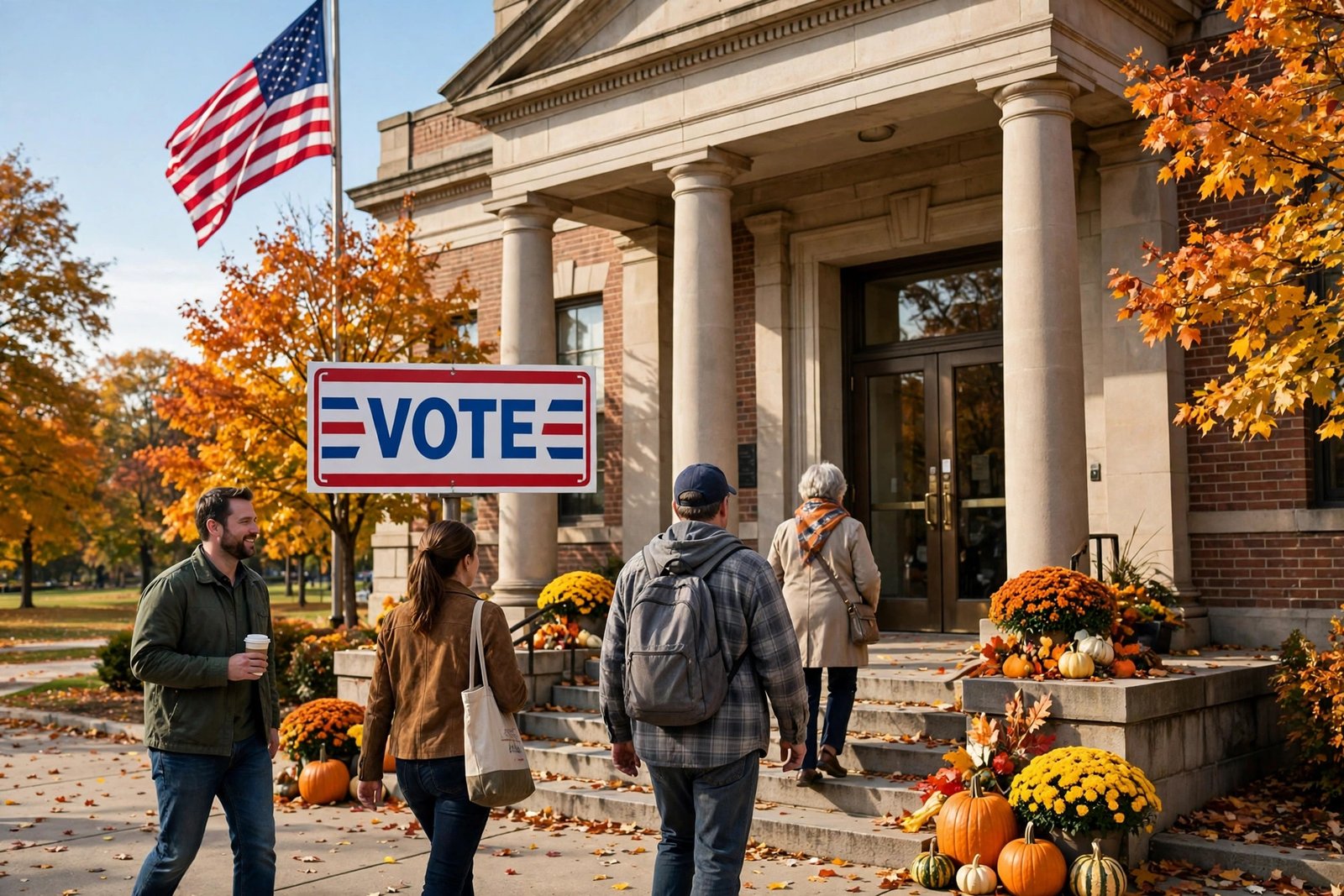
Election Day is approaching, and for millions of Americans the question is no longer whether an election is coming but what will actually be decided when they cast a ballot. On Tuesday, November 3, 2026, voters across the country will take part in the midterm elections, a moment that arrives in the middle of a presidential term and reshapes the balance of power in Washington while also deciding who leads states, counties, cities, and school boards closer to home. Midterms do not choose a president, but they determine who writes laws, who controls committees, who sets state budgets, and who oversees the everyday services that touch daily life. That combination of national stakes and local consequences is why turnout, attention, and preparation matter so much in a midterm year.
Understanding what is on the ballot starts with understanding the structure of the election itself. Voters will not all see identical ballots, because while the federal contests are national in scope, the state and local races, the ballot measures, and the offices up for election vary from place to place. A voter in one state may be choosing a governor and a senator, while a voter in another state may be focused mainly on House races and local offices. What unites every ballot is the chance to shape the direction of government for the years that follow, both in Congress and at home. For first-time midterm voters, the experience can feel quieter than a presidential election, with fewer national advertisements at the start of the year and a longer list of unfamiliar offices. Taking time to learn the offices, the candidates, and the voting options in advance makes the process far less confusing on Election Day itself.
What Makes a Midterm Election Different
A midterm election takes place halfway through a president’s four-year term, and its defining feature is the breadth of offices decided at once without a presidential race at the top of the ticket. The focus shifts to Congress, to governors, and to the state and local leaders who carry out much of the work of government. Because the president is not on the ballot, campaigns often turn to questions about the direction of Congress, the performance of the party in power, and the issues voters feel most directly in their own communities, from the cost of living and public safety to schools, roads, health care, and jobs.
That shift in focus does not make the election less important. Control of Congress determines which bills reach a vote, which proposals advance out of committee, and how much leverage the White House has to carry out its agenda. Governors, meanwhile, shape state policy in ways that can be felt immediately, signing or vetoing legislation, proposing budgets, and appointing officials who oversee state agencies. Local offices, which sometimes receive the least attention, often have the most direct effect on daily life, influencing policing, schools, zoning, transit, and local taxes. In a midterm year, all of those layers are decided together, which is why the ballot can feel long and why researching the full ballot in advance is so valuable.
All 435 Seats in the House of Representatives
Every seat in the United States House of Representatives is up for election on November 3, 2026. All 435 House seats will be decided, because House members serve two-year terms and the entire chamber faces voters at every federal election. That means every congressional district in the country will choose a representative, and the outcome in each district will contribute to the overall balance of power in the House.
The House majority is determined by a simple threshold: a party needs 218 seats to hold a majority. Reaching that number brings control of the chamber, including the speakership, committee chairs, and the ability to set the legislative agenda and schedule votes. Falling short leaves a party in the minority, where it can still shape debate and negotiate, but cannot by itself move legislation through the chamber. Because all seats are contested at once, even shifts in a relatively small number of districts can change which party holds the majority, which is why House races across the country attract intense attention in a midterm year.
For voters, a House race is also one of the most personal federal contests. Representatives are tied to a specific district, and their work often involves local concerns such as federal funding for infrastructure, veterans services, disaster assistance, and community projects, alongside national legislation. Learning where candidates stand on both local priorities and national issues gives voters a fuller picture than party labels alone. Town halls, candidate forums, local news coverage, and campaign materials can all help voters understand how a representative would approach the job.
The Senate Races on the Ballot
The Senate tells a different story, because only a portion of the chamber is up for election at a time. In 2026, 35 Senate seats will be contested, made up of 33 regular elections plus special elections in Florida and Ohio. Senators serve six-year terms, and the chamber is divided into classes so that roughly a third of seats come up in each federal election cycle. That staggered design gives the Senate continuity from one Congress to the next, even as voters decide a substantial number of seats in any given midterm.
The threshold for a Senate majority is 51 seats, or 50 seats plus the vice president’s tie-breaking vote. That narrow margin means that a handful of competitive races can determine control, and it also means that individual senators can carry significant influence in a closely divided chamber. Senate control shapes which nominations advance, which bills reach the floor, and how the chamber handles confirmations and major legislation. In a year when 35 seats are at stake, the national map matters, but so do the individual contests in each state, where candidates must appeal to voters across an entire state rather than a single district.
Special elections add another layer to the 2026 Senate picture. The special elections in Florida and Ohio arise when a seat must be filled outside the regular cycle, and voters in those states will decide who holds the seat going forward. For voters in those states, the Senate race may feel especially prominent, because it sits alongside the full slate of other federal, state, and local contests. In every state with a Senate race, taking time to compare the candidates’ records and positions helps voters make a choice that reflects their priorities for the next six years.
Governors and State Offices
Beyond Congress, 36 governorships will be decided in 2026, giving voters in a large share of states the chance to choose their chief executive. Governors play a central role in state government, proposing budgets, signing or vetoing bills passed by state legislatures, directing state agencies, and responding to emergencies. Their decisions affect education funding, health policy, transportation, public safety, and economic development, often in ways that are more visible in daily life than federal debates.
Governor races also tend to focus heavily on state-specific issues. A campaign in one state may center on schools and property taxes, while a campaign in another may focus on energy, housing, water, or disaster recovery. That local character is a strength of the system, because it allows voters to judge candidates on the challenges their own state faces rather than on national talking points alone. At the same time, governors often become national figures, and their records can influence broader debates about policy approaches that other states watch closely.
Alongside governors, many states will also elect other statewide and local officials, and voters may face ballot measures that ask them to decide policy questions directly. Those measures can cover a wide range of topics, and their wording matters. Reading the full text of a measure, rather than relying only on a short summary or a campaign slogan, helps voters understand what a yes or no vote would actually do. Local offices deserve the same care, because mayors, county officials, judges, and school board members shape services and rules that residents encounter every day.
When Winners Take Office
Winning on Election Day does not mean taking office the next morning. Newly elected members of Congress will take office on January 3, 2027, when the new Congress convenes. That gap between election and inauguration allows for certification of results, transition planning, and preparation for the legislative session ahead. It also means that the Congress elected in November will shape the final years of the presidential term, with a fresh mandate from voters and a new set of priorities shaped by the campaign.
How to Vote and Where to Check the Details
Voting options vary by state, and that variation is one of the most important practical details for 2026. Many states offer early in-person voting or mail voting, but the deadlines, the identification requirements, and the procedures differ from state to state. Some voters will be able to vote weeks before Election Day, while others will vote primarily on Election Day itself. The safest approach is to check directly with the state election office for the rules that apply to a specific address, rather than assuming the rules from another state or from a previous election apply unchanged.
Preparation also means confirming registration, finding the correct polling place or early voting location, and reviewing a sample ballot if one is available. A sample ballot shows every race and measure a voter will face, which makes it easier to research candidates and measures in advance and to move through the ballot with confidence. Voters who plan to vote by mail should pay close attention to request deadlines, return deadlines, and signature requirements, since those details can determine whether a ballot is counted.
For voters who want a broader overview of the election, a detailed guide to the 2026 midterm elections can help explain the contests and the stakes in one place. Readers can explore the 2026 midterm election guide for background on the races ahead, and a separate overview of the 2026 midterm elections offers another way to follow the national picture as Election Day approaches. Both resources complement, but do not replace, the official information provided by a state election office, which remains the authoritative source for deadlines, locations, and procedures.
Frequently Asked Questions
When is Election Day in 2026?
Election Day is Tuesday, November 3, 2026. Voters should check their state election office for early voting and mail voting deadlines, which vary by state.
How many House seats are up for election?
All 435 House seats are up for election, because House members serve two-year terms and the entire chamber faces voters at every federal election.
How many Senate seats are on the ballot?
There are 35 Senate seats on the ballot, comprising 33 regular elections plus special elections in Florida and Ohio.
What is needed for a majority in Congress?
A House majority needs 218 seats. A Senate majority needs 51 seats, or 50 seats plus the vice president’s tie-breaking vote.
When do newly elected members of Congress take office?
Newly elected members take office on January 3, 2027, when the new Congress convenes.
How many governorships are being decided?
There are 36 governorships on the ballot in 2026, alongside other state and local offices and ballot measures.