
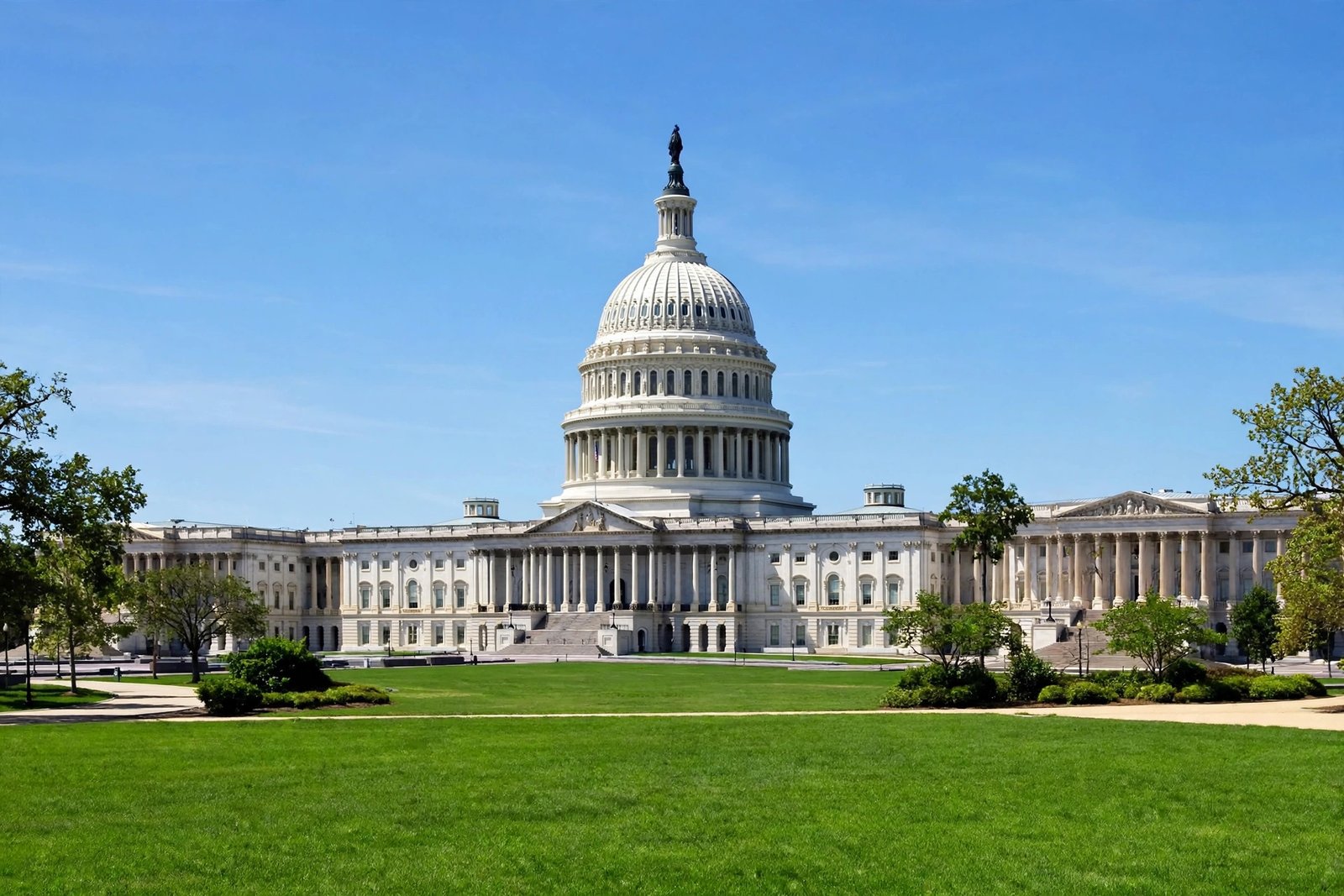
Congress is back in Washington for one of the most consequential stretches of the year, and the clock is already running. Federal funding runs out at the end of Friday, December 11, 2026. If lawmakers do not pass full-year spending bills or another short-term funding measure by then, parts of the federal government will begin shutting down at 12:01 a.m. on Saturday, December 12. It is a deadline Congress set for itself back in September, when it passed a stopgap bill to buy time. That time is now almost gone.
What makes this stretch unusual is the politics around it. The midterm elections on November 3, 2026, gave Democrats control of both the House and the Senate, but the new Democrat-controlled 120th Congress does not convene until January 3, 2027. Until then, the outgoing Republican majorities are still in charge, working alongside a president of their own party, in what is known as a lame-duck session. This article explains what a lame-duck session is, why December 11 matters, what the calendar actually allows, what happens if Congress misses the deadline, and what the recent history of shutdowns tells us about the risks ahead.
What is a lame-duck session?
A lame-duck session is the period between an election and the start of the new Congress. The term comes from the image of a duck that has been shot and can no longer keep up with the flock: members who have lost their seats, or who are retiring, continue to serve until their terms expire, even though voters have already chosen their replacements. The 119th Congress runs until noon on January 3, 2027, when the 120th Congress takes over, so everything Congress does between the November 3 election and that date happens in the lame-duck window.
Lame-duck sessions are often unproductive, and the reasons are easy to see. Outgoing members have less at stake politically, since they will not face voters again in their current seats. Incoming members have no power yet, since they have not been sworn in. Party leaders, meanwhile, are often looking past the current Congress to the next one, negotiating with people who will not be in the room when the deal is struck. That makes it hard to reach agreement on anything controversial, and funding the government is always controversial.
This lame duck is more unusual than most because control of Congress is changing hands entirely. Democrats won both chambers on November 3, according to Associated Press race calls reported by NPR, so the incoming majorities will be Democratic in both the House and the Senate. The outgoing Republican majorities must decide how much of the year’s unfinished business to settle themselves and how much to leave for the new Congress. Every choice they make now will shape what the new Congress inherits in January, and both parties know it.
The December 11 deadline, explained
The deadline comes from H.R. 6500, the Continuing Appropriations and Extensions Act, 2027. It is a continuing resolution, known in Washington as a CR, which is a short-term funding measure that keeps the government running at existing spending levels while Congress works on full-year bills. The House agreed to the Senate’s version of the bill on September 1, 2026, by a vote of 370 to 48, and President Donald Trump signed it into law on September 2, 2026.
The law funds federal agencies at fiscal year 2026 levels through December 11, 2026. Fiscal year 2027 began on October 1, 2026, and the stopgap meant there was no funding lapse on that date, which is why the government did not shut down at the start of the fiscal year. But the stopgap was a delay, not a solution. None of the 12 regular appropriations bills for fiscal year 2027 has been enacted, and as of early November the Senate had not passed any of them. The Congressional Research Service has been clear about what that means: Congress must enact the fiscal year 2027 bills or another stopgap before the end of December 11, or agencies covered by those bills face a lapse in funding.
The calendar: only 16 House session days
The most important fact about the lame-duck session is how little time Congress actually has. The House calendar published by Majority Leader Steve Scalise shows 16 days in session between the return on November 9 and the funding deadline: November 9 through 12, November 17 through 20, November 30 through December 3, and December 8 through 11. The calendar lists four more session days, December 14 through 17, after funding is due to lapse, which is only useful if Congress is cleaning up after a shutdown rather than preventing one.
The Senate’s schedule is only slightly more forgiving. The Senate’s tentative 2026 schedule marks November 23 to 27 as a state work period for Thanksgiving and December 21 to 31 as another, leaving about four weeks of session before the deadline. But Senate procedure is slower than the House: a single senator can slow a bill down, and the 60-vote threshold for most legislation means that nothing passes without bipartisan support. That matters enormously in a lame-duck session, because the outgoing Republican majority in the Senate cannot pass a funding bill on its own if Democrats withhold the votes needed to reach 60.
House Appropriations Committee Chairman Tom Cole of Oklahoma has said the time before the deadline is not enough to finish full-year bills, according to Fox News reporting. That is a significant admission from the person who oversees the spending process in the House. If full-year bills cannot be finished, the realistic options narrow to two: another short-term stopgap, or a shutdown. Both chambers must pass the same measure and the president must sign it by the end of December 11, and every day that passes without agreement makes that harder.
Three paths: omnibus, stopgap, or shutdown
Congress has, in practice, three ways forward, and each has its own politics. The first is an omnibus: a single large bill that packages all 12 appropriations bills together and funds the government for the rest of the fiscal year. An omnibus would end the uncertainty and let agencies plan properly, but it requires agreement on hundreds of individual spending decisions, and there is no sign that such agreement exists with only weeks left.
The second path is another stopgap. A short continuing resolution would push the deadline into January, handing the problem to the new Democratic Congress. Patty Murray, the incoming Senate Appropriations chair, wants a short stopgap into January, The Fiscal Times reported on November 11. That approach has real appeal for the incoming majority, which would rather write the final spending bills itself than inherit ones negotiated by the outgoing majority. It also has appeal for the outgoing majority, which can avoid a shutdown on its watch without making concessions it does not want to make. The risk is that it simply moves the fight to January, when the new Congress will have its own pressures and its own deadlines.
The third path is a shutdown, which happens by default if Congress does nothing. Prediction markets have taken notice: traders on Kalshi were pricing about a 44 percent chance of a shutdown on December 12, 2026, in mid-November, with the market having swung between the low 30s and the mid-40s in recent weeks. Those numbers are not a forecast, and prediction markets can be wrong, but they capture something real about the mood in Washington: a shutdown is not expected, but it is far from impossible.
What a December 12 shutdown would look like
If no funding law is signed by the end of December 11, a funding gap begins at 12:01 a.m. on Saturday, December 12, 2026. Because none of the 12 appropriations bills has been enacted, the gap would cover activities funded by all of them, which means it would be a broad shutdown rather than a narrow one.
Federal workers would be the first to feel it. In the 2025 shutdown, about 900,000 federal employees were furloughed, with nearly two million more working without pay for the duration. A December shutdown would follow the same pattern: workers deemed non-essential sent home, essential workers reporting for duty without paycheques, and everyone waiting for Congress to act. For families living paycheque to paycheque, even a short shutdown is a serious financial strain, and the timing, just two weeks before Christmas, would make it worse.
The public would feel the effects in everyday services. National parks and museums would close or operate with skeleton staffing. Passport and visa processing would slow. Federal loans and permits would stall. Food safety inspections, weather forecasting and aviation safety work would continue, because those are essential, but the agencies that do them would be working short-handed and without pay. Small businesses that depend on federal contracts or permits would find their work frozen. And because the shutdown would come at the height of the holiday travel season, any disruption to aviation, coming so soon after the FAA ground stop of November 13, would be felt by millions of travellers.
The 2025 shutdown: 43 days and its lessons
The last shutdown is still fresh in everyone’s mind, and it shapes how both parties think about December. The 2025 shutdown began at midnight on October 1, 2025, after Congress failed to pass appropriations for fiscal year 2026, and it ended 43 days later, on November 12, 2025, when President Trump signed a compromise funding package. It was the longest shutdown in American history, breaking the previous record of 35 days set in 2018-2019.
The dispute at the heart of the 2025 shutdown was over health care. Senate Democrats refused to approve the Republican appropriations bill because it did not include a provision to extend funding for Affordable Care Act premium tax credits. The House had passed a stopgap bill, H.R. 5371, but Senate Democrats blocked it, saying it failed to protect the subsidies and contained policy changes they opposed. The standoff lasted for weeks, with both sides blaming the other, until senators from both parties finalised a revised version of the bill in early November. The Senate approved it on November 10 by a vote of 60 to 40, the House passed it on November 12 by 222 to 209, and the president signed it the same day.
The debt ceiling clock is ticking too
Funding is not the only fiscal deadline Congress faces. The federal debt ceiling, the legal limit on how much the government can borrow, is about 41.1 trillion dollars, and analysts expect it to be reached in the first half of 2027, according to the Committee for a Responsible Federal Budget. The debt limit was raised by 5 trillion dollars in July 2025 and has not bitten since, but the room left under the borrowing limit is shrinking by roughly 200 billion dollars a month, according to recent analysis.
Other unfinished business
Funding is the most urgent item on the lame-duck agenda, but it is far from the only one. The farm bill, which governs agricultural programmes and food assistance, remains unfinished. The annual defence authorisation bill, which the House passed in July and which stalled at a Senate procedural vote, still needs to be completed. And a transportation package, tied to the highway and transit programmes that expire on December 11, is also waiting.
What it means for ordinary Americans
For most people, the lame-duck session feels distant from daily life, and that is understandable. Congressional procedure is not most people’s idea of compelling news. But the outcome of the December 11 deadline will be felt in very ordinary ways: in whether national parks are open over the holidays, in whether passport applications are processed on time, in whether federal workers get paid before Christmas, and in whether the economy takes another hit from a shutdown that everyone could see coming.
The deeper point is that the December 11 deadline is a test of whether Congress can still do the most basic job it has: keep the government running. The stopgap that expires that day was passed by a wide bipartisan margin, 370 to 48 in the House, because both parties agreed that a shutdown in September would have been harmful. The question now is whether that same spirit can produce another agreement in December, in a lame-duck session, with control of Congress changing hands. The answer will arrive by the end of December 11, one way or another.
FAQ
When does federal funding run out?
Federal funding runs out at the end of Friday, December 11, 2026, under the stopgap law H.R. 6500, signed on September 2, 2026. If no new funding law is passed, a funding gap begins at 12:01 a.m. on Saturday, December 12, 2026.
What is a lame-duck session?
It is the period between an election and the start of the new Congress. The current 119th Congress serves until noon on January 3, 2027, when the Democrat-controlled 120th Congress convenes. Democrats won both chambers in the November 3, 2026 midterms, but the outgoing Republican majorities remain in charge until then.
What happens if Congress misses the December 11 deadline?
A partial shutdown begins on December 12. Non-essential federal workers would be furloughed, national parks and federal offices would close or reduce services, and hundreds of thousands of federal employees would work without pay until funding is restored. Essential services such as the military, air traffic control and Social Security payments would continue.
How long was the last government shutdown?
The 2025 shutdown lasted 43 days, from October 1 to November 12, 2025, the longest in American history. It ended when President Trump signed a compromise funding package after the Senate approved it 60 to 40 and the House 222 to 209.
Can Congress avoid a shutdown?
Yes. Congress can pass full-year appropriations bills, pass a single omnibus bill, or pass another short-term stopgap that pushes the deadline into January. Any of those must pass both chambers and be signed by the president by the end of December 11. The most widely expected outcome is a short stopgap into January, handing the final decisions to the new Congress.
Related reading
- After Election Day: How Votes Are Counted and Certified in 2026
- Democrats Sweep Congress in 2026: What Happens Next
- Midterm Elections November 3, 2026: What’s on the Ballot
Sources: NerdWallet government shutdown news; Congress.gov; U.S. House of Representatives; Congressional Budget Office; Committee for a Responsible Federal Budget; Fresh Calendars funding deadline guide; San Francisco Inquirer on the lame-duck calendar; ThoughtCo shutdown history.